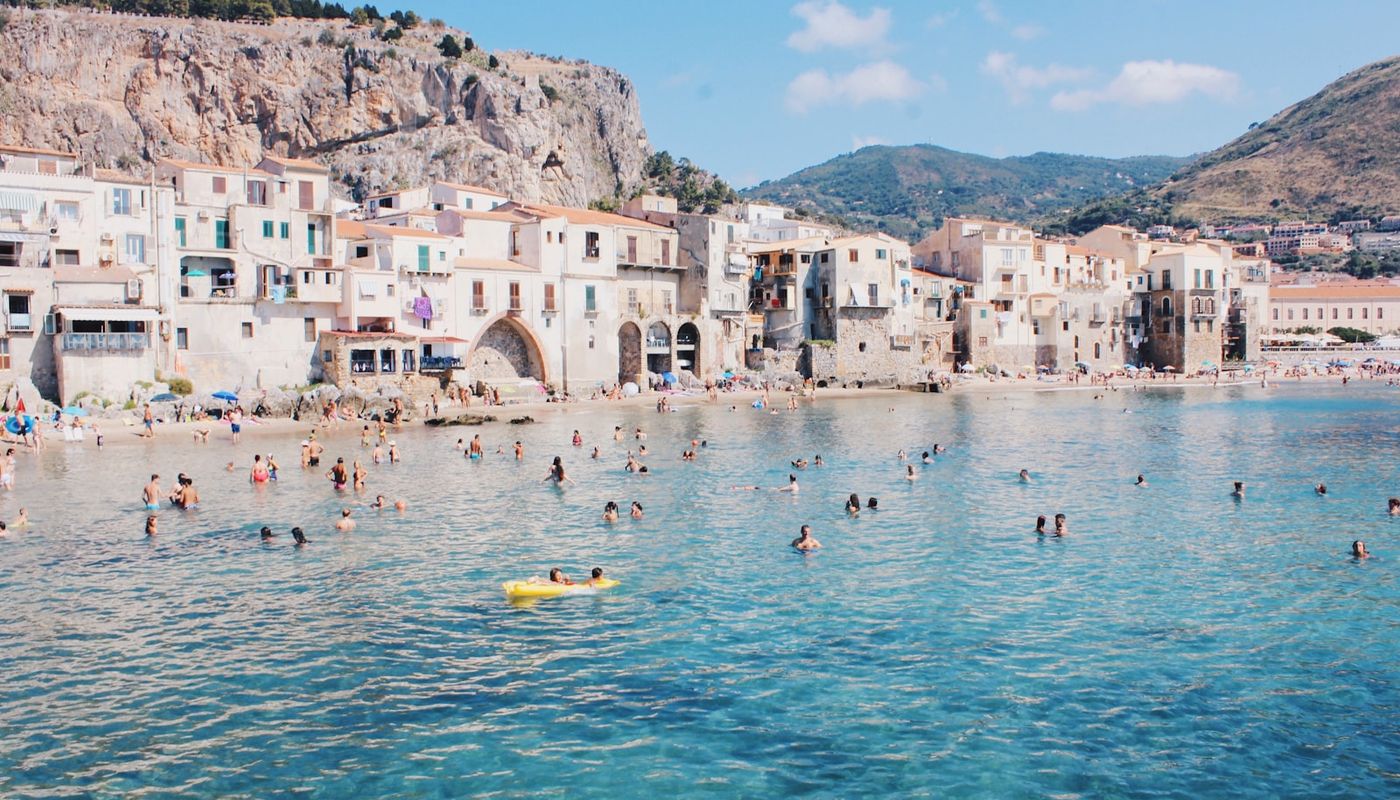
Sicily Real Estate FAQ for Foreign Buyers: 25 Questions Answered
Sicily has become one of the most searched property markets in southern Europe, pulled along by one-euro house schemes, low prices, and a 7 percent tax regime for pensioners. The rules are the Italian rules, but Sicily adds its own quirks around old houses, rural land, and short-let registration. This FAQ answers the questions foreign buyers ask most, with the specific taxes, codes, and laws that apply in 2026.
Can foreigners buy property in Sicily?
Yes, foreigners can buy property in Sicily, with EU citizens facing no restrictions at all. Non-EU citizens must satisfy the condizione di reciprocità under Article 16 of the Preliminary Provisions of the Italian Civil Code, meaning an Italian must be able to buy in your country for you to buy in Italy. Citizens of the United States, the United Kingdom, Canada, and most major countries pass this test, and your notary confirms it before signing.
Do I need an Italian tax code to buy in Sicily?
Yes, you must obtain a codice fiscale before you can complete a purchase. It is free and issued by the Agenzia delle Entrate in Italy or by an Italian consulate abroad, usually the same day. You need it for the deed, the utilities, and every tax payment, so arrange it before making an offer.
What is the buying process in Sicily?
The process has three stages: a purchase proposal (proposta d'acquisto), a binding preliminary contract (compromesso), and the final deed (rogito) signed before a notary. The compromesso fixes the price and usually carries a deposit of 10 to 20 percent, and backing out after it has real financial consequences under Article 1385 of the Civil Code. The rogito transfers ownership and is now executed electronically as a rogito telematico.
How much tax do I pay when buying a resale in Sicily?
A resale bought from a private seller carries registration tax (imposta di registro) of 9 percent of the cadastral value, dropping to 2 percent if it qualifies as your prima casa. The prima casa rate requires you to take residence in the municipality within 18 months of purchase. New builds from a developer carry VAT instead, at 10 percent, or 4 percent for a prima casa.
What are the total costs of buying in Sicily?
Budget roughly 10 to 15 percent of the price for all taxes and fees combined. This covers registration tax or VAT, notary fees of around 1 to 2.5 percent, and estate agency commission of 2 to 4 percent plus VAT. On cheap Sicilian properties the fixed minimum fees can make the percentage feel higher, because notary and agency floors do not shrink with the price.
Are the one-euro houses in Sicily really one euro?
The headline price is real, but the true cost is the mandatory renovation, not the purchase. Towns like Sambuca di Sicilia, Mussomeli, and Troina sell abandoned houses for a symbolic one euro on the condition that you renovate within a set deadline, usually one to three years. You also post a security deposit, often several thousand euros, which you forfeit if you miss the renovation deadline.
How much does it cost to renovate a one-euro house?
Realistic renovation budgets run from 20,000 to 50,000 euros or more, depending on the condition and size of the building. Many one-euro homes need structural work, new roofing, and full rewiring and plumbing. Some towns such as Troina have offered incentives of up to 15,000 euros to offset costs, but you should budget on the assumption that you carry the full renovation yourself.
What annual property tax will I pay in Sicily?
If the home is not your main residence you owe IMU (Imposta Municipale Unica), a self-assessed municipal tax. On a 200,000 euro second home in Sicily, IMU typically runs between 900 and 2,400 euros a year depending on the comune's rate. No bill arrives in the post: you calculate it yourself and pay by the June and December deadlines.
Is there a tax on my main home in Sicily?
If a non-luxury property is your registered prima casa and main residence, it is generally exempt from IMU. Luxury homes classified in cadastral categories A1, A8, and A9 pay IMU even as a main residence. Confirm the cadastral category before you assume an exemption applies.
What is the 7 percent flat tax for pensioners?
Foreign pensioners who move their tax residency to a qualifying southern town can pay a flat 7 percent on all foreign-source income for up to nine years. To qualify you must transfer residency to a municipality of fewer than 20,000 residents in Sicily, Calabria, Sardinia, Campania, Basilicata, Abruzzo, Molise, or Puglia, and not have been an Italian tax resident in the previous five years. This regime is a major reason retirees look at small Sicilian towns.
Can I rent my Sicilian property to tourists?
Yes, but you must register for a CIN code first. Italy's national rental database (BDSR) now requires every short-let property to obtain a Codice Identificativo Nazionale before it can be listed on platforms such as Airbnb or Booking. Renting without a CIN exposes you to fines, and the code must be displayed in your listing.
How is rental income taxed in Sicily?
Short-let income is commonly taxed under the cedolare secca flat regime at 21 percent on your first rented property and 26 percent from the second short-let property onward. The cedolare secca replaces ordinary income tax and some other charges on that income. You can instead opt for ordinary taxation, but for most foreign owners the flat rate is simpler and lower.
Do I need a lawyer as well as a notary?
The notary is mandatory but neutral, so an independent lawyer is advisable on older or rural Sicilian properties. The notaio certifies the deed, checks title, and collects the taxes, but does not represent your private interests. Sicilian village houses frequently have inheritance tangles, missing paperwork, or informal extensions, which is exactly where a buyer's own lawyer earns their fee.
What planning problems are common in Sicilian properties?
The most common issues are unpermitted extensions, missing habitability certificates, and discrepancies between the cadastral plan and the actual building. Many older Sicilian homes were altered over decades without permits. Before you buy, the notary and your surveyor (geometra) must confirm the building is urbanistically compliant or that any abuso can be regularised, because an unresolved abuso can block resale.
What is the agibilità certificate?
The agibilità (or abitabilità) is the certificate confirming a property is fit for habitation and meets safety and hygiene standards. A home without it can be hard to insure, mortgage, or resell. On one-euro and older properties this certificate is frequently absent, and obtaining it is part of what your renovation must achieve.
Can I buy rural land or a country house in Sicily?
Yes, but rural purchases carry extra checks around pre-emption rights and land classification. Neighbouring farmers may hold a pre-emption right (diritto di prelazione) over agricultural land, which can override your purchase if not properly handled. Confirm the land's classification and any agricultural tenancy before paying a deposit.
Can I get a mortgage in Sicily as a foreigner?
Yes, Italian banks lend to non-residents, typically up to 50 to 60 percent of the valuation. You will need a codice fiscale, proof of income, and the bank's own valuation, and the process adds several weeks. Many cheap Sicilian purchases are done in cash because the loan amounts are too small for banks to bother with.
Can I complete the purchase remotely?
Yes, by granting a power of attorney (procura) to a representative or lawyer in Italy. The power of attorney is signed before a notary, and if executed abroad it needs an apostille and a sworn translation. This lets overseas buyers attend the rogito through a representative.
What taxes apply when I sell in Sicily?
If you sell within five years of buying, the gain is taxed as ordinary income, unless the property was your main residence for most of the holding period. After five years of ownership, the capital gain on a residential sale is generally exempt. This five-year rule is a key planning point for buyers treating Sicily as a short-term flip.
Is Sicily a good place to buy cheaply in Europe?
Sicily is among the cheapest entry points to European property, but cheap headline prices hide renovation and compliance costs. The one-euro and low-price stock often needs heavy work and careful legal checks, so the all-in cost is far higher than the sticker. Verifying the seller, the title, and the building's legal status before committing is the kind of due diligence Bektu is built to support.
Do I owe Italian inheritance tax on a Sicilian home?
Yes, Italian inheritance tax applies to property located in Italy regardless of where the owner lived. Italy's inheritance tax is comparatively light, with a 4 percent rate for spouses and children above a one-million-euro allowance per heir. This makes passing Sicilian property to close family relatively inexpensive compared with many other countries.
What ongoing obligations do I have as a foreign owner?
You must pay IMU where due, file Italian tax returns on any rental income, keep your CIN current if you let the property, and maintain the building to retain its agibilità. Missing IMU deadlines triggers penalties because no reminder is sent. Many overseas owners use a local accountant (commercialista) to manage the annual filings.
Sources
- Property Foreign Ownership Sicily (January 2026) – Investropa
- 1 Euro Houses in Italy: Complete 2026 Guide for Foreigners (Impatria)
- Italy Property Tax for Co-Owners in 2026: IMU, Cedolare Secca (Co-Ownership Property)
- Buying Property In Italy 2026: Legal Guide & Taxes (Legally Italy)
Sign up to read the rest
Create a free account to keep reading. It only takes a minute.
Considering a developer you read about here?
You cannot walk the land from another country. But you can verify the developer. Bektu contacts them on your behalf and sends you a scored report. They never see who asked.
Search and verify any developerMore from Bektu
Stay a step ahead of the wire transfer
Get the occasional note from Bektu on verifying developers before you commit. No noise, just what matters.
We will never share your email. You can opt out at any time.