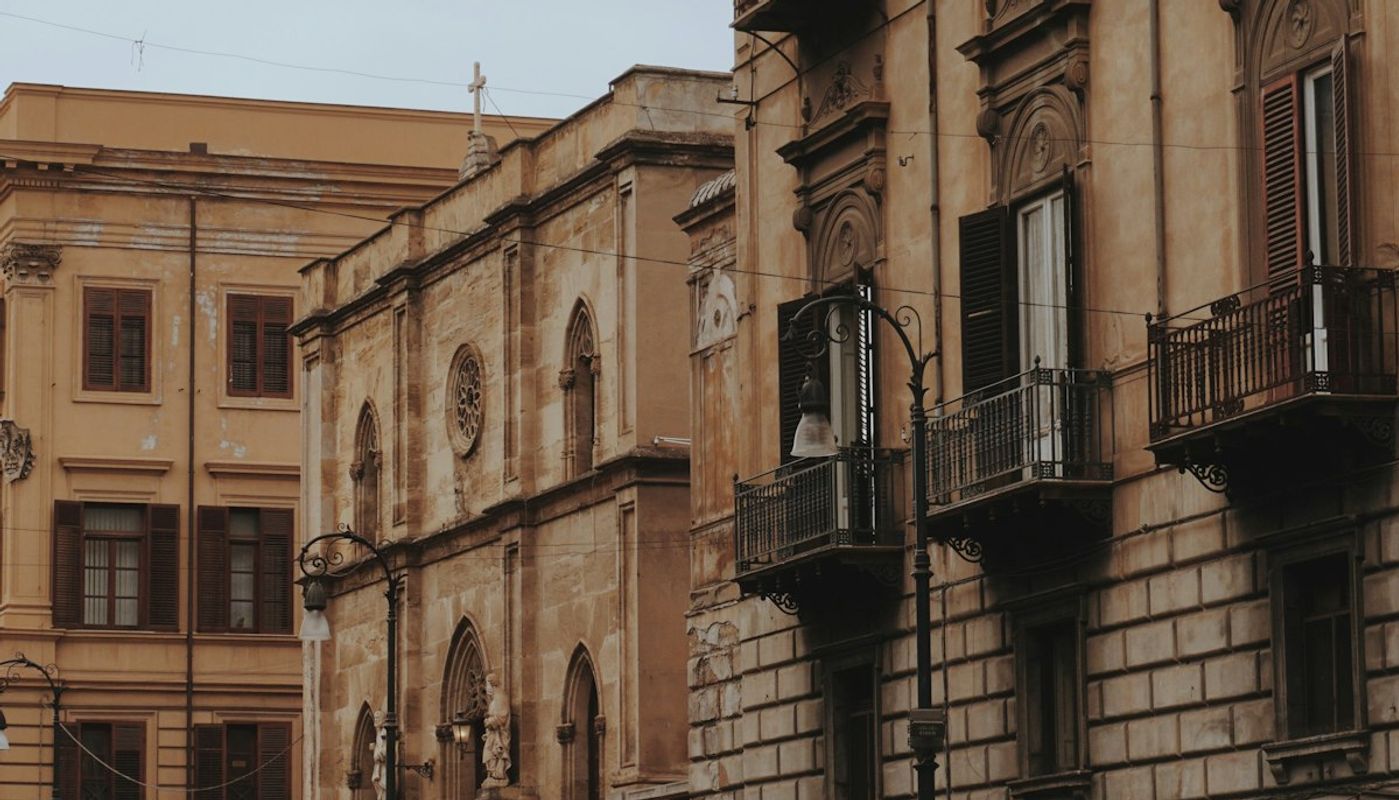
Top Property Developers in Sicily for Foreign Buyers in 2026
Top Property Developers in Sicily for Foreign Buyers in 2026
Finding the right developer in Sicily is not like shopping for a flat in Milan or Rome. The island operates on its own rhythm, with a mix of established local firms, national networks with Sicilian branches, and municipality-run programs that hand you a house for one euro and wish you luck. Here is what you need to know about who is actually building, restoring, and selling property across Sicily right now.
The Palermo Market: Ferreri Group and Local Players
Palermo has attracted the most development activity of any Sicilian city over the past five years. The historic center, once largely abandoned, is now a construction zone of restoration projects and new residential builds.
Ferreri Group (Gruppo Ferreri) is the name you will hear most often. Based in Palermo, they have been active in residential development across the city for decades. Their projects range from new-build apartment complexes in the expanding northern suburbs to restoration work in the centro storico. Impresa Ferreri handles the construction side, while the group's development arm manages sales and project planning. For foreign buyers, Ferreri is notable because they have experience working with non-Italian purchasers and can typically provide bilingual documentation, though you should still engage your own notaio (notary) independently.
Beyond Ferreri, Palermo's development scene includes several smaller firms focused on the restoration of historic palazzi. These are often architect-led studios that buy a crumbling noble palace, restore it under the supervision of the Soprintendenza dei Beni Culturali (the cultural heritage authority), and sell individual apartments. The results can be stunning, but the process is slow. Restoration projects in Palermo's historic center regularly take three to five years from purchase to completion because of the layers of bureaucratic approval required when working with buildings that have historical or artistic significance under the Codice dei Beni Culturali (D.Lgs. 42/2004).
Catania and the East Coast
Catania's property market has a different character. The city sits at the foot of Mount Etna, and seismic building codes under the Testo Unico Edilizia (D.P.R. 380/2001) add complexity and cost to every project. Several mid-sized developers operate here, often focusing on the borgata marinara (fishing village neighborhoods) south of the city center and the residential corridors heading toward Acireale.
National real estate networks have their strongest Sicilian presence in Catania. Tecnocasa, Italy's largest real estate franchise network, operates multiple agencies across the Catania metropolitan area. Gabetti, another major national name, also has offices here. These are not developers in the traditional sense. They are brokerage and advisory networks. But for foreign buyers unfamiliar with the Sicilian market, they provide a structured entry point with standardized processes. Just remember that the agent works on commission from the sale, so independent due diligence remains essential. Platforms like Bektu can help you verify property details and ownership records before committing.
Taormina and the Luxury Segment
Taormina has been Sicily's luxury destination since the Grand Tour era. Development here is tightly constrained by both geography (the town sits on a cliff) and planning regulations. New construction is essentially impossible within the historic town. What you find instead are restoration specialists who convert existing structures into high-end residences.
These firms tend to be small, often a geometra (surveyor) or architetto working with a trusted team of local craftsmen. The quality varies enormously. Some produce genuinely beautiful restorations that respect the original stone and ironwork. Others cut corners with modern materials behind a historic facade. If you are buying a restored property in Taormina, insist on seeing the permesso di costruire (building permit) and the certificato di agibilita (habitability certificate) before signing anything. Both are required under D.P.R. 380/2001, and their absence is a red flag.
Ragusa Ibla: Where Restoration Meets UNESCO
Ragusa Ibla, the lower half of the divided city of Ragusa, is a UNESCO World Heritage site and one of the most beautiful baroque towns in Europe. It has attracted a wave of restoration-focused developers over the past decade, many of them working with the Superbonus 110% program and its successor incentive schemes.
The Superbonus, introduced under D.L. 34/2020 and subsequently modified multiple times, allowed property owners to deduct 110% of qualifying renovation costs from their tax liability, effectively making renovations free or even profitable through tax credit transfers. The program has been scaled back significantly since 2024, but reduced incentive rates still apply to certain categories of work, particularly energy efficiency improvements and seismic upgrades. Several developers in Ragusa Ibla built their entire business model around these incentives, purchasing ruined buildings cheaply, restoring them using Superbonus credits, and selling the finished apartments at a substantial markup.
Altamura Costruzioni is among the firms active in the broader Ragusa province, handling both residential and commercial construction. The southeast corner of Sicily, covering Ragusa, Modica, and Noto, has seen consistent development interest because property prices remain far below those in Taormina or central Palermo while the architectural quality rivals anywhere in Italy.
Syracuse and Trapani
Syracuse's island center, Ortigia, is another area where restoration work dominates. The dynamics are similar to Ragusa Ibla: a beautiful historic core, tight building restrictions, and a mix of small local developers converting individual buildings. The market here has become more competitive in recent years as holiday rental demand on platforms like Airbnb has driven up both property prices and renovation activity.
Trapani, on Sicily's western coast, remains more affordable and less developed. A handful of local construction firms operate here, but the market is quieter. Trapani's appeal for foreign buyers tends to be its proximity to the Egadi Islands and the salt flats, and property transactions are more likely to involve direct purchases from individual owners than buying from developers.
The 1 Euro House Programs
The most talked-about entry point into Sicilian property is the "case a 1 euro" phenomenon. These are not developer-run projects. They are municipal programs operated directly by town governments trying to reverse depopulation in Sicily's interior hill towns.
The towns currently running active programs include Sambuca di Sicilia, Mussomeli, Gangi, Troina, Castiglione di Sicilia, and Bivona, among others. Each municipality manages its own program with its own rules. The Comune di Sambuca di Sicilia (comune.sambucadisicilia.ag.it) drew international headlines when it launched its program and has processed hundreds of applications from foreign buyers. Mussomeli (comune.mussomeli.cl.it) has been equally active. Gangi (comune.gangi.pa.it) was actually one of the first towns to pioneer the model.
The structure is broadly similar across programs. The municipality acquires abandoned properties from owners who no longer want them (or whose heirs cannot be located). It then sells these properties for a symbolic price of one euro, with conditions attached. Buyers must post a deposit, typically 5,000 euros in the form of a fideiussione (guarantee bond) or cauzione (security deposit), and commit to completing renovations within a set timeframe, usually one to three years. The deposit is returned once renovation is complete.
The catch, and it is a significant one, is that the renovation costs are real. Budget a minimum of 15,000 euros for the most basic structural work on a small property, and expect 50,000 to 150,000 euros for a fully habitable result. You will need a geometra to survey the property, an architect or engineer to design the renovation, and a local construction firm to do the work. The permesso di costruire from the Comune's ufficio tecnico (technical office) is required before any work begins, per D.P.R. 380/2001.
Practical Advice for Foreign Buyers
Regardless of whether you are buying from a developer, restoring through a 1 euro program, or purchasing directly from an owner, a few things hold true across Sicily. Always engage an independent notaio. Always get a visura catastale (cadastral survey) and visura ipotecaria (mortgage/lien search) before committing. Always verify that the property has proper urbanistic conformity, meaning that what is actually built matches what the planning records say should be there. In Sicily more than anywhere else in Italy, the gap between paper and reality can be wide.
The Sicilian property market rewards patience and due diligence. The developers and programs listed here are starting points, not endorsements. Do your homework, verify everything independently, and budget for surprises.
Sign up to read the rest
Create a free account to keep reading. It only takes a minute.
Considering a developer you read about here?
You cannot walk the land from another country. But you can verify the developer. Bektu contacts them on your behalf and sends you a scored report. They never see who asked.
Search and verify any developerMore from Bektu
Stay a step ahead of the wire transfer
Get the occasional note from Bektu on verifying developers before you commit. No noise, just what matters.
We will never share your email. You can opt out at any time.