Sicily Property Tax and Rental Income for Foreign Owners: IMU, Cedolare Secca, and the CIN System
Sicily Property Tax and Rental Income for Foreign Owners: IMU, Cedolare Secca, and the CIN System
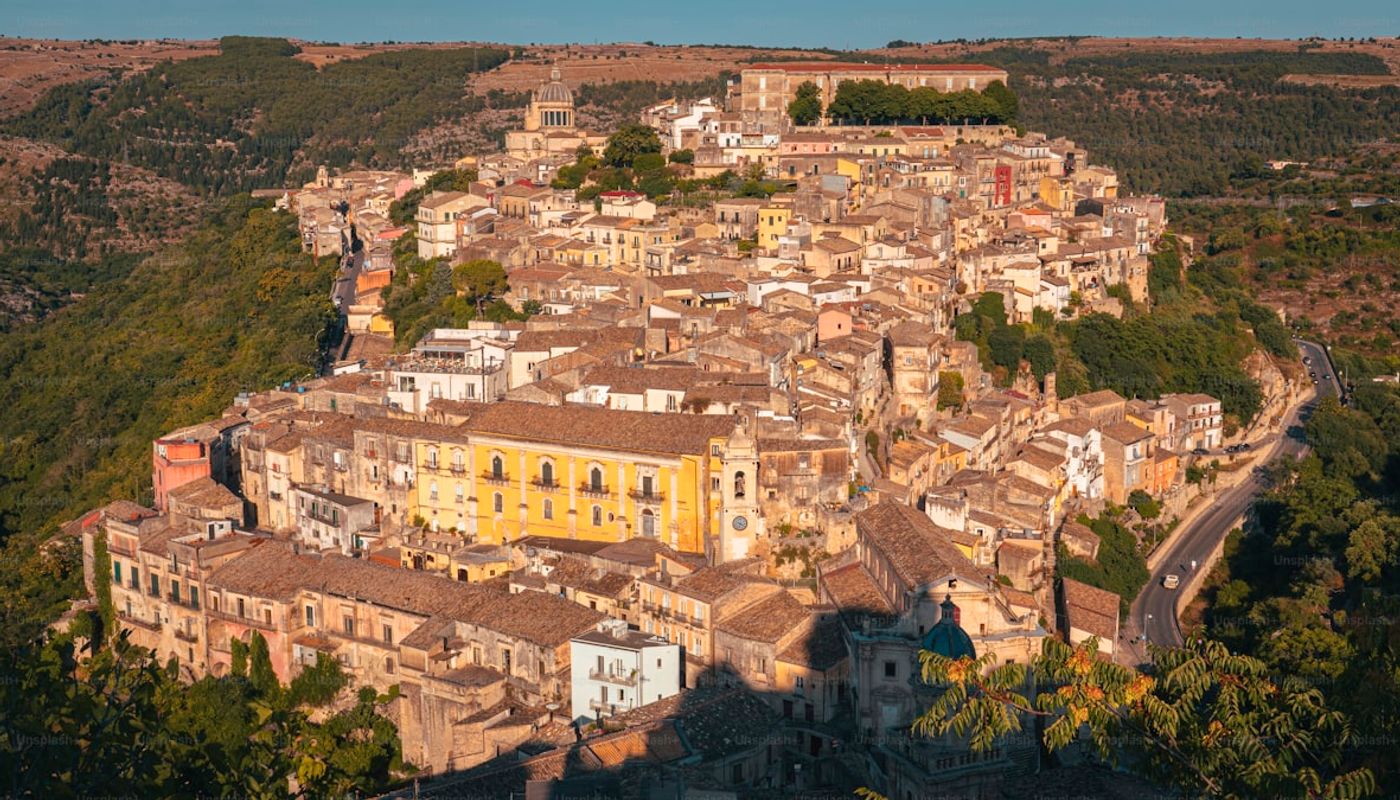
Foreign property owners in Sicily face the same national tax framework as any Italian property owner, but the local variations matter more than most guides acknowledge. IMU rates differ by comune, TARI waste charges swing wildly depending on where your property sits, and the rental income regime has changed significantly with the expansion of the cedolare secca rules and the introduction of the CIN system. Here is how the numbers actually work.
IMU: The Annual Property Tax
IMU (Imposta Municipale Unica) is Italy's primary annual property tax, reformed under L. 160/2019, Article 1, commi 738-783. The national framework sets a base rate of 0.76% of the property's rendita catastale (cadastral income) as revalued by standard multipliers, but each comune can adjust this within a range of 0.46% to 1.06%.
The practical impact of this municipal discretion is significant. Palermo's standard IMU rate for seconda casa properties sits at 1.06%, the national maximum. Catania applies 1.06% as well. Smaller comuni in the Ragusa province or the Madonie mountains may set lower rates, sometimes as low as 0.76%, to attract investment. Always check the specific delibera comunale for your property's location on the comune's website or through the MEF's IMU database.
The critical exemption: prima casa properties (your primary residence) are exempt from IMU, provided the property is not classified as luxury (categories A/1, A/8, or A/9). For most foreign owners who use their Sicilian property as a holiday home or rental, this exemption does not apply. You will pay IMU annually, with payments due in two installments: the acconto by June 16 and the saldo by December 16.
The calculation starts with the rendita catastale shown on your visura catastale, revalued by 5%, then multiplied by the coefficient for the property category (160 for standard residential, category A, excluding A/10). The IMU rate is applied to this figure, not to the market value. Since cadastral values in Sicily tend to be substantially below market values, the effective tax burden is lower than the rate percentages suggest.
Cedolare Secca: Flat Tax on Rental Income
The cedolare secca is an optional flat-rate tax on rental income, established by D.Lgs. 23/2011. It replaces IRPEF (progressive income tax), registration tax, and stamp duty on the lease. For landlords, it simplifies everything.
For long-term residential leases (contratti a canone libero), the cedolare secca rate is 21%. For leases under the canone concordato scheme (agreed-rate contracts in high-demand municipalities), the rate drops to 10%.
Short-term rentals (locazioni brevi, defined as stays of 30 days or fewer) are where the rules changed in 2024. The cedolare secca rate for short-term rentals remains 21% for income from the first property rented short-term. From the second property onward, the rate increases to 26%, as amended by the Legge di Bilancio 2024 (L. 213/2023, Art. 1, comma 63). This change was designed to discourage portfolio investors from converting large numbers of residential units into tourist rentals.
Opting for the cedolare secca requires a specific election made when registering the lease contract or, for short-term rentals, when filing your annual tax return (Modello Redditi PF). Non-resident foreign owners can use the cedolare secca. The election is made on a per-property, per-contract basis.
Platforms like Airbnb and Booking.com are required to withhold 21% of the rental income at source and remit it to the Agenzia delle Entrate. This withholding functions as a credit against your cedolare secca liability. If your actual rate is 26% (second property onward), you pay the 5% difference when filing.
The CIN System: Mandatory Registration for Short-Term Rentals
The Codice Identificativo Nazionale (CIN) is now mandatory for all short-term rental properties in Italy, enacted through D.L. 145/2023 and converted into law as L. 191/2023. The CIN replaced the patchwork of regional identification codes that previously existed.
Every property offered for short-term rental must have a CIN, obtained through the Banca Dati Strutture Ricettive (BDSR) portal. The CIN must be displayed on all online listings, on the property's exterior, and on any advertising material. Operating without a CIN triggers fines of 800 to 8,000 euros, with higher penalties for repeat violations.
The application requires details about the property, its owner, the type of rental activity, and confirmation that the property meets safety requirements including working fire extinguishers, carbon monoxide detectors, and compliance with gas and electrical safety standards. For properties in condominiums, you may also need to confirm that the condominium regulations do not prohibit short-term rental activity.
Foreign owners should note that CIN registration requires a valid codice fiscale and, in practice, an Italian PEC (posta elettronica certificata) email address or SPID digital identity. Many foreign owners delegate this process to their commercialista (accountant) or property manager.
Verifying a property's CIN status and rental compliance history is one area where transparency tools like Bektu can add value, particularly for buyers evaluating investment properties that are already operating as short-term rentals.
TARI: The Waste Tax Nobody Talks About
TARI (Tassa sui Rifiuti) is the municipal waste collection tax, and its variation across Sicilian comuni is remarkable. Rates are set locally based on the comune's waste management costs, property size, and occupant number. A 100-square-meter apartment might generate an annual TARI bill of 250 euros in one comune and 500 euros in another.
For properties used as short-term rentals, some comuni apply a higher TARI classification than standard residential, reflecting the increased waste generation. Check with the Comune's Ufficio Tributi for the exact tariff applicable to your property category.
TARI is not optional and not subject to negotiation. Non-payment results in collection proceedings, and accumulated unpaid TARI becomes a lien against the property.
Capital Gains on Resale
If you sell a Sicilian property within five years of purchase, the gain is subject to capital gains tax. Under Article 67 of the TUIR (DPR 917/1986), you can choose between including the gain in your regular IRPEF income (taxed at progressive rates up to 43%) or paying a flat substitute tax of 26%.
The 26% flat rate, applied at the notaio at the time of sale, is the simpler option and usually the better one for foreign owners who may not have other Italian income to offset. After five years, capital gains on residential property sales are not taxed at all, provided the property was not acquired through inheritance or donation within the prior five years.
Renovation costs documented with proper invoices (fatture) can be added to your acquisition cost, reducing the taxable gain. Keep every invoice.
US Owners: FBAR and FATCA Obligations
American citizens and green card holders who own property in Sicily and maintain Italian bank accounts face additional US reporting requirements that have nothing to do with Italian tax law.
The FBAR (Foreign Bank Account Report, FinCEN Form 114) must be filed annually if the aggregate value of all foreign financial accounts exceeds $10,000 at any point during the calendar year. This includes Italian bank accounts used to receive rental income or pay property expenses. The filing deadline is April 15, with an automatic extension to October 15. Penalties for non-filing are severe: up to $12,500 per violation for non-willful failures, and substantially more for willful violations.
FATCA reporting under Form 8938 applies to specified foreign financial assets exceeding $50,000 on the last day of the tax year (or $75,000 at any point), with higher thresholds for married filing jointly and for taxpayers living abroad. Form 8938 is filed with your annual federal tax return.
Italian property itself is not a reportable asset under FBAR or FATCA (real estate is excluded), but the bank accounts you use to manage it absolutely are. US owners should also be aware that rental income from Italian property must be reported on their US tax return, with credits available for Italian taxes paid under the US-Italy tax treaty to avoid double taxation.
The interaction between Italian and US tax obligations is complex enough that both a commercialista in Italy and a US tax professional with international experience are necessary, not optional.
Sign up to read the rest
Create a free account to keep reading. It only takes a minute.
Considering a developer you read about here?
You cannot walk the land from another country. But you can verify the developer. Bektu contacts them on your behalf and sends you a scored report. They never see who asked.
Search and verify any developerMore from Bektu


Stay a step ahead of the wire transfer
Get the occasional note from Bektu on verifying developers before you commit. No noise, just what matters.
We will never share your email. You can opt out at any time.