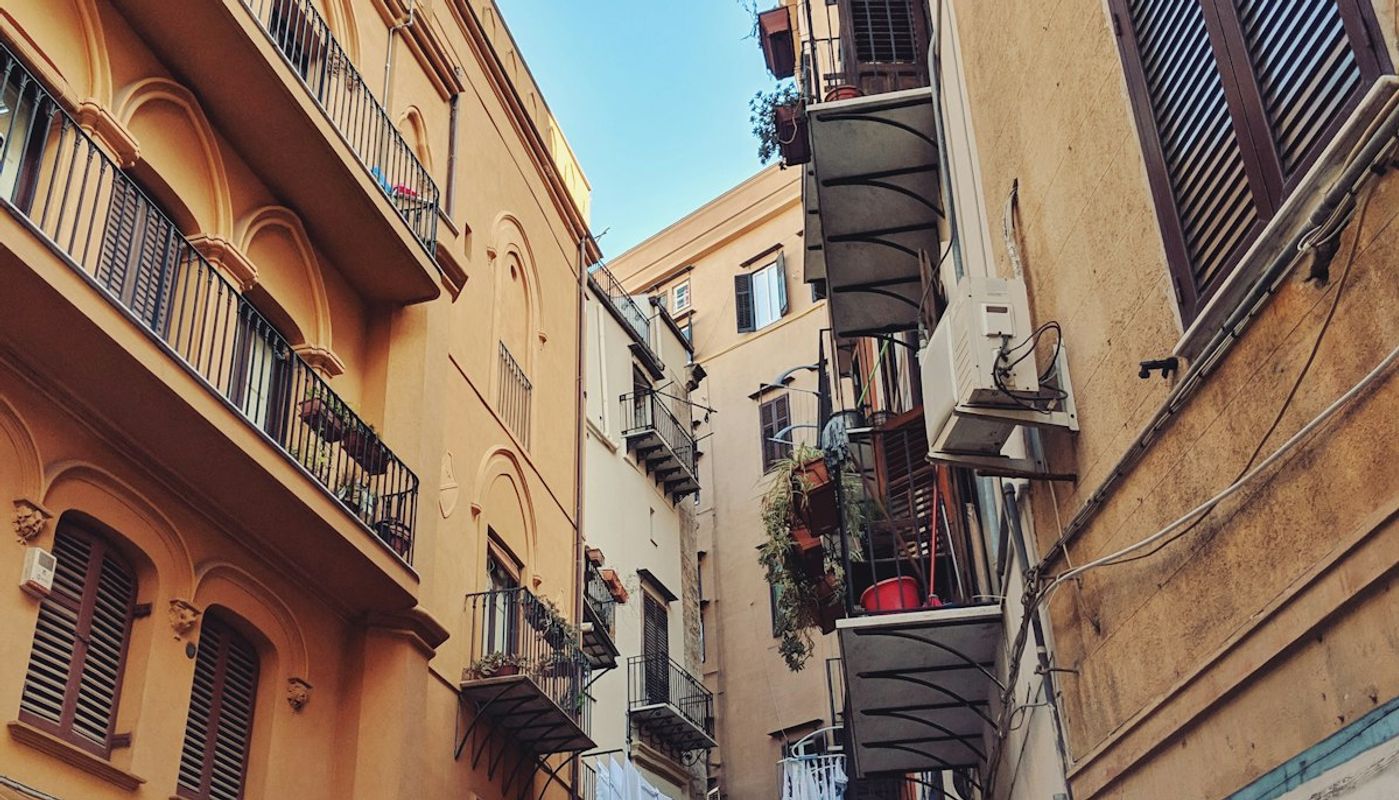
Can Foreigners Buy Property in Sicily? The 2026 Legal Guide
Can Foreigners Buy Property in Sicily? The 2026 Legal Guide
Yes. Foreigners can buy property in Sicily with the same ownership rights as Italian citizens. There is no special permit, no residency requirement, and no restriction on the type of property you can purchase. Sicily follows the same national Italian law as every other region. But the island has its own practical complications that make the buying process rougher than it would be in, say, Lombardy or Tuscany. This guide covers the law, the process, and the Sicilian-specific pitfalls that catch foreign buyers off guard.
The Legal Foundation: Full Ownership Rights
Foreign property ownership in Italy is governed by Article 16 of the Disposizioni Preliminari al Codice Civile (Preliminary Provisions to the Civil Code), which establishes the principio di reciprocita (reciprocity principle). Under this rule, foreign citizens can enjoy the same civil rights as Italians, including the right to own real property, provided that Italian citizens enjoy equivalent rights in the foreigner's home country.
In practice, this means citizens of the United States, United Kingdom, Canada, Australia, and virtually all EU and OECD countries have unrestricted property ownership rights in Italy. The Italian Ministry of Foreign Affairs maintains the list of countries with confirmed reciprocity. If you hold a passport from any major Western nation, this is not an obstacle. You can read the full text of the Disposizioni Preliminari through the Normattiva legal database.
There is no distinction between mainland Italy and Sicily on this point. The Regione Siciliana has a special statute of autonomy (Statuto della Regione Siciliana), which gives it greater legislative independence than ordinary Italian regions, but property law, civil law, and real estate transactions fall under national jurisdiction. The rules are identical whether you buy an apartment in Palermo or a villa in Positano.
The Codice Fiscale: Your First Step
Before you can do anything in Italy, including opening a bank account, signing a property contract, or paying taxes, you need a codice fiscale. This is a tax identification number issued by the Agenzia delle Entrate (Revenue Agency). Foreign citizens can obtain one at any Agenzia delle Entrate office in Italy or through an Italian consulate abroad.
The process is straightforward. You present your passport, fill out a form, and receive your codice fiscale on the spot. It costs nothing. The Agenzia delle Entrate website provides details on required documents. Without this number, no property transaction can proceed.
The Purchase Process: Proposta, Compromesso, Rogito
Italian property purchases follow a three-stage process, and Sicily is no exception.
The proposta d'acquisto (purchase offer) is a written offer submitted by the buyer, usually accompanied by a small deposit held by the real estate agent. If the seller accepts, this becomes a binding preliminary agreement.
The compromesso (preliminary contract), formally called the contratto preliminare di compravendita, is the detailed agreement signed by both parties. It specifies the price, the timeline, and the conditions of sale. A deposit called the caparra confirmatoria is paid at this stage, typically 10% to 20% of the purchase price. Under Article 1385 of the Codice Civile, if the buyer withdraws, they lose the caparra. If the seller withdraws, they must return double the caparra. The compromesso should be registered with the Agenzia delle Entrate within 20 days and transcribed at the Conservatoria dei Registri Immobiliari (land registry) for maximum legal protection.
The rogito (final deed), formally the atto di compravendita, is signed before a notaio (notary public). The notaio is a public official who verifies the legal status of the property, ensures all taxes are paid, and registers the transfer of ownership. The notaio is not your lawyer. They are a neutral party required by law. You should still engage an independent avvocato (lawyer) to review everything, especially in Sicily.
Taxes on Purchase
The tax regime depends on whether you are buying from a private individual or from a company (such as a developer), and whether the property will be your prima casa (primary residence) or seconda casa (second home).
For purchases from private sellers, the imposta di registro (registration tax) is the main cost. Under D.P.R. 131/1986, the rate is 2% of the valore catastale (cadastral value) for a prima casa, or 9% for a seconda casa. The cadastral value is almost always significantly lower than the actual purchase price, so taxes are calculated on a favorable basis. Fixed fees of 50 euros each apply for the imposta ipotecaria (mortgage tax) and imposta catastale (cadastral tax) on prima casa purchases.
For purchases from developers (subject to IVA/VAT), the structure is different: 4% IVA for prima casa, 10% for seconda casa, calculated on the actual sale price rather than the cadastral value. This can be substantially more expensive.
To qualify for prima casa rates, you must establish residency in the comune where the property is located within 18 months of purchase. This is feasible for many foreign buyers but requires genuine intent to reside, not just a postal address.
Sicily's Specific Complications: Abusivismo Edilizio
Here is where Sicily diverges from the textbook Italian property purchase. The island has one of the highest rates of abusivismo edilizio (unauthorized construction) in Italy. This means buildings, extensions, modifications, and sometimes entire structures that were built without proper planning permission.
Under the Testo Unico Edilizia (D.P.R. 380/2001), any construction without the required permesso di costruire or other authorization is illegal, and properties with unresolved abusivismo cannot legally be sold. In practice, Italy has addressed this problem through three rounds of condono edilizio (building amnesties) that allowed owners to retroactively legalize unauthorized construction by paying fees and submitting documentation.
The three condoni were established under L. 47/1985 (the first condono), L. 724/1994 (the second condono), and L. 326/2003 (the third condono). Many Sicilian properties have condono applications that were filed years or even decades ago but never fully processed. These pending sanatorie (legalization applications) create a gray zone. The property is not fully legal, but the owner has taken steps toward legalization.
For foreign buyers, this is the single biggest risk in the Sicilian market. You must verify the urbanistic conformity of any property before purchase. This means comparing the actual physical structure against the records held at the Comune's ufficio tecnico (technical office) and the planimetria catastale (cadastral floor plan) at the Catasto. If there are discrepancies, you need to understand whether they are covered by a completed condono, a pending sanatoria, or neither. Your notaio is required by law to include a declaration of urbanistic conformity in the rogito, but you should not rely solely on the seller's declaration. Engage a geometra (surveyor) or an architect to physically inspect the property and compare it against the records.
Tools like Bektu help surface property documentation and flag potential irregularities before you get deep into negotiations, which is particularly valuable in a market where paperwork does not always match reality.
The Catasto and Conservatoria: Sicily's Land Registry
Italy has a dual system of property records. The Catasto (cadastral registry, managed by the Agenzia delle Entrate) contains maps, floor plans, and fiscal valuations. The Conservatoria dei Registri Immobiliari (land registry, now called Ufficio di Pubblicita Immobiliare) records ownership, mortgages, liens, and legal encumbrances.
In northern Italy, these systems are generally well-maintained and digitized. In Sicily, particularly in smaller comuni and rural areas, the records can be incomplete, outdated, or inconsistent. It is not unusual to find properties where the catasto records do not match the conservatoria records, or where the recorded boundaries do not match the actual physical boundaries.
A visura catastale (cadastral search) and a visura ipotecaria (mortgage/lien search) are essential before any purchase. Your notaio will conduct these, but you can also request them independently through the Agenzia delle Entrate's online services.
Practical Considerations
Open an Italian bank account before you start the purchase process. The notaio will typically require payment via bonifico bancario (bank transfer) from an Italian account, particularly for larger amounts. Anti-money laundering regulations under D.Lgs. 231/2007 mean that cash transactions above certain thresholds are prohibited, and banks will need to verify the source of funds.
Consider appointing a local representative with a procura (power of attorney) if you cannot be in Sicily for every step of the process. The procura must be notarized and, if executed abroad, apostilled under the Hague Convention.
Finally, factor in the ongoing costs. IMU (Imposta Municipale Unica) is the annual property tax, and rates vary by comune. TARI is the waste collection tax. If you rent the property, you will owe income tax on rental earnings, either under the ordinary IRPEF regime or the cedolare secca flat tax of 21% (26% for short-term rentals from the second property onward, as updated by the 2024 Budget Law).
Sicily is not harder to buy in than the rest of Italy from a legal standpoint. It is harder from a practical standpoint, because the gap between what the law says and what actually happens on the ground is wider here than in most Italian regions. Go in with your eyes open, hire independent professionals, and verify everything twice.
Sign up to read the rest
Create a free account to keep reading. It only takes a minute.
Considering a developer you read about here?
You cannot walk the land from another country. But you can verify the developer. Bektu contacts them on your behalf and sends you a scored report. They never see who asked.
Search and verify any developerMore from Bektu

Stay a step ahead of the wire transfer
Get the occasional note from Bektu on verifying developers before you commit. No noise, just what matters.
We will never share your email. You can opt out at any time.