Residential Development in Berawa: The Bali Sub-Zone Where Foreign Money Is Actually Going in 2026
Residential Development in Berawa: The Bali Sub-Zone Where Foreign Money Is Actually Going in 2026
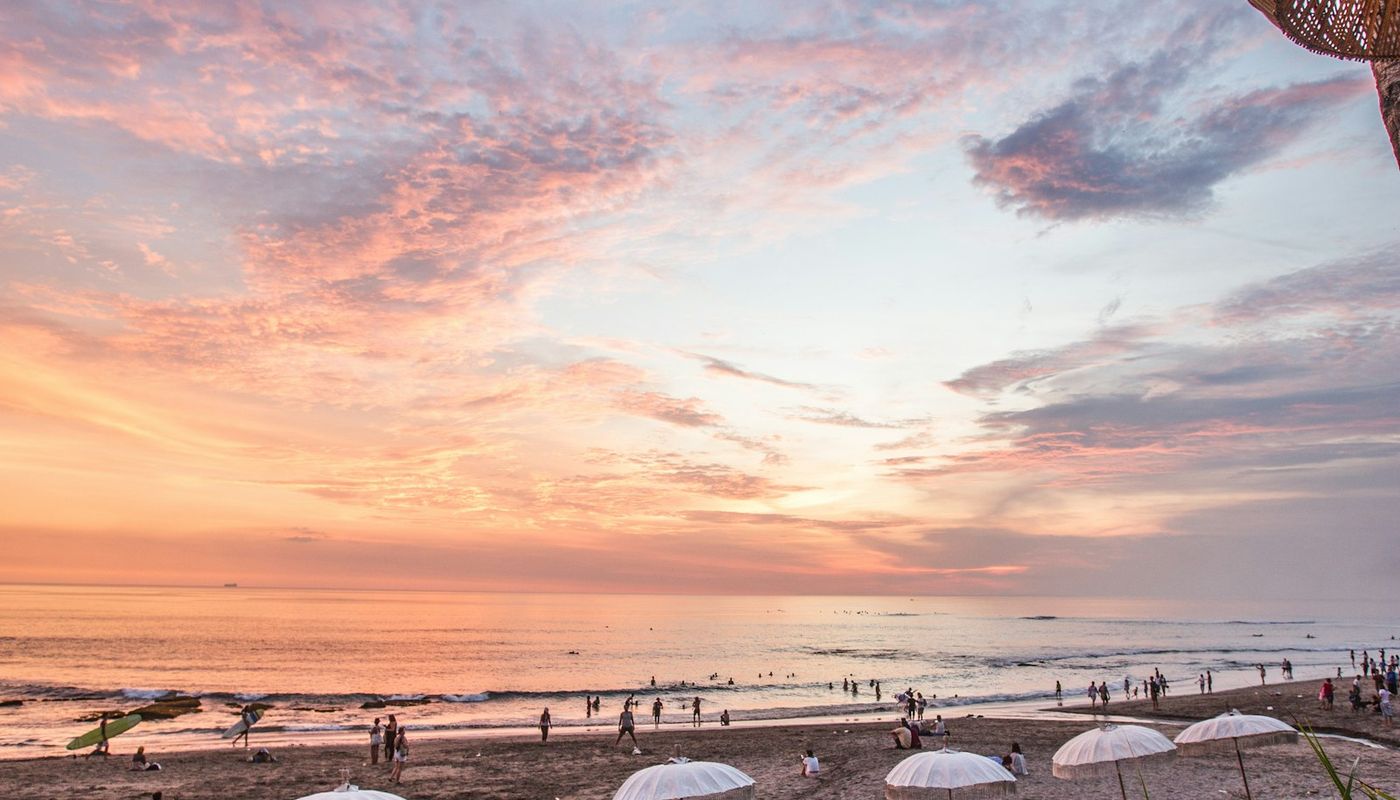
Residential development in Berawa is the most concentrated foreign-investor segment in Bali right now. The sub-zone sits between Canggu and Seminyak on the south-west coast, anchored by Finns Beach Club, La Brisa, and a dense corridor of restaurants and retail along Jalan Pantai Berawa. Gross villa yields in core Berawa run in the 9.5 to 13.8 percent range in 2026 according to multiple independent market trackers, with the best-managed projects pushing higher in peak season. That yield band, combined with the area's lifestyle visibility, is what has made Berawa the default destination for the current wave of foreign capital into Bali.
The headline residential delivery in 2026 is Magnum Residence Berawa, the four-storey luxury apartment complex completing in Q1 2026, featuring what the developer claims will be the world's longest rooftop pool at 190 metres. The project is located approximately 500 metres from the beach, near the Tamora Square lifestyle centre, with one-bedroom units priced from USD 340,000 to USD 470,000 and two-bedroom units from USD 640,000 to USD 900,000. That is the upper end of the Berawa price ladder and a useful reference point for the segment as a whole.
But Berawa is not Magnum Residence. Berawa is dozens of overlapping micro-projects, mid-tier developer compounds, and individual custom villas being built simultaneously in a sub-zone that is, by Bali standards, already overdeveloped and under-permitted.
What "Residential Development in Berawa" Actually Means
Foreign buyers searching for residential development in Berawa typically encounter four product types, and the relevant verification differs for each:
The branded luxury apartment complex (Magnum Residence Berawa and similar). These projects involve named developers with project websites, defined unit pricing, and structured payment plans. The buyer is typically purchasing under a leasehold or HGB (Hak Guna Bangunan) structure with a 25 to 30 year term, with extension options, attached to a PT PMA or PT entity holding the underlying land title.
The boutique villa compound (10-30 units, often built by a mid-tier Russian, Ukrainian, or Australian developer marketing primarily to its own diaspora). Pricing is typically USD 200,000 to USD 600,000 per unit, with ROI marketing in the 15-20 percent gross range and actual net yields materially lower. These projects are where most foreign capital is concentrated and also where most boutique-developer collapses occur.
The custom freehold-equivalent villa (a foreign buyer commissioning a custom build on land held under leasehold or via PT PMA). This is the most flexible structure for the buyer but also the highest-friction, requiring the buyer to manage land acquisition, design, construction, and operation as separate workstreams.
The off-plan house in a small developer subdivision (often marketed at the lower end of the foreign-buyer market, USD 150,000 to USD 300,000). The risk profile is the highest of the four categories because the developer's balance sheet is the weakest and the recourse if the project stalls is the most limited.
Why Berawa Has the Yields It Has
Berawa's rental yields are driven by three things: high tourist density, the concentration of branded lifestyle venues (Finns, La Brisa, Atlas, Cafe Organic), and proximity to international schools (Australian Independent School, Canggu Community School) that anchor a year-round expat resident base alongside the seasonal tourist flow. The result is high mid-week occupancy in addition to peak weekend and holiday occupancy, which is what separates Berawa from sub-zones that depend purely on tourist seasonality.
The structural risk is that Berawa is at a development saturation point. Traffic on Jalan Pantai Berawa during high season is now reliably bad, drainage infrastructure has not kept pace with the build-out, and the Pondok Wisata licensing situation has tightened significantly. Bali Province issued a series of enforcement actions through 2024 and 2025 against unlicensed short-let operations, particularly in Canggu and Berawa, and the trend is firmly toward stricter compliance.
For a foreign investor, that means two things. First, the yield premium that Berawa currently commands may compress as new supply continues to deliver and as licensing enforcement reduces the effective short-let inventory in non-compliant projects. Second, the projects that hold their yields will be the ones with proper Pondok Wisata licences and a competent management company actually operating the units.
The Document Chain on a Berawa Apartment or Villa
For any Berawa residential purchase, the verification chain is:
The Sertifikat (BPN-issued land title certificate) held by the land-holding entity, with a fresh BPN search confirming no encumbrances and clean chain of transfer. Foreign buyers should commission this search through their own notary, not the developer's.
The PBG (Persetujuan Bangunan Gedung) for the building, replacing the old IMB regime under Government Regulation No. 16 of 2021. Without PBG, the building is unauthorised.
The Pondok Wisata licence under Bali Regional Regulation No. 5 of 2008 if the unit will be operated as short-term tourist rental. Without Pondok Wisata, the rental projection is illegal and unenforceable.
The lease deed (Akta Sewa) or HGB sale deed (Akta Jual Beli), notarised before a licensed PPAT, with the buyer's name, lease term, and unit identification clearly stated.
The Tax NPWP (Nomor Pokok Wajib Pajak) registration for the foreign owner, required to report rental income under Indonesian Income Tax Law. The flat 10 percent rate applies to gross rental income for foreign owners; failure to register and report exposes the owner to penalties and complicates future capital repatriation.
A platform like Bektu was designed for exactly this verification step, allowing foreign buyers to evaluate Berawa developers against their actual delivery histories before committing capital.
The Honest Read
Residential development in Berawa in 2026 represents one of the highest-concentration foreign-investor markets in Southeast Asia. The combination of yield, lifestyle, and brand visibility is real. The risks are structural, not promotional. Supply continues to deliver, infrastructure is strained, licensing enforcement is tightening, and the boutique-developer collapse risk is non-trivial.
For a foreign investor with the documentary discipline to verify title, building approval, short-let licence, and developer track record, Berawa is a workable market with sustainable returns in the 6 to 9 percent net range for well-structured projects. For an investor relying on Instagram renderings, marketing-deck ROIs, and informal payment arrangements, Berawa is exactly the market where deposits disappear.
The sub-zone is not the problem. The verification standard the buyer applies is.
Sources
- Magnum Residence Berawa official project page
- Magnum Estate company overview
- Bali Home Immo: Where foreign investors are buying villas in Bali in 2026
- Prestige Property Bali: Best areas to invest in Bali 2026
- Basic Agrarian Law No. 5 of 1960 (Indonesia)
- Government Regulation No. 16 of 2021 (PBG replacing IMB)
Sign up to read the rest
Create a free account to keep reading. It only takes a minute.
Developers referenced
- Magnum Estate Canggu, Indonesia
Thinking about Magnum Estate?
You cannot walk the land from another country. But you can verify the developer. Bektu contacts them on your behalf and sends you a scored report. They never see who asked.
Verify Magnum Estate anonymouslyMore from Bektu
Stay a step ahead of the wire transfer
Get the occasional note from Bektu on verifying developers before you commit. No noise, just what matters.
We will never share your email. You can opt out at any time.