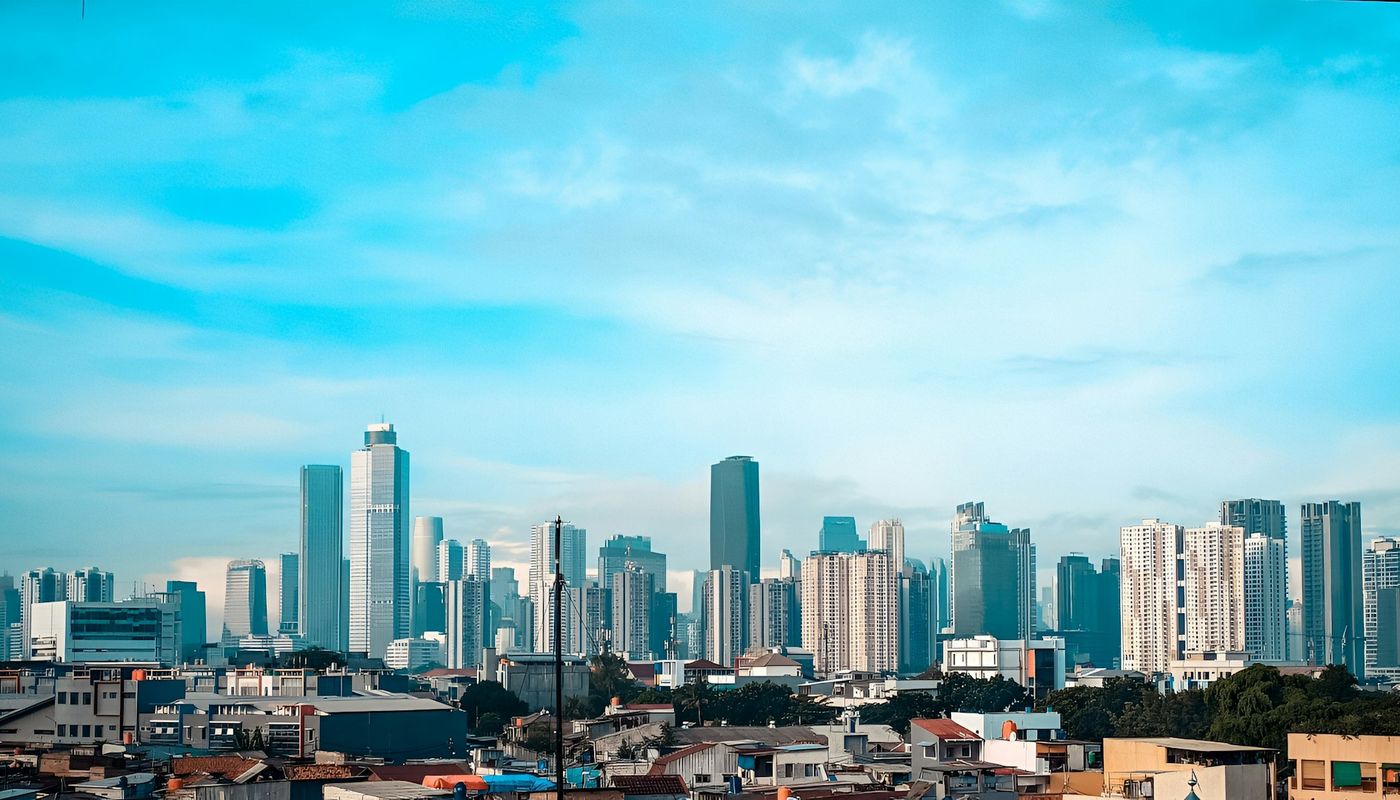
Bali vs Jakarta vs Lombok: Where Foreign Property Buyers Are Looking in 2026
Bali, Jakarta, and Lombok are three different markets with three different theses. Bali sells lifestyle and rental yield to an international buyer pool that is now mature and competitive. Jakarta sells corporate housing and infrastructure-linked yield to a domestic market that is still the largest in Southeast Asia. Lombok sells early-stage growth to buyers comfortable with execution risk and a thinner exit. Picking between them is not a question of which market is best, it is a question of what kind of return you are underwriting.
Bali: matured premium with compressed yields
Median villa sale prices in Bali sat at around USD 299,000 in Q3 2025 and held flat into 2026. That is the headline number. Underneath it, the market has split. Canggu, the area that drove the post-pandemic boom, is now showing signs of oversupply. Rental yields that hit 18 to 22 percent in 2022 have compressed to 10 to 15 percent for well-located new builds, and lower for tired stock in saturated micro-locations.
Australians are still the largest foreign buyer group at roughly 29 percent of villa transactions, followed by Indonesians from Jakarta at 21 percent, Europeans at 20 percent, Americans at 15 percent, and a Korean and Chinese segment around 8 percent combined. The buyer base is broad enough that price discovery is reasonably honest, but the implication for new buyers is that the easy money is gone. A villa in Berawa or Pererenan in 2026 needs to compete with several hundred similar units on Airbnb and direct booking platforms.
Ubud and Uluwatu have held up better than Canggu because supply is more constrained, but both have seen pricing run ahead of fundamentals in spots. Sanur and the east coast (Sidemen, Karangasem) are the quieter end of the market with lower entry prices and lower yields, suitable for buyers who want personal use with some rental offset rather than yield as the primary thesis.
The provincial minimum price for foreign Hak Pakai property in Badung Regency is IDR 5 billion (roughly USD 320,000) for apartments. Most foreign buyers use either leasehold (typically 25 to 30 years) or PT PMA depending on whether the property will be rented commercially.
Jakarta: yield play, domestic market
Jakarta is the largest housing market in Southeast Asia and operates on different fundamentals than Bali. Foreign buyers are a small minority. Demand is driven by domestic income growth, infrastructure, and the slow shift of corporate housing toward transit-oriented developments along the MRT and LRT lines.
Apartment rental yields in Jakarta range from 3.9 percent at the low end to over 13 percent for specific micro-locations, with the city average sitting around 11 percent. South Jakarta TOD properties near MRT stations (Tebet, Cipete, Fatmawati) have delivered 6 to 8 percent net yields with reasonable capital appreciation. Central business district stock in SCBD and Mega Kuningan is more variable, with luxury supply outstripping demand at the top end.
The Indonesian property price index has tracked at low single-digit nominal growth for the last several years, and Jakarta has not been an exception. Buyers who underwrite Jakarta should expect yield, not capital gains, as the primary return driver. The structural argument for Jakarta is that the city's middle class is still expanding, the metro network is still being built out, and the supply pipeline is reasonably disciplined.
Foreign buyers in Jakarta typically use the same structures as in Bali (Hak Pakai for personal use, PT PMA for rental businesses), but the price thresholds are different. The minimum price for foreign Hak Pakai apartments in DKI Jakarta is IDR 5 billion, the same as Badung. Below that threshold, foreigners cannot directly own apartment units.
Lombok: early-stage growth, real execution risk
Lombok is roughly where Bali was in 2010. Land prices in South Lombok (Kuta, Selong Belanak, Tanjung Aan) sit at IDR 250 to 450 million per are (about USD 17,000 to 31,000), a fraction of equivalent Bali land. Multiple market forecasts put 15 to 20 percent annual price growth in beachfront and hilltop areas through 2026, anchored by Mandalika circuit traffic, the international airport expansion, and government-backed infrastructure spend.
The risk is execution. Infrastructure projects have repeatedly slipped schedules. Water and electricity availability varies by parcel. Title disputes are more common than in Bali because adat (customary) land has been more aggressively converted to certified land in the last decade and not all conversions are clean. Liquidity is thin: a Lombok villa can take 12 to 24 months to sell at the asking price, against 3 to 9 months in Bali.
The buyers who do well in Lombok are typically operators who develop or substantially renovate, hold for 5 to 7 years, and have a clear thesis about which micro-location is on the next wave of infrastructure. Buying turnkey product at retail prices in Lombok in 2026 looks more like a personal lifestyle bet than an investment.
Yields, entry price, and time horizon
A useful comparison table for a foreign buyer thinking through where to deploy:
Bali (Canggu, Uluwatu, Berawa) — entry USD 300K to 800K for a turnkey villa, gross yields 10 to 15 percent on well-located new build, holding period 5 to 10 years, liquidity moderate.
Jakarta (South Jakarta TOD, BSD City) — entry USD 150K to 500K for a quality apartment, gross yields 6 to 11 percent, holding period 7 to 15 years for yield compounding, liquidity good in mid-market segment.
Lombok (South Lombok beachfront and hill plots) — entry USD 80K to 300K for land plus build, gross yields 6 to 12 percent if you can fill rental demand, holding period 5 to 10 years, liquidity poor.
Verifying developers and delivery
The single biggest risk across all three markets is developer delivery. Indonesia does not have a centralized escrow system for off-plan property, and pre-construction payments commonly run 30 to 50 percent before any concrete is poured. Failed projects, especially in Bali and Lombok, have left foreign buyers with deposits they cannot recover.
Checking a developer's previous projects, their NIB and tax compliance, and whether prior buyers actually received titles on the original schedule is the most important due diligence step. Bektu compiles delivery history and reported issues across Indonesian developers, which helps separate operators with a track record from those marketing aggressively on their first project.
Sources
- Bali Real Estate Market 2026 — InvestlandBali
- Lombok vs Bali Property Investment 2026 — Kinnara
- Indonesia Residential Property Market Analysis 2026 — Global Property Guide
- Bali vs Lombok Property Investment 2026 — Nour Estates
- Government Regulation No. 18 of 2021 on Land Rights
- Indonesia Property Market Outlook 2026 — Esales Overseas Property
Sign up to read the rest
Create a free account to keep reading. It only takes a minute.
Considering a developer you read about here?
You cannot walk the land from another country. But you can verify the developer. Bektu contacts them on your behalf and sends you a scored report. They never see who asked.
Search and verify any developerMore from Bektu


Stay a step ahead of the wire transfer
Get the occasional note from Bektu on verifying developers before you commit. No noise, just what matters.
We will never share your email. You can opt out at any time.