Manila vs Cebu vs Davao: Foreign Buyer Property Markets in 2026
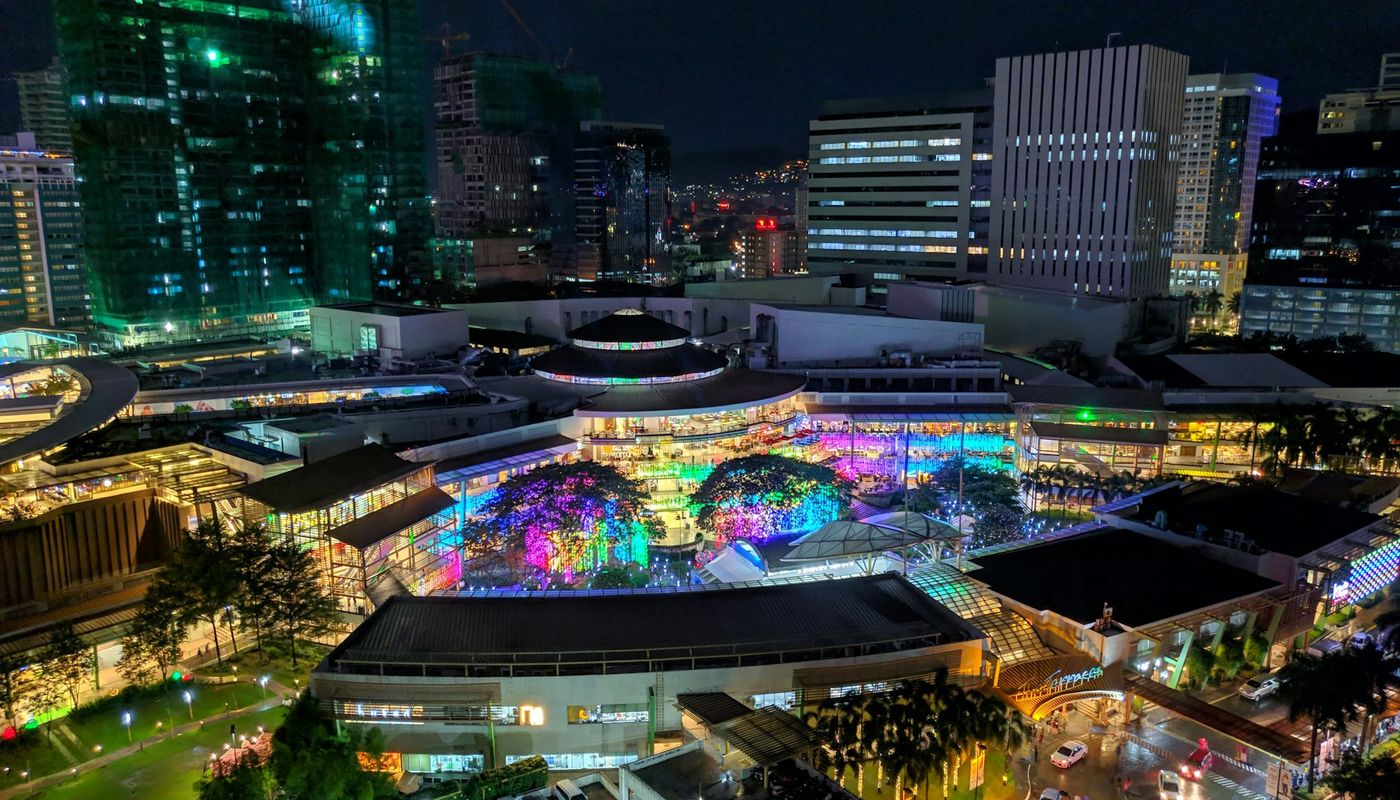
Three cities define foreign condo buying in the Philippines. Metro Manila is the established market with the highest prices, the deepest secondary market, and the lowest projected appreciation. Cebu is the secondary city that has consistently outperformed Metro Manila on yield, with a substantial expat and BPO-driven rental base. Davao is the third tier: cheap, growing, and structurally underpriced relative to its population and infrastructure, but with the thinnest foreign buyer pool and the least liquid exit.
Metro Manila: established and slowing
Condo prices in Metro Manila range from roughly PHP 100,000 to PHP 350,000 per square meter at retail. Makati CBD sits at the top, with Ayala Center stock averaging around PHP 380,000 per sqm in 2026 and luxury units exceeding PHP 400,000 per sqm. BGC averages closer to PHP 275,000 per sqm. A typical studio (22 to 28 sqm) in either district runs PHP 4.4 million to PHP 9.8 million. A one-bedroom (30 to 40 sqm) sits in the PHP 6 million to PHP 14 million range. At the top, three-bedroom units in Park Avenue, Park Terraces, or Grand Hyatt Residences regularly clear PHP 50 million.
Gross rental yields on Metro Manila condos average 4 to 6 percent in established CBDs and 6 to 8 percent in select TOD developments. The premium districts are over-supplied at the top end, and luxury rents have not kept pace with construction. The mid-market segment (PHP 6 million to PHP 12 million units in BGC, Ortigas, Rockwell, Eastwood) has held up better. Forecasts for 2026 put Metro Manila condo price growth flat to low single digits, with the strongest performance in TOD-adjacent stock connected to the Metro Manila Subway and MRT-7 lines.
The 40 percent foreign ownership cap under RA 4726 hits popular Makati and BGC projects early. Foreign buyers competing for a specific unit in a high-demand tower commonly find the foreign allocation already exhausted, and the only viable foreign-allocated units are in secondary buildings or further from the core. New launches with explicit foreign allocations remain the cleanest path for international buyers.
The cap comes from Section 5 of RA 4726 and is measured against 40 percent of the project's units or floor area. Developers manage the allocation actively, and a foreign reservation taken late in pre-selling can be returned if the building fills its foreign share before your deed is registered, so get the current foreign percentage confirmed in writing before you pay anything.
Cebu: yield and operational depth
The average condo price in Cebu is about PHP 6.84 million (roughly USD 113,000), with a per-square-meter price of PHP 162,000 (about USD 2,700). That is roughly 40 percent below Metro Manila on a per-square-meter basis for comparable build quality. The Cebu pre-selling market is concentrated in the PHP 2.5 million to PHP 7 million segment, which captured nearly two-thirds of pre-sale take-up in 2025.
Cebu IT Park is the most consistent rental performer. The IT Park BPO ecosystem provides a stable mid-market rental demand for one- and two-bedroom units, with gross yields commonly reported at 7 to 9 percent for well-located new build. Lahug, Banawa, and Capitol Site sit a tier below on price and yield. Mactan beachfront, including Punta Engaño near the airport, has emerged as a separate market driven by Korean and Chinese second-home demand and short-term rental yields that approach Bali levels at much lower entry prices.
The 40 percent cap applies project by project. IT Park and Ayala Center towers have hit the cap relatively quickly in 2024 and 2025 launches. Mactan projects typically have more foreign allocation remaining. Cebu price forecasts for 2026 point to 5 to 7 percent appreciation in provincial growth corridors, putting Cebu above Metro Manila on expected capital gains as well as yield.
Davao: cheap, growing, illiquid
Davao City condos averaged around PHP 185,000 per sqm in 2026, with the premium Lanang corridor (Azuela Cove, Davao Park District) commanding PHP 9 million to PHP 45 million for higher-end units. The rest of the market is significantly cheaper: a typical one-bedroom in Davao's mid-market sits PHP 3 million to PHP 5 million. House and lot product, which a foreigner cannot buy outright, dominates Davao's overall residential market at about PHP 60,000 per sqm, roughly one-third of condo per-sqm pricing.
The Davao thesis is structural undervaluation. The metro area has 1.8 million people, an airport on a multi-stage expansion, deep agricultural and logistics linkages to Mindanao and beyond, and a steadily growing service economy. Condo supply is small relative to population. The risk is exit: the foreign buyer pool is thin, the resale market is dominated by domestic buyers, and selling a Davao condo can take 6 to 12 months at market price.
The 40 percent foreign cap rarely binds in Davao because foreign demand is low. That is good for entry but bad for exit. Davao is most suitable for buyers who plan personal use, retirement, or long-term holding rather than yield optimization or capital gains arbitrage.
Two further constraints shape Davao beyond price. International connectivity is thin, with a single direct international route as of 2026 and most journeys routing through Manila or Cebu. And the developer roster is narrow: Cebu Landmasters, Ayala Land, Vista Land and Damosa Land account for most of the foreign-accessible condo product, which makes comparable stock harder to find when you want to benchmark a price or resell.
Mortgage and financing for foreigners
Foreign mortgages on Philippine condos are available from major local banks (BDO, BPI, Metrobank, Security Bank) and from a handful of international banks with Philippine presence. Rates ranged 7 to 10 percent in early 2026. Documented income (typically two to three years of tax returns or audited financials), a 20 to 40 percent down payment, and proof of legal residency or permanent address are standard requirements. Loan terms run up to 20 years for residential stock. Foreign income is acceptable but increases scrutiny on documentation.
Pre-selling units are commonly purchased on the developer's own installment terms, which avoids bank financing but pushes risk onto the buyer for delivery and title issuance.
Verifying the developer
The Philippine condo market has a strong pre-selling culture: 30 to 50 percent of payments are made before turnover, with the balance financed on bank or developer terms. The largest risk to a foreign buyer is that the developer either delivers late or does not deliver at all, or delivers the unit but cannot produce a Condominium Certificate of Title because the master title is encumbered.
The DHSUD License to Sell is a baseline check but only confirms the developer is authorized to pre-sell. The harder check is delivery history: how many projects has the developer completed, how often did they turn over on schedule, and how reliably did the CCTs get issued in buyers' names. Bektu compiles delivery and title issuance records for Philippine developers, which is the kind of information a sales agent will not volunteer on a unit they are trying to close.
Closing costs and title timelines
Buyer-side closing costs land at roughly 4 to 6 percent of price in all three cities. Documentary stamp tax is 1.5 percent of the higher of zonal value or selling price, transfer tax is 0.5 to 0.75 percent depending on the local government unit, and registration fees run about 0.25 percent, with notary, broker and miscellaneous items adding 1 to 2 percent. Capital gains tax of 6 percent is legally the seller's obligation, but contract language in a Contract to Sell sometimes shifts it to the buyer, so read that clause specifically. Annual real property tax (amilyar) runs 1 to 2 percent of assessed value, which sits well below market value.
Title issuance timelines differ by city and belong in the plan. CCTs from the Manila and Quezon City Registries of Deeds typically issue three to five months after full payment, Cebu runs five to nine months, and Davao six to twelve months or longer.
Where the markets actually fit
Metro Manila is appropriate for buyers prioritizing established market liquidity and brand-name developers, who can absorb 4 to 6 percent gross yields and bet on modest capital appreciation. Cebu suits buyers who want stronger yield (7 to 9 percent in IT Park, higher on Mactan short-term rentals) and faster appreciation, with the trade-off of a less deep secondary market than Manila. Davao is for buyers with long horizons, personal use intent, or a structural bet on Mindanao's growth, accepting that exit will be slow.
Sources
- Property Prices Philippines 2026 — Realty One Group
- Cebu Condo Market 2026 — Rumavi
- Manila Condo Prices Update 2026 — Bamboo Routes
- Davao City Housing Prices 2026 — Bamboo Routes
- Philippines Residential Property Market Analysis 2026 — Global Property Guide
Sign up to read the rest
Create a free account to keep reading. It only takes a minute.
Considering a developer you read about here?
You cannot walk the land from another country. But you can verify the developer. Bektu contacts them on your behalf and sends you a scored report. They never see who asked.
Search and verify any developerMore from Bektu

Stay a step ahead of the wire transfer
Get the occasional note from Bektu on verifying developers before you commit. No noise, just what matters.
We will never share your email. You can opt out at any time.