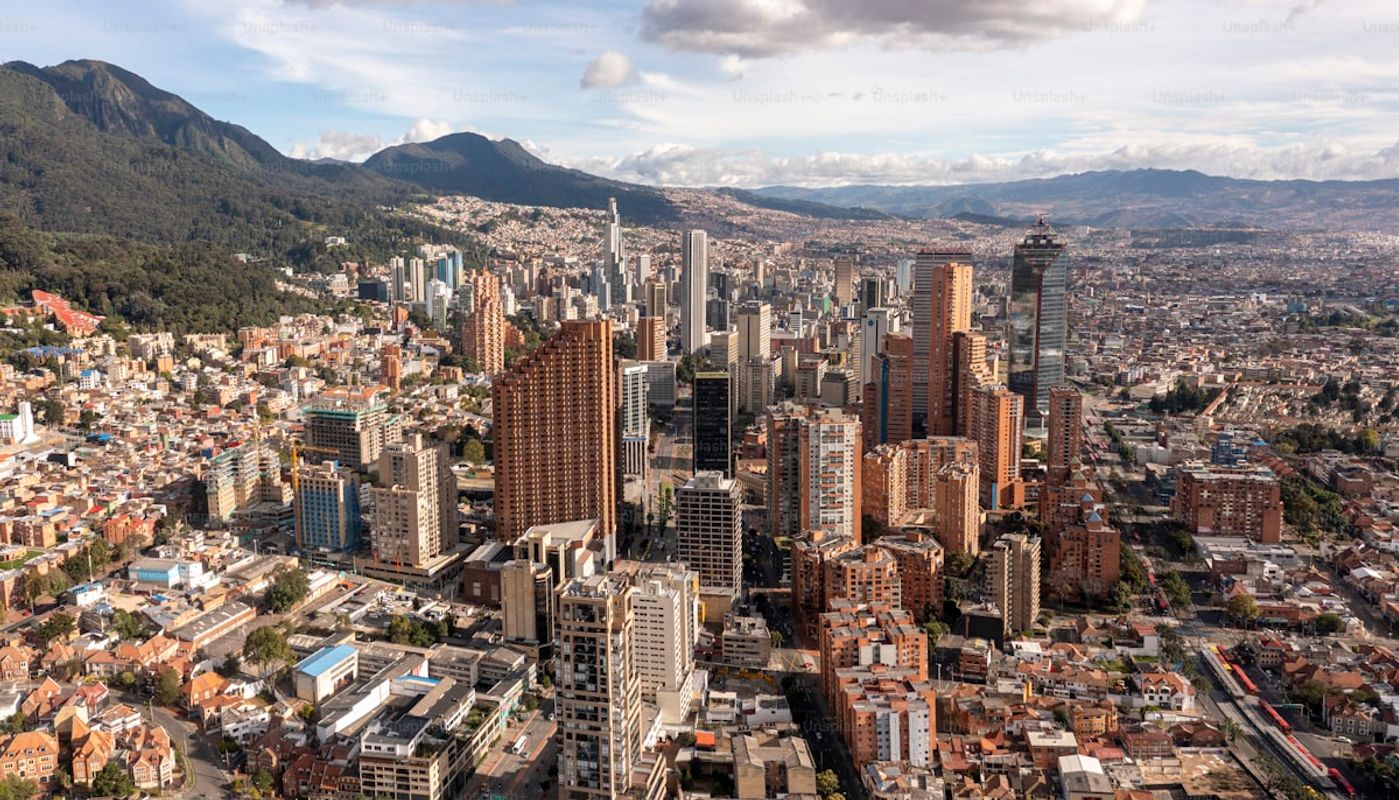
Buying Property in Colombia as a Foreigner in 2026: Rights, Registration, and What to Watch
Buying Property in Colombia as a Foreigner in 2026: Rights, Registration, and What to Watch
Foreigners can buy property in Colombia on the same legal footing as Colombian citizens. That is the headline answer, and it is one of the most permissive frameworks in Latin America. The legal basis is Article 100 of the 1991 Constitution, which guarantees foreigners the same civil rights as nationals. Restrictions exist only for land in border zones, certain rural areas, and a narrow set of national security categories.
For most buyers looking at an apartment in Medellín, a beachfront unit in Cartagena, or a house in Bogotá, the rules are simpler than in almost any neighboring country. The procedural step that foreign buyers most often miss is the Banco de la República foreign exchange registration, which has long-term consequences for capital repatriation and visa applications.
The constitutional and legal framework
Article 100 of the 1991 Constitution states that foreigners enjoy the same civil rights granted to Colombian nationals. This includes the right to own real property, mortgage it, lease it, sell it, and pass it through inheritance. There is no requirement for a Colombian partner, no special government approval, and no minimum holding period.
The exceptions are specific:
Border zones. Decree 2324 of 1984 and subsequent legislation restrict foreign ownership of land within designated coastal and frontier zones for national security reasons. The restrictions apply to rural land and are most relevant for buyers looking at properties along the Caribbean and Pacific coasts outside established urban areas, the Venezuelan and Ecuadorian land borders, and certain island territories. Urban apartments and houses inside established municipalities are not restricted.
Rural land caps and restitution areas. Law 160 of 1994 limits the size of rural parcels (Unidad Agrícola Familiar) and properties subject to the Victims and Land Restitution Law (Law 1448 of 2011) can carry titling complications. These mostly affect large agricultural acquisitions, not residential buyers.
Indigenous reserves and collective territories. Land titled as indigenous resguardos or Afro-Colombian collective territories cannot be sold to foreigners or anyone else outside the community under Law 70 of 1993 and related legislation.
For the typical foreign residential buyer, none of these restrictions is operative.
The Banco de la República registration
This is the procedural step that determines whether a foreign buyer can later move sale proceeds out of Colombia at the official exchange rate. Resolution 1 of 2018 of the Banco de la República (which replaced the prior Resolution 8 of 2000 framework) requires foreign investment in real estate to be registered as an inbound foreign exchange transaction.
The mechanics:
The inbound funds must be channeled through a Colombian bank or authorized foreign exchange intermediary using Declaration Form 4 (the foreign investment declaration form). The form records the investor's identity, the source country of the funds, the destination of the investment, and the amount in pesos at the day's official exchange rate.
The registered amount becomes the basis for future repatriation. When the property is sold, the seller can move out of Colombia, at the prevailing market rate, the registered principal plus the realized capital gain, after Colombian withholding tax. Funds that arrived without a Form 4 registration are stuck in the parallel exchange channel, which carries higher costs and limits.
The form filing is the foreign buyer's responsibility. Lawyers and notaries handling the purchase generally know the framework, but the actual filing has to happen at the receiving Colombian bank when the funds land. Buyers who wire pesos in or use third-party accounts often discover the registration gap months later when they try to repatriate.
The purchase process
Title transfer in Colombia is a public deed (escritura pública) executed before a notary public, followed by registration at the Oficina de Registro de Instrumentos Públicos. The standard timeline from offer to registered title is four to eight weeks. The buyer typically pays the notary fees (about 0.27 percent of the price), the registration fees (about 1.67 percent), and the beneficiación tax in some municipalities.
Before signing, the buyer should obtain a Certificado de Tradición y Libertad from the registry office. This is the equivalent of a title search and lists all liens, mortgages, prior owners over the past 30 years, and any litigation affecting the property. A clean certificate from the date of signing is essential, and any encumbrances should be cleared before transfer.
For new construction, the developer's track record is the key risk variable. Pre-construction sales in Medellín's El Poblado and Laureles, Cartagena's Bocagrande and Castillogrande, and Bogotá's Chicó and Rosales are common entry points for foreign buyers, with project delivery typically 18 to 36 months from purchase. Bektu maintains developer profiles across Latin America, useful when committing to an off-plan project where prior delivery history is the best predictor of completion risk.
Tax exposure for foreign owners
Foreign owners pay the same property tax (impuesto predial) as Colombian owners, assessed annually by the municipality. Rental income from Colombian property is Colombian-source income subject to withholding tax under the Tax Statute (Estatuto Tributario), regardless of where the landlord lives. The standard withholding rate on rental income paid to non-residents is 35 percent on net income or 26 percent on gross income, depending on the tax treaty position.
Capital gains tax on the sale of property held for more than two years is 15 percent. Property held for less than two years is taxed at ordinary income rates. The cost basis is the original purchase price adjusted for inflation indices published by DIAN (the Colombian tax authority).
Treaty positions for U.S., Spanish, Mexican, and Canadian investors can reduce some withholding rates. A local tax advisor is worth the fee.
The bottom line
Colombia is one of the cleanest foreign ownership frameworks in the region. Buy through a notary, register the inbound funds with the Banco de la República using Form 4, and stay clear of restricted border zones and indigenous territories. The rest is a standard real estate transaction.
For related reading on regional rules, see Bektu's coverage of property developers in Mexico for foreign buyers in 2026 and the Guide to Foreign Real Estate Investment in Asia for cross-region comparison.
Sources
- Political Constitution of Colombia (1991), Article 100
- Resolution 1 of 2018, Banco de la República (Foreign Exchange Regime)
- Law 160 of 1994 (Agrarian Reform Law)
- Law 70 of 1993 (Afro-Colombian Communities)
- Law 1448 of 2011 (Victims and Land Restitution Law)
Sign up to read the rest
Create a free account to keep reading. It only takes a minute.
Considering a developer you read about here?
You cannot walk the land from another country. But you can verify the developer. Bektu contacts them on your behalf and sends you a scored report. They never see who asked.
Search and verify any developerMore from Bektu
Stay a step ahead of the wire transfer
Get the occasional note from Bektu on verifying developers before you commit. No noise, just what matters.
We will never share your email. You can opt out at any time.