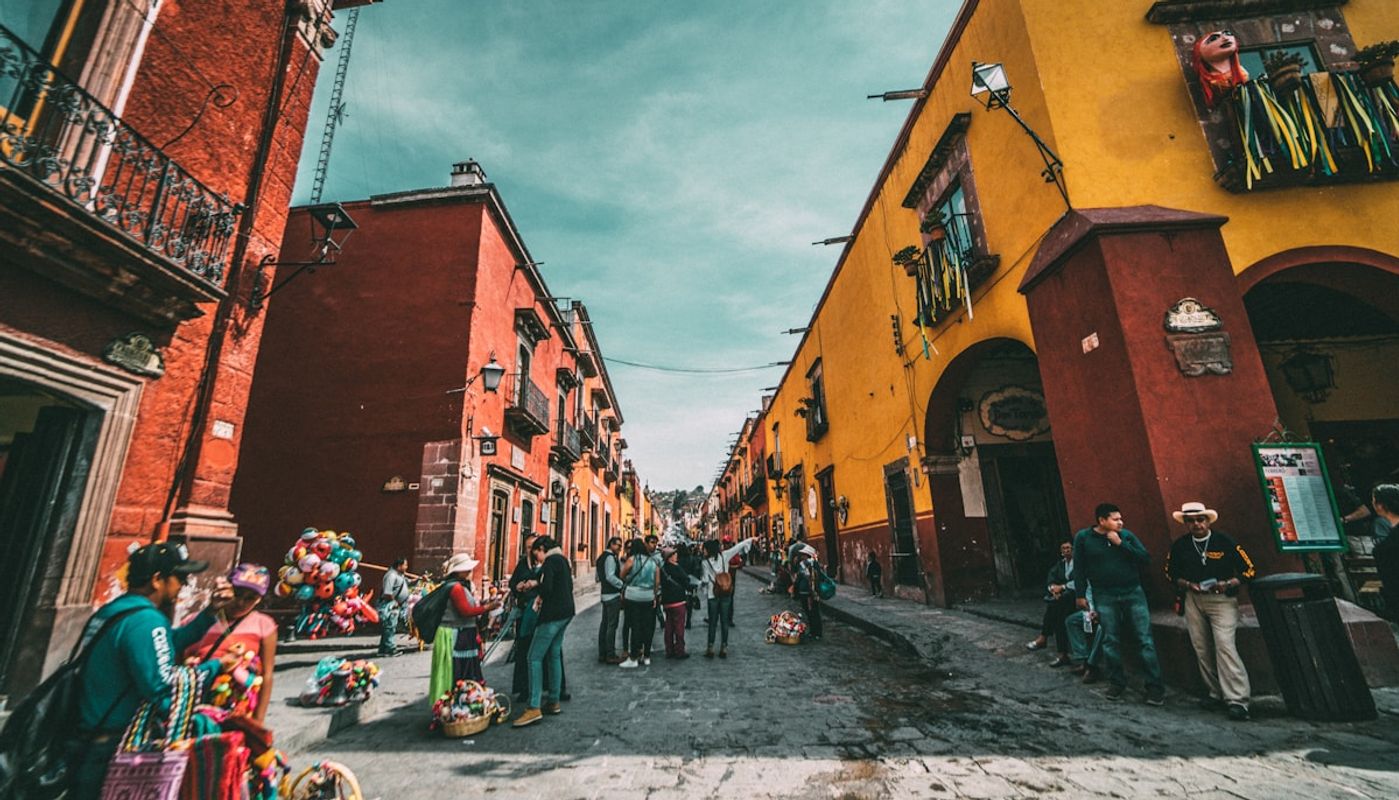
Tulum vs Playa del Carmen vs CDMX vs Puerto Vallarta: Where Foreign Investors Are Buying 2026
Four Markets, Four Stories
Mexico's property market for foreign investors is concentrated in four distinct markets, each with different fundamentals, risks, and buyer profiles. This comparison draws on federal and state-level transaction data and on-the-ground market conditions.
Tulum: The Speculative Frontier
Tulum has been the fastest-growing real estate market in Mexico over the past five years. What was a backpacker village 15 years ago now hosts hundreds of condo developments, boutique hotels, and villa projects.
Prices (2026)
Tulum town and beach road: $2,500-5,000/sqm for new construction condos. Aldea Zama (the planned development zone): $2,000-3,500/sqm. Region 15 and outskirts: $1,200-2,000/sqm. Beachfront: $4,000-8,000/sqm (limited availability).
Rental Yields
Tulum's rental yields are among the highest in Mexico for short-term rentals: 8-12% gross for well-managed properties on platforms. However, these yields are highly seasonal (December-April peak, significant drop-off May-November) and depend heavily on professional management.
Occupancy is the number to test against a developer's pro forma. Actual annual occupancy in Tulum averages 55 to 65 percent, against the 75 to 85 percent most sales projections assume. Nightly rates have softened as supply flooded the market, and operating costs (management, cleaning, platform commissions, utilities) run higher than in other Mexican markets because of the infrastructure constraints below.
Infrastructure Concerns
Tulum's rapid growth has outpaced infrastructure. Water supply is a serious issue; many developments rely on pozos (wells) and water trucks. The electrical grid is strained. Sewer systems are inadequate in many areas, with developments using septic systems that risk contaminating the local cenote and aquifer system.
The Tren Maya (Maya Train) station in Tulum, which opened in late 2023, has improved connectivity but also increased development pressure. The new Tulum International Airport (opened 2024) has added direct international flights.
Zoning enforcement in Tulum has been inconsistent. Some developments have been built without proper municipal permits or in violation of environmental regulations (particularly SEMARNAT regulations protecting the coastal mangrove zone under the General Law of Ecological Balance and Environmental Protection, LGEEPA).
SEMARNAT, the federal Secretariat of Environment and Natural Resources (gob.mx/semarnat), has stepped up enforcement along the Tulum corridor, and several projects have been hit with stop-work orders for environmental violations. A stop-work order on a pre-construction project you have already paid into is the risk that matters here.
Who Buys in Tulum
Speculative investors seeking capital appreciation and short-term rental income. North American digital nomads and lifestyle buyers. The risk profile is higher than other Mexican markets due to infrastructure and regulatory uncertainty.
Playa del Carmen: The Mature Riviera Maya Market
Playa del Carmen is Tulum's more established neighbor, with better infrastructure, a larger permanent population, and a more predictable investment environment.
Playa del Carmen sits 60 kilometers north of Tulum and carries a year-round resident population of roughly 350,000, which is the structural reason its rental market is less hostage to the tourist season.
Prices (2026)
Centro (5th Avenue area): $2,000-4,000/sqm. Playacar (gated community): $2,500-4,500/sqm. North of town (Colosio, CTM): $1,500-2,500/sqm. Beachfront: $3,500-7,000/sqm.
Rental Yields
Gross yields of 6-9% for short-term rentals. Less seasonal than Tulum due to a larger year-round tourism market and growing expat community. The Cancun International Airport (45 minutes away) provides strong airlift.
Quintana Roo has been tightening vacation rental rules across the Riviera Maya, and the requirements apply in Tulum as well as Playa del Carmen. Operators must register with the state tourism authority (qroo.gob.mx) and the local municipality, obtain a constancia de clasificacion, and meet safety and accessibility standards. Enforcement has been uneven so far but is moving toward stricter compliance.
Infrastructure
Significantly better than Tulum. Municipal water supply, reliable electricity, paved roads, established hospital and school facilities. The city has been a functioning urban center for over 30 years.
Who Buys in Playa del Carmen
Investors seeking more predictable returns with lower risk than Tulum. Retirees and lifestyle buyers. Canadian and American buyers dominate, with growing European interest.
CDMX (Mexico City): The Capital Play
Mexico City is Latin America's largest metropolitan area (population approximately 22 million). The property market is the deepest and most liquid in Mexico, driven by domestic demand rather than foreign tourism.
Prices (2026)
Condesa and Roma (the expat neighborhoods): $3,000-5,500/sqm. Polanco (the upscale district): $4,000-7,000/sqm. Coyoacan and San Angel: $2,500-4,500/sqm. Santa Fe (the business district): $2,000-3,500/sqm. Centro Historico (downtown): $1,500-3,000/sqm.
Emerging colonias including Juarez, San Rafael, and Napoles run $2,000-3,500/sqm with improving infrastructure and rising demand.
Rental Yields
Long-term residential yields: 4-6%. Short-term rental yields: 6-8% in Condesa/Roma and Centro Historico. Mexico City has implemented short-term rental regulations, and some colonias (neighborhoods) have introduced restrictions.
The restrictions are borough-level. The Cuauhtemoc borough government (alcaldiacuauhtemoc.mx), which covers Roma, Condesa, and Juarez, has imposed registration requirements on short-term rentals and taken enforcement action against unlicensed operators. Individual buildings have also amended their condominium bylaws to restrict or ban short-term letting, so check the reglamento before buying for that strategy.
Key Advantage
CDMX is outside the restricted zone, so foreigners can purchase directly without a fideicomiso. This saves the annual trust fee and simplifies the transaction.
The saving is real money: annual bank trust fees on a coastal fideicomiso run roughly $500 to $1,500 USD per year, every year of ownership.
Who Buys in CDMX
Sophisticated investors seeking capital appreciation in a deep market. Remote workers attracted to the cultural scene. The market is less dependent on tourism and more correlated with Mexico's overall economic growth.
Puerto Vallarta: The Pacific Coast Veteran
Puerto Vallarta and its northern extension, Riviera Nayarit (Nuevo Vallarta, Bucerias, Sayulita, Punta de Mita), form Mexico's second-largest resort market after the Riviera Maya.
Prices (2026)
Puerto Vallarta Romantic Zone: $2,500-4,500/sqm. Marina Vallarta: $2,000-3,500/sqm. Nuevo Vallarta: $1,800-3,000/sqm. Sayulita: $2,500-4,500/sqm. Punta de Mita: $4,000-8,000/sqm.
Rental Yields
Gross yields of 5-8% for short-term rentals. The season runs November-April (high) with a smaller summer bump (July-August). Year-round occupancy is lower than the Riviera Maya.
The snowbird market is what smooths the season. Canadian and American retirees rent for three to six months at a time, giving Puerto Vallarta owners predictable mid-term income rather than a pure short-stay strategy. The Jalisco state government (jalisco.gob.mx) has not imposed the short-term rental restrictions now in force in Quintana Roo and Mexico City.
Infrastructure
Well-established. The international airport handles direct flights from major North American cities. Municipal services are reliable. Healthcare facilities are good (Puerto Vallarta is a medical tourism destination).
Who Buys in Puerto Vallarta
North American retirees (largest buyer group), Canadians seeking winter homes, LGBTQ+ community (Puerto Vallarta has Mexico's most established LGBTQ+ community). The buyer profile skews older and more conservative than Tulum or CDMX.
Comparative Table
| Factor | Tulum | Playa del Carmen | CDMX | Puerto Vallarta |
|--------|-------|-------------------|------|-----------------|
| Avg price/sqm | $1,200-8,000 | $1,500-7,000 | $1,500-7,000 | $1,800-8,000 |
| Gross yield | 8-12% | 6-9% | 4-8% | 5-8% |
| Fideicomiso needed | Yes | Yes | No | Yes |
| Infrastructure | Weak | Good | Excellent | Good |
| Seasonality | High | Medium | Low | Medium |
| Risk level | Higher | Medium | Lower | Lower |
Legal Note
All coastal properties (Tulum, Playa del Carmen, Puerto Vallarta) require a fideicomiso under Article 27 of the Constitution. CDMX properties can be purchased directly. In all cases, the purchase is formalized through a notario publico and registered in the Registro Publico de la Propiedad.
For updated market comparisons across Mexican cities, Bektu provides data at https://bektu.com.
Sources
- Mexican Constitution Article 27: https://www.diputados.gob.mx/LeyesBiblio/pdf/CPEUM.pdf
- LGEEPA: https://www.diputados.gob.mx/LeyesBiblio/pdf/148.pdf
- INEGI Housing Data: https://www.inegi.org.mx
Sign up to read the rest
Create a free account to keep reading. It only takes a minute.
Considering a developer you read about here?
You cannot walk the land from another country. But you can verify the developer. Bektu contacts them on your behalf and sends you a scored report. They never see who asked.
Search and verify any developerMore from Bektu
Stay a step ahead of the wire transfer
Get the occasional note from Bektu on verifying developers before you commit. No noise, just what matters.
We will never share your email. You can opt out at any time.