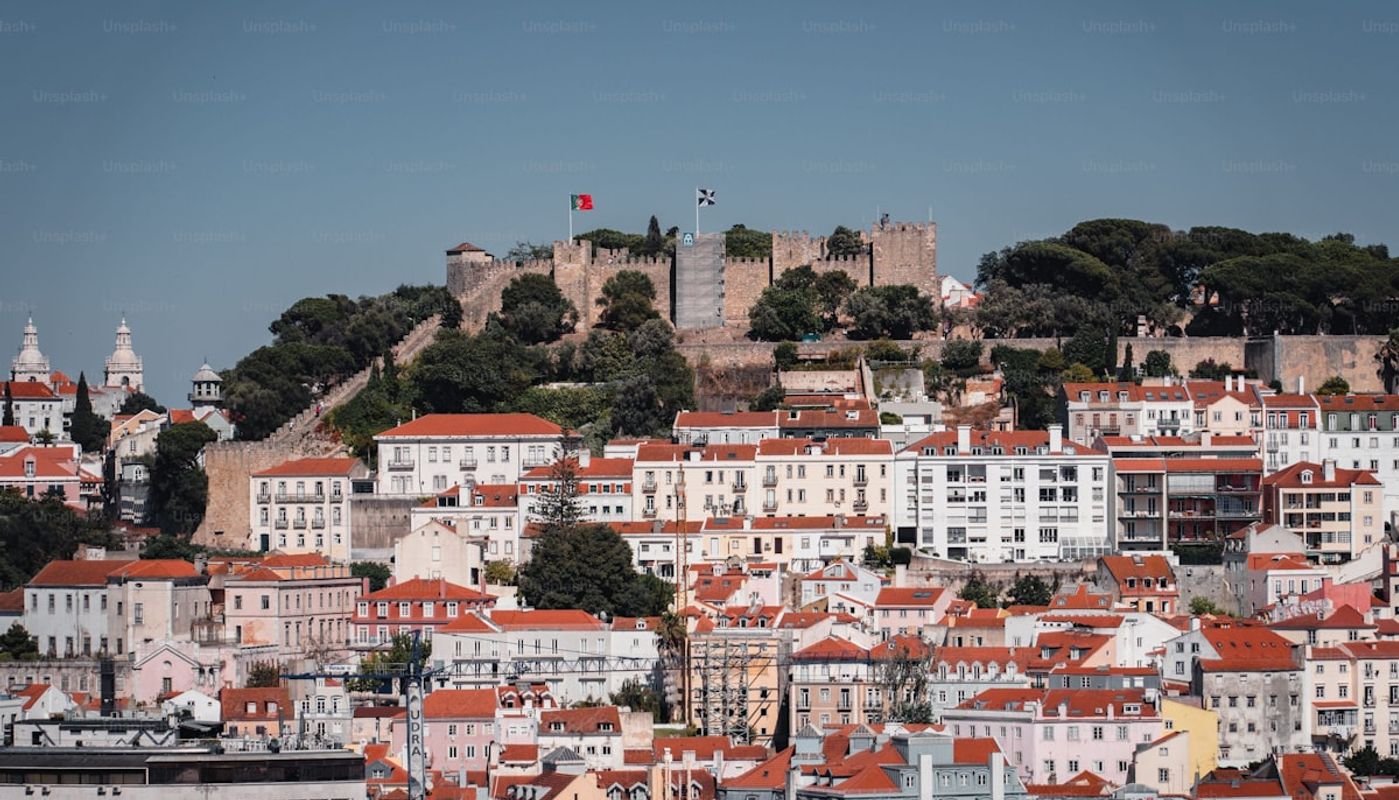
Lisbon vs Porto vs Algarve vs Madeira: Where Foreign Buyers Should Look in Portugal in 2026
Foreign property prices in Portugal compressed into four regions: Lisbon, Porto, the Algarve, and Madeira. Each plays a different role in a foreign buyer's portfolio. Lisbon is the most expensive and most liquid. Porto offers the strongest yield among the major cities. The Algarve is the lifestyle and second home market. Madeira is the quiet alternative.
This is a comparison built on 2026 pricing, foreign buyer premiums, rental yields, and what each region actually offers to foreign buyers after the 2024 Golden Visa changes.
Median Prices Per Square Metre (2026)
Idealista's April 2026 data and Portuguese statistical office (INE) figures show the spread clearly:
- Greater Lisbon: €3,439/m² median, with central Lisbon at €4,875/m² and Cascais at €4,550/m²
- Algarve: €3,139/m² median, with Loulé at €3,993/m²
- Setúbal Peninsula: €2,596/m²
- Madeira: €2,500/m²
- Porto Metropolitan Area: €2,305/m²
Lisbon is roughly 50 percent more expensive than Porto on a per-square-metre basis. The Algarve sits between them. Madeira is the most affordable of the four major foreign-buyer destinations.
The Foreign Buyer Premium
Foreign buyers in Portugal consistently pay more than domestic buyers in the same areas. The premium reflects two things: foreign buyers concentrate in new builds and prime addresses, and they have higher purchasing power.
In Greater Lisbon, foreign-buyer median prices exceeded domestic-buyer prices by 49 percent. Lisbon recorded €4,813/m² for buyers with tax domicile in Portugal and €6,026/m² for buyers with tax domicile abroad.
In the Porto Metropolitan Area, the foreign-buyer premium was 35.6 percent.
Across the country, international buyers spent an average of €376,500 per home compared to €224,800 for domestic purchasers. This is a structural feature of the foreign-buyer segment, not a one-time anomaly.
The practical takeaway is that the median price you see in market reports often understates what foreigners are actually paying for the properties they typically want.
Lisbon: Liquidity, Capital Preservation, Lower Yield
Lisbon is the deepest property market in Portugal. Foreign buyers from the US, Brazil, France, the UK, and Germany dominate. The city benefits from a long-term structural tailwind: it ranks 8th worldwide for remote workers and is home to roughly 295,000 expats.
Yields are the lowest among the four regions. Gross rental yields in Lisbon run 3.8 to 4.7 percent for apartments, with studios in premium neighbourhoods reaching 5.7 percent. At a median €1,800 monthly rent and the May 2026 prices, gross yields hold around 4 percent.
Short-term rental yields are stronger at 5 to 8 percent gross, but Lisbon has tightened short-term rental licensing significantly since 2023. New Alojamento Local (AL) licences are no longer being granted in most central parishes. Properties with existing AL licences attached carry a meaningful premium because the licence is transferable.
The strongest yield neighbourhoods in 2026 are Arroios (5.2 percent gross for studios, 5.0 percent gross for one bedroom), and parts of Marvila, Olivais, and Penha de França where prices remain below central Lisbon but rental demand is consistent.
Neighbourhoods that have softened over the last 12 months include Belém, Santa Maria Maior, Misericórdia, Santo António, and Parque das Nações. Prices stayed high while rent growth cooled.
What Lisbon is for: capital preservation, prestige address, mid-to-long term hold strategies, buyers who value liquidity over yield. Less suited to yield-maximising strategies.
Porto: Strongest Yields Among Major Cities
Porto is the second largest property market in Portugal and offers the best yield among the major foreign-buyer destinations. The price floor sits roughly a third below Lisbon's, and the rental market is supported by a growing tech sector, student demand, and tourism.
Apartment yields run 5 to 7 percent gross, with smaller units in neighbourhoods like Bonfim achieving 6 percent or higher. City-centre yields average around 5.8 percent, while suburban areas reach 6.1 to 7.4 percent. Short-term rental yields run 6 to 10 percent gross in the historic centre.
The strongest neighbourhoods for foreign investment in 2026 include Bonfim (recently gentrified, strong yields, lower entry prices), Cedofeita (cultural centre, high rental demand), and Boavista (mature, more expensive, lower yield but more stable). Vila Nova de Gaia, across the river, offers significantly lower entry prices with stable demand from young professionals.
Porto's short-term rental licensing situation is similar to Lisbon's. AL licences in the historic centre are highly restricted, and existing licences trade at a premium with the property.
What Porto is for: yield-focused buyers, second home buyers who want the lifestyle without Lisbon prices, smaller-budget foreign investors. Less suited to buyers prioritising prestige liquidity at the very top end.
The Algarve: Second Home Market and Higher Hold Costs
The Algarve is the long-established foreign second home market in Portugal. UK, German, Dutch, Irish, and increasingly American and French buyers concentrate here.
Median prices are €3,139/m², but the central Algarve markets that attract most foreign demand sit significantly higher. Loulé runs €3,993/m² and Vilamoura, Quinta do Lago, and Vale do Lobo run €5,000 to €8,000/m² for prime stock.
Yields are seasonal and concentrated in short-term rentals. Long-term residential yields in the Algarve run 3 to 5 percent gross. Short-term rentals in beach areas can deliver 6 to 10 percent gross, but the season is concentrated in summer and shoulder months, with significant vacancy in winter.
The Algarve has been excluded from the Portugal Golden Visa property route since 2022, alongside Lisbon, Porto, and other coastal urban areas. Only certain interior parts of the Algarve qualify as low-density areas. For most foreign buyers, the Algarve is now a lifestyle market rather than a residency-tied investment market.
What the Algarve is for: second home buyers, lifestyle buyers, retirees, and short-term rental investors who understand the seasonal cash flow pattern. Not suited to buyers who want a residency pathway through property or to buyers expecting urban-market liquidity.
Madeira: Quiet Alternative
Madeira is the quietest of the four major foreign-buyer markets. Funchal and the surrounding coast attract a smaller but loyal foreign buyer base, with strong representation from German, British, Scandinavian, and increasingly remote-working buyers.
Median prices are €2,500/m², the lowest of the four major regions. Funchal city centre prices run higher, particularly for sea-view stock, but the average remains well below Lisbon and the Algarve.
Yields run 3 to 5 percent gross for long-term and 5 to 8 percent for short-term rentals, with strong winter demand from the European retiree and remote worker segments.
Madeira was excluded from the Portugal Golden Visa property route from 2022 alongside the other major markets. Property purchases in Madeira are no longer eligible for residency through the Golden Visa, though foreign buyers can still purchase and hold property freely.
Madeira has a separate International Business Centre (IBC) corporate tax regime that benefits some foreign buyers and remote workers, particularly for property held through corporate structures.
What Madeira is for: quiet long-term holds, remote-worker primary residences, lifestyle buyers who value lower density. Limited as an active investment market.
Side-by-Side Snapshot
| Region | Median Price/m² | Foreign Buyer Premium | Long-Term Yield | Short-Term Yield | Golden Visa? |
|---|---|---|---|---|---|
| Lisbon | €3,439 (centre €4,875) | 49% | 3.8-4.7% | 5-8% | No |
| Porto | €2,305 | 35.6% | 5-7% | 6-10% | No |
| Algarve | €3,139 (Loulé €3,993) | High | 3-5% | 6-10% (seasonal) | No (except interior low-density) |
| Madeira | €2,500 | Moderate | 3-5% | 5-8% | No |
What the 2024 Golden Visa Changes Did to Each Region
The 2024 reforms removed property as a qualifying Golden Visa investment in all major foreign-buyer regions. Lisbon, Porto, the Algarve coastal belt, and Madeira are excluded. Only interior low-density areas qualify, and the qualifying programme has shifted toward venture capital funds (€500,000 minimum) and cultural contributions (€250,000, or €200,000 in low-density areas).
The practical effect on each region differs.
Lisbon saw a softer 2024 in central prime stock as Golden Visa demand evaporated, but the broader market remained supported by remote worker demand, EU buyers, and structural inflows. Prices recovered through 2025 and continued rising into 2026.
Porto absorbed the Golden Visa change more easily because Porto was already shifting toward yield-focused and lifestyle buyers rather than Golden Visa investors.
The Algarve lost the Golden Visa as a marketing pull but retained the long-established second home buyer base. The high end (Quinta do Lago, Vilamoura, Vale do Lobo) was largely insulated.
Madeira saw the least impact because Golden Visa demand was always a smaller share of the buyer pool.
Practical Considerations Before Choosing a Region
The 7.5 percent flat IMT (transfer tax) for non-resident buyers introduced in 2026 applies regardless of region. There is no regional escape from this charge.
AL (short-term rental) licences are highly restricted in central Lisbon and Porto. The economics of short-term rentals in those markets depend on acquiring property with an existing AL licence attached. Always verify the AL status as part of due diligence.
Coastal Algarve and Madeira have fewer AL restrictions but face seasonality that long-term Lisbon and Porto rentals do not.
Foreign-buyer premiums are real and structural. Whether buying in Lisbon, Porto, or the Algarve, expect to pay above the headline median for the type of property foreign buyers actually want.
Platforms like Bektu cross-reference developer track records and project status against Portuguese property registry data, which is useful for verifying new-build developers before transferring funds.
Bottom Line
Lisbon is the deepest and most liquid market with the lowest yield. Porto offers the strongest yield among major Portuguese cities. The Algarve is a lifestyle and seasonal short-term rental market. Madeira is the quiet, lower-cost alternative.
After the 2024 Golden Visa changes, none of these regions delivers residency through standard property purchase. The investment case has shifted entirely toward yield, capital appreciation, and lifestyle, which forces clearer thinking about which region matches the actual hold strategy.
Sources
- Portugal House Prices 2026 (Portugal Homes)
- House prices rise 16.8% to €2,076 per m² (Idealista)
- Portugal Residential Property Market Analysis (Global Property Guide)
- Lisbon Rental Yields for Apartments 2026 (Investropa)
- Gross rental yields in Portugal: Lisbon and 5 other cities (Global Property Guide)
- Lisbon Market Report 2026 (Benoit Properties)
- Portugal Golden Visa Real Estate 2026 Update (IMIN Portugal)
- Madeira Golden Visa Investment Guide 2026 (Global Citizen Solutions)
- Portugal housing prices keep increasing (The Portugal News)
Sign up to read the rest
Create a free account to keep reading. It only takes a minute.
Considering a developer you read about here?
You cannot walk the land from another country. But you can verify the developer. Bektu contacts them on your behalf and sends you a scored report. They never see who asked.
Search and verify any developerMore from Bektu



Stay a step ahead of the wire transfer
Get the occasional note from Bektu on verifying developers before you commit. No noise, just what matters.
We will never share your email. You can opt out at any time.