Kammora Living and Villas: What Bali Invest Club Built in Canggu and What Foreign Investors Should Actually Check
Kammora Living and Villas: What Bali Invest Club Built in Canggu and What Foreign Investors Should Actually Check
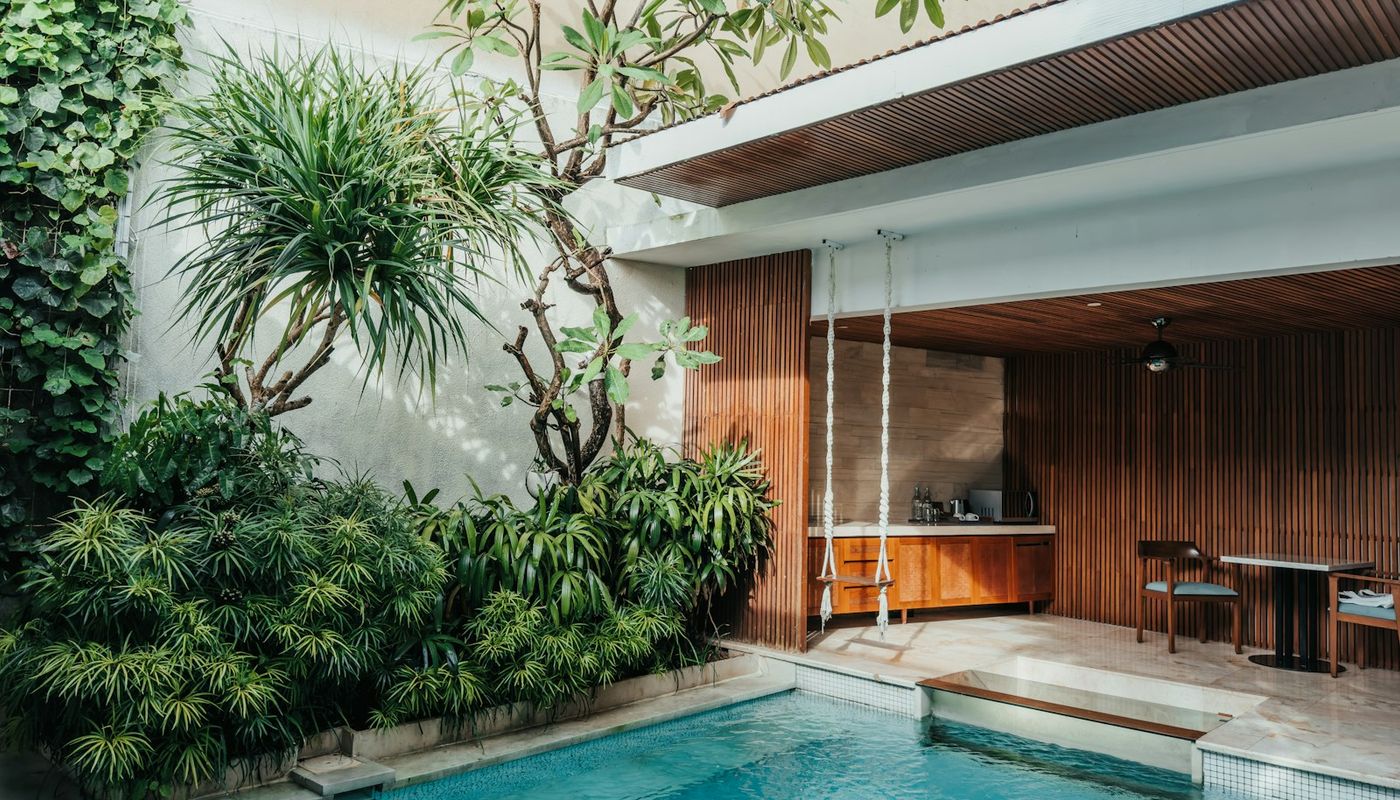
Kammora Living and Villas is a 26-unit premium villa and apartment complex on Jl. Padang Linjong in Canggu, Bali, developed by Bali Invest Club. The property sits roughly seven minutes from the ocean, faces rice fields, and was marketed during construction with starting prices around USD 195,000 for apartments and quoted ROI figures in the 17 percent range. It is a small project by Bali standards, a recognisable model for the current wave of investor-targeted Canggu micro-resorts, and a useful case study for foreign buyers trying to understand what they are actually purchasing when they wire money into an Indonesian villa complex.
Foreign buyers should start with the legal frame. Article 21 of Indonesia's Basic Agrarian Law No. 5 of 1960 (Undang-Undang Pokok Agraria) prohibits foreigners from holding Hak Milik freehold title over Indonesian land. That is the constitutional starting point for every villa transaction in Bali, including Kammora Living. Foreign buyers are limited to three legal ownership structures: Hak Pakai (Right of Use), leasehold via a notarised Hak Sewa agreement, or beneficial ownership through a foreign-owned company structure (PT PMA) holding Hak Guna Bangunan (Right to Build). Anything outside those three structures is either nominee ownership or a paperwork mirage, and nominee ownership in Indonesia is illegal under Article 26(2) of the Agrarian Law, which voids the underlying title.
The three structures have different mechanics. Hak Pakai is available only to foreigners holding a valid Indonesian residence permit (KITAS or KITAP), is granted for an initial 30 years, is extendable to a combined maximum of 80 years under Government Regulation 18/2021, and must be registered at the local Land Office. Hak Sewa has no statutory ceiling beyond what the parties agree, which is why practical Bali leasehold terms cluster at 25 to 30 years. Hak Guna Bangunan cannot be held by a foreign individual at all, only by an Indonesian-registered company, which is what makes the PT PMA the wrapper of choice for investor-grade product.
What "Kammora Living" Actually Sells
The Kammora Living units fall into the apartment and pool-villa category that defines investor-grade Canggu real estate in 2026. Apartments are typically marketed under a leasehold structure with a defined lease term, usually 25 to 30 years with extension options, attached to the land title held by an Indonesian entity. The investor receives a notarised leasehold deed (Akta Sewa) executed before a PPAT (Pejabat Pembuat Akta Tanah, the licensed land deed official), with the unit identified on the developer's master site plan.
The ROI numbers quoted at marketing time (the 17 percent range that appears on Kammora's investor materials) are gross projections based on assumed occupancy and assumed average daily rate during peak season. They are not contractually guaranteed unless the developer offers a specific rental guarantee, and they do not net out the management company's fee (typically 20-30 percent of gross rental), taxes, maintenance, and capital reserves. A foreign buyer should ask for the trailing twelve months of actual occupancy and ADR data on existing comparable units in the same complex, not the projection deck.
The Documents Foreign Buyers Need
For any Kammora Living unit, the documentary chain that needs verification before funds move is:
The Sertifikat Hak Milik or Sertifikat Hak Guna Bangunan held by the Indonesian land-holding entity. The Sertifikat is issued by the Badan Pertanahan Nasional (BPN), Indonesia's national land agency. A foreign buyer should commission a certified BPN search through their notary to confirm the title is real, unencumbered, and held in the name of the entity executing the lease.
The Izin Mendirikan Bangunan (IMB) or the more recent Persetujuan Bangunan Gedung (PBG), which replaced IMB under Government Regulation No. 16 of 2021. Without a valid PBG, the structure is unauthorised and at risk of administrative enforcement. Bali has had multiple high-profile cases of unlicensed villas being sealed, including in Canggu and Berawa.
The Pondok Wisata licence (a small tourist accommodation licence) if the unit is to be operated as short-term tourist rental. Without Pondok Wisata, short-let operation is illegal under Bali Regional Regulation No. 5 of 2008 and subject to administrative sanctions. The recent Bali enforcement wave against unlicensed Pondok Wisata operations is a real risk to the investor's projected rental yields.
The PPJB (Perjanjian Pengikatan Jual Beli) and the AJB (Akta Jual Beli) for any sale transaction, or the AS (Akta Sewa) for any lease transaction. These are the binding notarised documents. WhatsApp screenshots and email confirmations are not transactions.
The PT PMA Wrapper and What It Actually Buys
Foreign investment through an Indonesian company is governed by Law 25/2007 on Investment, the Omnibus Job Creation Law 11/2020 and its successor Perpu 2/2022 as ratified by Law 6/2023, and implementing rules including Government Regulation 5/2021 on risk-based business licensing. A PT PMA can hold HGB title, register the relevant KBLI business codes for accommodation, and legally collect rental income. The minimum capital requirement is IDR 10 billion per business line, of which roughly IDR 2.5 billion typically has to be paid up.
The structural question that decides your tax, exit, and dispute position is whether each buyer holds shares in a single PT PMA that owns the whole building, or holds an individual strata or leasehold interest in their own name. The two look similar in a sales deck and behave completely differently at resale, in an owner dispute, and under assessment. Get it answered in writing before signing.
The Bali Invest Club Question
Bali Invest Club is the developer entity behind Kammora Living. For foreign buyers, the practical question is what the company has actually delivered. Indonesian developers operating in the boutique Canggu segment often have a portfolio of one to five completed projects, and the relevant questions are: which projects are fully complete and handed over, what was the construction delay between marketing handover date and actual handover, and what is the current handover satisfaction record with prior buyers.
Four verification questions carry most of the weight. Which Indonesian-registered entity is the actual developer, and what are its NIB (Nomor Induk Berusaha) and NPWP tax identification numbers? What is the PBG reference number, and does the permitted design match what is being sold? Which prior projects has the same group completed, with addresses and verifiable handover dates? Who runs rental management after handover, and on what contract length and termination terms?
Bali Invest Club operates as a group of companies marketing to an international and predominantly Russian-speaking investor base, with instalment payment terms, in-house legal services, and a tokenisation wrapper offering equity-style participation. Each of those features moves the buyer a step further from a directly held, independently verifiable title.
The Bali boutique villa segment in 2026 has seen multiple developers run into financing issues part-way through construction, with foreign buyers' deposits at risk when the underlying entity becomes unable to complete. The structural risk is real and is not unique to Bali Invest Club. The mitigation is to insist on milestone-based payment with each milestone tied to verifiable construction completion, with an escrow structure that releases funds only when an independent surveyor confirms the milestone is met.
A platform like Bektu was built for exactly this kind of cross-developer verification, allowing foreign buyers to look at a Bali developer's full delivery track record before sending capital.
Where the ROI Math Actually Lands
The 17 percent ROI marketing number for Kammora Living needs to be unpacked carefully. In core Canggu and Berawa, typical villa ROI in 2026 falls in the 9.5 to 13.8 percent gross range according to most independent market trackers, with strong projects able to push higher in peak season. A 17 percent gross projection is at the top of the realistic range and requires assumptions about occupancy and average daily rate that need to hold consistently.
The marketed figure is more precisely 17.83 percent a year with a six-year payback. Projections above 15 percent generally rest on occupancy assumptions above 80 percent, management fees set below market, no allowance for renovation reserves, or a developer-run rental pool that smooths the headline number but is contractually enforceable only during a guarantee period of one to three years. Ask what nightly rate and occupancy are assumed, what happens when the guarantee period ends, and which entity is actually the guarantor.
Net ROI is materially lower than gross. After the 20-30 percent management fee, the 10 percent rental income tax for foreign owners under Indonesian Income Tax Law, the maintenance and capital reserves, and the gradual lease decay (each year of a 25-year lease reduces the remaining value), the net yield for a foreign buyer in a Canggu boutique apartment typically lands in the 6 to 9 percent range when the project performs to plan, and lower when it does not.
That is still attractive compared to most developed-market rental yields, but it is not 17 percent.
The Honest Read
Kammora Living is a small, recognisable boutique Canggu development in the segment that has attracted significant foreign investment over the last five years. It is not a brand-name luxury resort and it is not a fraud. It is a mid-tier investor product that requires the same documentary verification as every other Bali villa transaction: BPN search on the title, PBG on the structure, Pondok Wisata on the operation, notarised AS or AJB on the deal, and milestone-based payments with escrow if construction is not yet complete.
The 17 percent ROI is a marketing number. The net 6 to 9 percent is the operating reality. For foreign investors comfortable with that range and with the structural risk of a 25-30 year leasehold in a small developer's project, Kammora Living fits a specific portfolio role. For investors expecting freehold ownership and double-digit guaranteed net yields, no Bali project meets that brief, and Kammora is no exception.
Sources
- Kammora Living Bali Invest Club official property listing
- Kammora Living complex profile on DDA Real Estate
- Bali Invest Club developer profile on Realiste
- Basic Agrarian Law No. 5 of 1960 (Indonesia)
- Government Regulation No. 16 of 2021 (PBG replacing IMB)
- Bali Regional Regulation No. 5 of 2008 on Pondok Wisata licensing
Sign up to read the rest
Create a free account to keep reading. It only takes a minute.
Developers referenced
- Bali Invest Club Canggu, Indonesia
Thinking about Bali Invest Club?
You cannot walk the land from another country. But you can verify the developer. Bektu contacts them on your behalf and sends you a scored report. They never see who asked.
Verify Bali Invest Club anonymouslyMore from Bektu


Stay a step ahead of the wire transfer
Get the occasional note from Bektu on verifying developers before you commit. No noise, just what matters.
We will never share your email. You can opt out at any time.