Japan Benchmark Land Prices Rise 1.5 Percent With Commercial Land Up 2.9 Percent
Japan's benchmark land prices rose 1.5 percent nationally in the year to 1 July 2026, with commercial land up 2.9 percent and residential land up 1.0 percent, according to the prefectural land price survey published by the Ministry of Land, Infrastructure, Transport and Tourism on 15 September. It is the fifth consecutive year of gains and matches the pace recorded a year earlier, the strongest run since the early 1990s.
What the survey found
The all-use national average of 1.5 percent breaks down into a residential figure of 1.0 percent and a commercial figure of 2.9 percent, both rising for a fifth straight year. The gap between the two is the story. Commercial land is now carrying the national number, and it is doing so on the back of visitor demand rather than office absorption.
Twenty prefectures recorded residential land gains, the same count as last year. Thirty-four recorded commercial gains, four more than last year. That spread of commercial strength across three quarters of the country is new, and it is what separates this release from a Tokyo-only story.
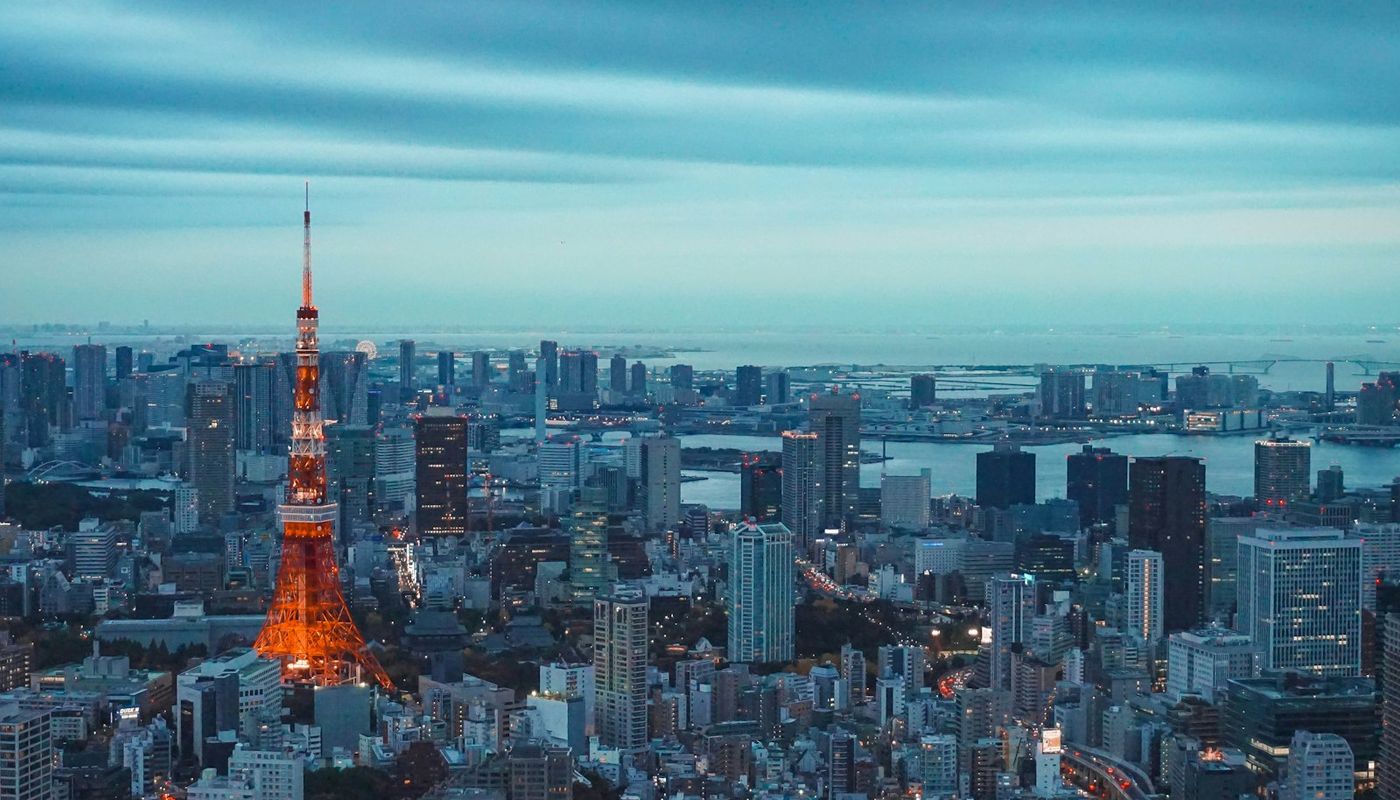
The three major metropolitan areas rose 4.4 percent combined. Within that, the Tokyo and Osaka areas widened their gains across all use categories, while the Nagoya area's increase narrowed. Tokyo's 23 special wards rose 8.7 percent. The four regional cities of Sapporo, Sendai, Hiroshima and Fukuoka rose 4.1 percent, but their rate of increase narrowed, which the ministry attributed in part to buyers stepping back from higher-priced housing as land and construction costs climbed, and shifting demand toward suburban stock. Regional Japan outside the major metros rose for a fourth consecutive year.
The sharpest individual moves were in tourism destinations. Commercial land in Hakuba, Nagano prefecture, rose 35.6 percent, the largest commercial increase in the country. Residential land in Furano, Hokkaido, rose 32.0 percent, the largest residential increase. At the other end, land fell 6.8 percent in Wajima, Ishikawa prefecture, still absorbing earthquake damage, and 6.0 percent in Kami, Miyagi prefecture, a depopulating municipality.
The most expensive sites remain in Tokyo. The top residential point was in Akasaka, Minato ward, at 7.5 million yen per square metre. The top commercial point was in Ginza, Chuo ward, at 52.5 million yen per square metre.
The mechanism
This is the survey Japanese practitioners call kijun chika. Prefectural governors commission appraisals of standard sites valued as of 1 July each year, and the land ministry compiles and publishes the national result in September. It is a separate series from the land price publication released in March, which uses a 1 January valuation date. Two survey dates, two release dates, two datasets, and they do not always point the same direction at the same speed.
That matters for anyone reading Japanese land data from abroad. The figures are used as reference points in compulsory purchase compensation, in public land transactions, and as a sanity check by lenders and appraisers. They are not transaction price indices. A published benchmark price is an appraised value at a single point in a municipality, not the price the last condominium there actually traded at.
What it means for a foreign buyer
Japan does not restrict property ownership by nationality. There is no foreign buyer surcharge, no approval step tied to citizenship, and no residency requirement attached to holding freehold land or a condominium unit. A non-resident buyer reads this survey the same way a domestic one does, which is rarer than it sounds across Asian property markets.
The practical read is that the cheap entry into Japanese resort land has closed. Hakuba at 35.6 percent on commercial land and Furano at 32.0 percent on residential land are not early-cycle numbers. Anyone underwriting a Niseko-style thesis on a second-tier ski or onsen town is now buying after five consecutive years of appreciation, into land that is being repriced by inbound visitor volumes rather than local household formation. That demand base can reverse faster than a residential one.
The Tokyo 23-ward figure of 8.7 percent tells a different story: land cost is now a live constraint on new supply in central Tokyo, which supports existing stock values but compresses yields on anything bought at current asking prices. The narrowing gains in Sapporo, Sendai, Hiroshima and Fukuoka are worth noting for the same reason in reverse. Construction cost inflation is squeezing the top of those markets first, which is where foreign buyers usually shop.
Depopulating municipalities remain a genuine risk rather than a discount. Kami at minus 6.0 percent is not an outlier, it is the base case for a large share of rural Japan.
Context
Japan's land market bottomed after the 1990s asset price collapse and spent two decades flat or falling outside a handful of urban submarkets. The current run of increases began in 2022 and has been driven by central Tokyo redevelopment, semiconductor and logistics investment, and a weak yen that made Japanese assets cheap in dollar and euro terms. Purchase mechanics are unusually open to foreigners by regional standards, with the main friction sitting in registration, financing for non-residents, and post-acquisition reporting rather than in eligibility.
Reference points for buyers looking at the framework behind these numbers: the earlier land price publication and the Fukuoka and Hakata submarkets, the legal requirements for foreigners buying property in Japan, and the property registration process.
Sources
- Japanese land prices rise for fifth year (Reuters, 15 September 2026)
- 基準地価5年連続プラス=全国平均1.5%上昇―名古屋圏で上げ幅縮小・国交省 (nippon.com, 15 September 2026)
Sign up to read the rest
Create a free account to keep reading. It only takes a minute.
Considering a developer you read about here?
You cannot walk the land from another country. But you can verify the developer. Bektu contacts them on your behalf and sends you a scored report. They never see who asked.
Search and verify any developerMore from Bektu


Stay a step ahead of the wire transfer
Get the occasional note from Bektu on verifying developers before you commit. No noise, just what matters.
We will never share your email. You can opt out at any time.