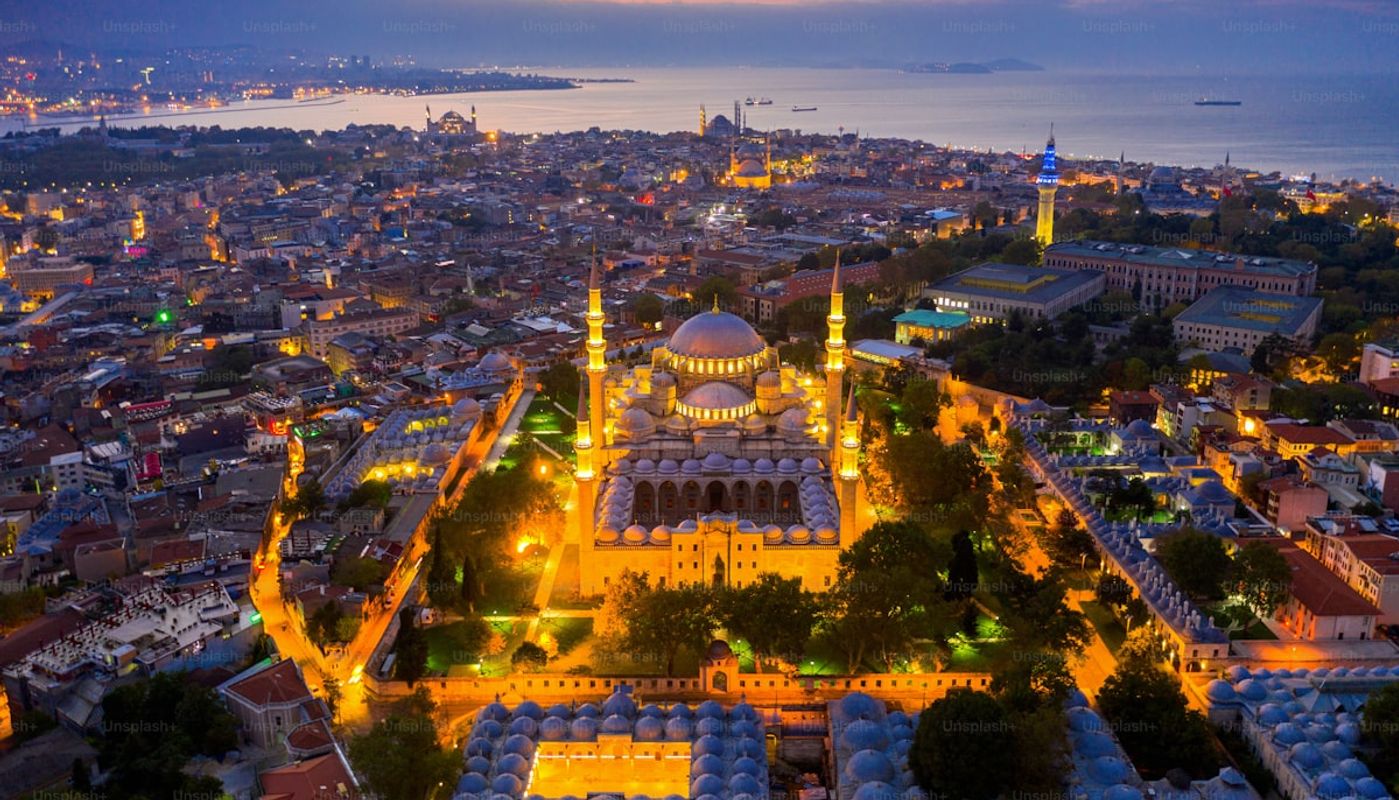
Istanbul vs Antalya: Where Should Foreign Buyers Invest in Turkey in 2026
Istanbul vs Antalya: Where Should Foreign Buyers Invest in Turkey in 2026
Istanbul gives you liquidity, scale, and the deepest rental market in the country. Antalya gives you lower entry prices, stronger holiday-rental yields, and easier closing. The right pick depends on whether you want a financial asset or a lifestyle one, and how willing you are to accept the operational complexity of managing property in a 16-million-person city.
Foreign buyers purchased roughly 4,165 properties across Turkey in Q1 2026, down 14.9% year-on-year. Russians, Iranians, and Germans remained the three largest buyer groups. The slowdown reshuffled relative prices and reset rental yields, so this comparison reflects a buyer's market in both cities, not the inflation-driven frenzy of 2022-2023.
Price per square meter and entry points
Istanbul averages roughly $3,094 per square meter in the city center as of early 2026, with wide dispersion by district. Prime Beşiktaş apartments trade between 100,000 and 250,000 TRY per square meter. Outer districts such as Esenyurt and Başakşehir sit at 30,000 to 50,000 TRY per square meter. Antalya averages around $2,530 per square meter citywide, with budget areas like Kepez at roughly $585 per square meter and prime Lara or Konyaaltı stock several multiples higher.
A two-bedroom apartment that costs $250,000 in central Istanbul typically costs $150,000 to $180,000 in a comparable Antalya district. The $400,000 citizenship threshold is also easier to hit cleanly in Istanbul because a single high-quality apartment in Beşiktaş, Şişli, or Sarıyer often crosses it. In Antalya you generally combine two or three units, or buy a villa in Kalkan or Kaş.
Rental yields
Antalya wins on gross yield. Fethiye and Antalya rentals run 7% to 10% gross, with short-term holiday yields in Alanya and central Antalya reaching 6% to 12% during peak season. Istanbul tops out around 8% in top long-let neighborhoods and sits closer to 4% to 6% in prime central districts. Antalya's yield premium comes from tourism: roughly 16 million visitors per year, a long shoulder season, and predictable Russian, German, and Scandinavian demand.
The caveat is regulatory. Turkey tightened short-term rental rules in 2024 under Law 7464, requiring an operating permit from the Ministry of Culture and Tourism for any rental shorter than 100 days. Building owners must approve the activity unanimously in a buildings of more than three units. Enforcement is real in Antalya's tourist corridors, so factor compliance cost into your yield model.
Buyer demographics by city
Antalya is dominated by Russians and Iranians at the volume end and Northern Europeans at the lifestyle end. Bodrum draws Brits and wealthy Turks. Istanbul attracts Gulf buyers, Iranian families relocating long-term, and citizenship-by-investment buyers who want a city base. If you plan to rent to other foreigners, your audience differs sharply between cities and that should drive the layout, finish, and location of what you buy.
Closed neighborhoods and military zones
As of 2025, 1,169 neighborhoods across Turkey are closed to foreign address registration. Foreigners can still buy property in many of these zones, but cannot register their residence there, which blocks residency permit issuance for personal use. In Istanbul, this affects parts of Esenyurt, Başakşehir, Fatih, and other historically Syrian-heavy districts. In Antalya, several pockets in Kepez and Aksu are also closed. Military Forbidden Zones under the Military Forbidden Zones and Security Zones Law are blocked outright at the Land Registry, with no exceptions.
If your goal is residency or eventual citizenship, verify both the closed-neighborhood status and the military clearance before paying any deposit. The Land Registry checks military clearance automatically, but closed-neighborhood checks are administrative and easier to miss.
City-by-city dynamics
Istanbul price growth in nominal lira terms has decelerated, with annual increases dropping from the 100%-plus range of 2022 to roughly 25% to 30% in 2026 (still negative in USD terms in many districts during 2025). The Asian side, particularly Kadıköy, Üsküdar, and Ataşehir, has outperformed the European side on a yield basis. New supply is concentrated in Başakşehir, Kayaşehir, and the Istanbul Airport corridor.
Antalya pricing also cooled, with foreign sales down sharply from the 2022 peak. The luxury end (Kalkan, Kaş, Lara) has held up better than the volume end (Konyaaltı standard stock). Bodrum, technically Muğla province, deserves a separate mention: Yalıkavak, Gümüşlük, and Bodrum Town remain the highest-priced resort destinations in Turkey by a wide margin, and supply is genuinely constrained.
Buying process and timing
The transaction mechanics are identical in both cities. You obtain a Turkish tax number, convert your foreign currency to lira through a Turkish bank to generate a DAB (Döviz Alım Belgesi) certificate, complete an SPK-licensed valuation, and complete the title transfer at the local Tapu (Land Registry) office. Total transaction tax is 4% of the cadastral value (typically split equally between buyer and seller in practice, though legally the buyer pays the full amount). VAT on new construction from developers is 1%, 10%, or 20% depending on net area and project classification. Foreigners are exempt from VAT on the first new-build purchase under certain conditions, with full payment in foreign currency required.
Istanbul closings take longer in practice because the volume at central Tapu offices is higher and translator availability tighter. Plan for 4 to 8 weeks from offer to title for off-the-shelf transactions in either city, longer if a military zone check is required.
Risk filters
Off-plan purchases dominate new construction in both markets. Istanbul has seen multiple high-profile developer delays and project freezes since 2023, including in well-known Başakşehir and Kayaşehir branded projects. Antalya has fewer mega-projects but more cases of low-quality construction in cheap mass developments. In both cities, foreign-targeted "exclusive citizenship project" stock often sits 20% to 40% above the price local Turkish buyers pay for identical units in the same building. The valuation report controls the official price, but the cash paid is what matters. Bektu (https://bektu.com) tracks Turkish developer delivery history and lets you compare a project's quoted foreign price against recent local transactions in the same building.
Decision framework
Choose Istanbul if you want depth of resale market, long-term tenant demand, the simplest path to crossing the $400,000 citizenship threshold with a single unit, and exposure to the largest city in Turkey. Choose Antalya if you want a vacation use case, the highest gross yields in Turkey from short-term tourism rentals, lower absolute capital deployed, and a faster, simpler transaction. Both work for citizenship, both work for rental yield, but they solve very different problems.
Sources
- Buying Property in Turkey 2026: Guide for Foreign Investors (Global Citizen Solutions)
- Property Prices in Istanbul per Square Meter 2026
- Turkey Residential Real Estate Market Analysis 2026 (Global Property Guide)
- Housing Prices in Istanbul (2026) — Investropa
- Restricted Areas in Istanbul for Foreigners 2026 (Emlak Platform)
- Acquiring Property and Citizenship — Invest in Türkiye (Official)
Sign up to read the rest
Create a free account to keep reading. It only takes a minute.
Considering a developer you read about here?
You cannot walk the land from another country. But you can verify the developer. Bektu contacts them on your behalf and sends you a scored report. They never see who asked.
Search and verify any developerMore from Bektu

Stay a step ahead of the wire transfer
Get the occasional note from Bektu on verifying developers before you commit. No noise, just what matters.
We will never share your email. You can opt out at any time.