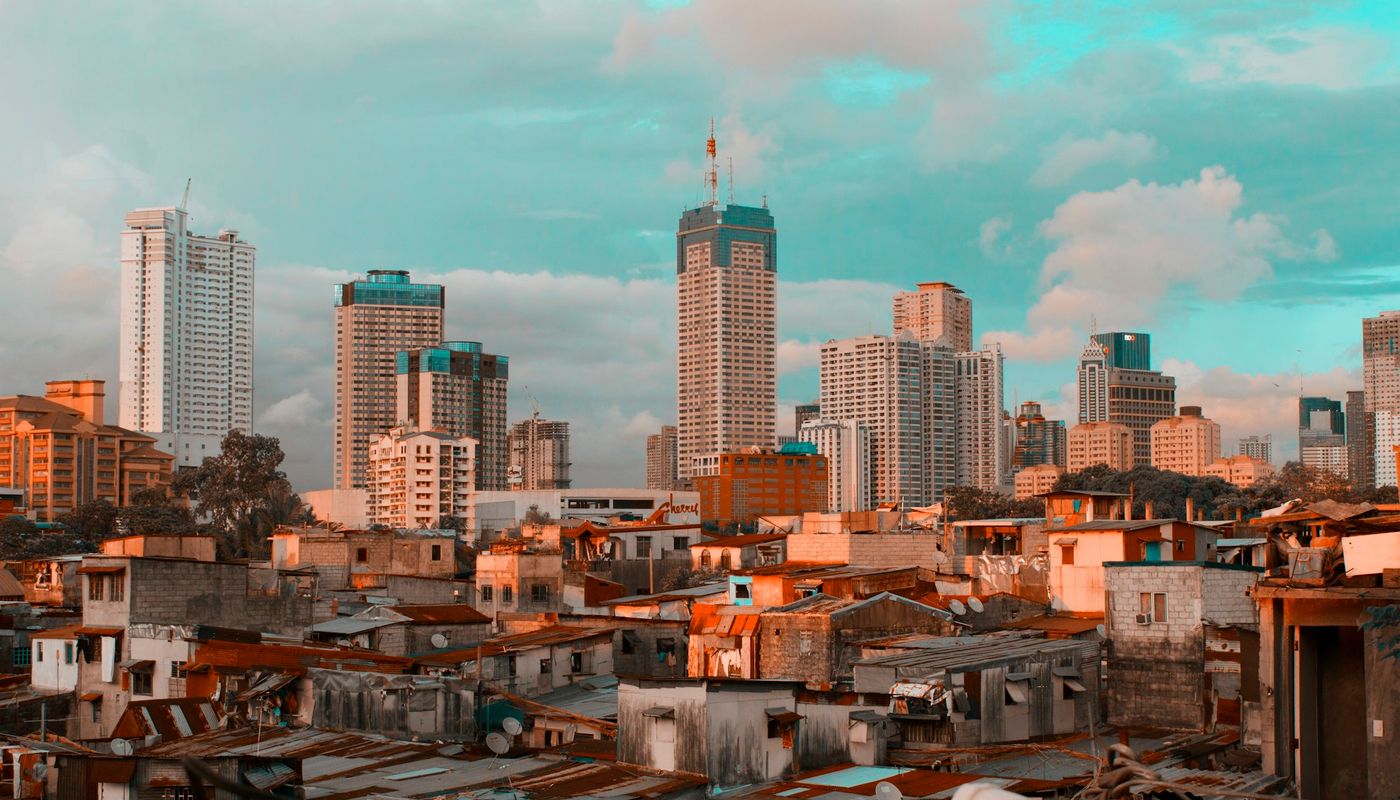
Can Foreigners Buy Condos in the Philippines? The 40% Rule Under RA 4726 Explained
Can Foreigners Buy Condos in the Philippines? The 40% Rule Under RA 4726 Explained
Foreigners can buy condominium units in the Philippines, but only up to a cap. Republic Act No. 4726, the Condominium Act of 1966, limits foreign ownership in any single condominium project to 40% of the total units or floor area, whichever the master deed specifies. Filipinos must hold the remaining 60%.
That single rule shapes almost everything a foreign buyer needs to know about condo investment in Manila, Cebu, or Davao. It determines which units you are even allowed to buy, what happens if the foreign quota is already full, and why the master deed matters more than the brochure.
What the law actually says
Section 5 of RA 4726 governs ownership in any condominium project where the land is held by a condominium corporation. It reads, in effect, that no condominium project shall be transferred or conveyed to foreign nationals or to a corporation more than 40% of which is owned by foreign nationals.
The 40% cap applies to the condominium corporation. The condominium corporation owns the land underneath the building, and unit owners get a share in that corporation alongside title to their unit. To keep the corporation compliant with the 1987 Philippine Constitution's restrictions on land ownership by foreigners under Article XII Section 7, the corporation itself must remain at least 60% Filipino-owned. The cleanest way to enforce that is to cap unit sales to foreigners at 40%.
How the cap is measured
The master deed of restrictions (Master Deed) registered with the Register of Deeds specifies whether the 40% limit is measured by number of units or by total floor area. Some master deeds use one, some use the other, and a few use both. This matters for foreign buyers because a project that is 40% foreign-owned by unit count could still have foreign capacity by floor area, and vice versa.
The Housing and Land Use Regulatory Board's successor agency, the Department of Human Settlements and Urban Development (DHSUD), tracks this through the corporation's General Information Sheet (GIS) filings with the Securities and Exchange Commission. Before signing a Contract to Sell, a foreign buyer's lawyer should pull the GIS to confirm the current foreign ownership percentage.
What happens when the 40% quota is full
Once a condominium project hits the 40% foreign ownership cap, additional units cannot be sold to foreigners. Developers sometimes hold a waitlist, but the practical effect is that foreign buyers in popular Makati or BGC towers occasionally have to walk away from a unit they had reserved.
There is a correction mechanism when a project goes over. Where a transfer pushes foreign ownership past the 40% ceiling, the Condominium Act requires divestment within one year, failing which the unit can be sold at public auction. The exposure lands on the buyer who paid a reservation fee against a unit that breached the cap, and what that buys is a refund fight rather than a condo.
Resale of an existing unit by a foreign owner to another foreign buyer is still allowed because it does not change the total percentage. Resale to a Filipino frees up the slot. Some Manila developers structure their pre-selling to keep specific units flagged for foreign buyers, which is legal but means the buyer is paying for the slot as much as the unit.
What foreigners can own under RA 4726
A foreign buyer who clears the 40% test can own:
- The condominium unit, with title evidenced by a Condominium Certificate of Title (CCT) registered under the Property Registration Decree PD 1529
- A proportional share in the common areas (lobby, corridors, elevators, amenities) through the condominium corporation
- Non-voting or limited voting rights in the corporation depending on the by-laws
Foreigners do not own the land directly. The land is held by the condominium corporation, and the foreigner's interest in the land is mediated through their corporate share. This is the legal fiction that allows foreign condo ownership to coexist with the constitutional ban on foreign land ownership.
Townhouses and house-and-lot under RA 4726
Townhouses are sometimes sold as condominium units under RA 4726 rather than as house-and-lot packages. When a townhouse is part of a registered condominium project with a Master Deed, foreigners can buy under the same 40% rule. When a townhouse is sold as house-and-lot (which is the more common structure), foreigners cannot buy because the land is not held by a condominium corporation.
The buyer needs to confirm which structure applies before signing. The cleanest indicator is the title document the seller produces: a Condominium Certificate of Title under RA 4726 versus a Transfer Certificate of Title for ordinary land.
Lease alternatives if RA 4726 is closed
If a project's foreign quota is full or the property is house-and-lot, foreign buyers have two legal alternatives.
Long-term lease under RA 7652. The Investors' Lease Act of 1993 allows foreign investors to lease private land for an initial 50 years, renewable once for 25 years, for a total of 75 years. The lease is registered with the Register of Deeds and is enforceable as a real right against successors of the landowner. RA 7652 leases are commonly used for foreign-funded residential developments on land the buyer cannot own.
Filipino spouse ownership. A foreign national married to a Filipino citizen may have the land titled in the Filipino spouse's name. This is not joint ownership. Under the 1987 Constitution and the Family Code, the foreign spouse has no registered interest in the land itself, only conjugal property rights in the value of the asset. In a divorce, the foreign spouse can claim equity but not title.
Enforcement and penalties for circumvention
Section 22 of RA 4726 makes wilful violation a criminal offence punishable under the Revised Penal Code. The Anti-Dummy Law (Commonwealth Act No. 108, as amended) imposes additional penalties on Filipino citizens who lend their names to allow foreigners to acquire land or shares above legal limits, with imprisonment of 5 to 15 years and fines up to the value of the property.
In practice, the most common circumvention attempt is a nominee structure where a Filipino holds title on paper while the foreigner provides the funds and holds an unregistered side agreement. These arrangements are unenforceable in Philippine courts, and the foreign buyer who tries to assert beneficial ownership against a nominee who reneges typically loses the property and the money.
Due diligence checklist before signing
1. CCT availability. Confirm the developer can issue a Condominium Certificate of Title in the buyer's name on completion. Pre-selling units may be sold under a Contract to Sell with title transfer only at completion.
2. Current foreign ownership percentage. Request the developer's latest GIS filing or written confirmation of available foreign quota.
3. Master Deed review. Whether the 40% cap is by unit count or floor area changes the available inventory.
4. DHSUD licence. Confirm the project has a License to Sell from DHSUD. Pre-selling without a License to Sell is illegal.
5. Developer track record. Completed projects, delivery delays, and turnover quality.
Platforms like Bektu aggregate developer delivery histories and project completion data, which helps verify what the brochure says about turnover dates against what the developer has actually shipped.
Metro Manila's high-rise pipeline is where the 40% rule bites hardest, and it is worth knowing who builds it. Nuvoland Philippines Inc. developed The Infinity Tower in Bonifacio Global City, Taguig, and the Nuvocity complex in Libis, Quezon City, which holds the Aspire Tower and Dream Tower residential buildings. These are the tower formats the 40% cap was written for and the stock foreign buyers most often reserve during pre-selling.
Costs on top of the purchase price
For a typical Metro Manila condo purchase by a foreign buyer:
- Documentary Stamp Tax: 1.5% of the higher of zonal or selling price (buyer)
- Transfer Tax: 0.5% to 0.75% depending on the LGU (buyer)
- Registration Fees: graduated scale, roughly 0.25% of value (buyer)
- Notarial fees: 1% to 2% of the deed value (split or by agreement)
- Capital Gains Tax: 6% of higher of zonal or selling price (seller, but sometimes shifted)
- VAT: 12% applies to condos priced above PHP 3.6 million (built into developer pricing for new units)
Add roughly 4% to 5% of the purchase price as the buyer's closing cost budget.
The bottom line
Foreigners can own condo units in the Philippines under RA 4726, subject to the 40% project cap. The cap is enforced at the corporation level, measured per the Master Deed, and tracked through SEC filings. The unit comes with a Condominium Certificate of Title, a real, registered, transferable asset. House-and-lot, townhouses sold as house-and-lot, and any land outside a condominium corporation remain off-limits to foreign ownership.
Before reserving a unit, confirm the 40% slot is open, the License to Sell is current, and the developer has shipped before. Without those three, the brochure is selling a future title, not a present right.
Sources
- Republic Act No. 4726 (Condominium Act of 1966)
- Republic Act No. 7652 (Investors' Lease Act of 1993)
- Property Registration Decree PD 1529
- 1987 Constitution Article XII (National Economy and Patrimony)
- Commonwealth Act No. 108 (Anti-Dummy Law)
- Foreign ownership limits in Philippine condominium units under RA 4726 — Respicio
- Condominium and Townhouse Ownership by Foreigners — Dominium Land
- Owning Land in the Philippines — Philippine Consulate Sydney
Sign up to read the rest
Create a free account to keep reading. It only takes a minute.
Considering a developer you read about here?
You cannot walk the land from another country. But you can verify the developer. Bektu contacts them on your behalf and sends you a scored report. They never see who asked.
Search and verify any developerMore from Bektu


Stay a step ahead of the wire transfer
Get the occasional note from Bektu on verifying developers before you commit. No noise, just what matters.
We will never share your email. You can opt out at any time.