Dubai vs Abu Dhabi vs Ras Al Khaimah: Where Foreign Investors Are Actually Buying in 2026
The UAE is not one property market. It is seven emirates, each with its own land authority, pricing dynamics, and rules for foreign ownership. In practice, three of those emirates absorb the overwhelming majority of foreign investment: Dubai, Abu Dhabi, and Ras Al Khaimah.
Each serves a different type of investor. This guide compares them on the metrics that actually matter: entry price, rental yield, capital appreciation, visa eligibility, and regulatory maturity.
Market Overview: Three Emirates, Three Profiles
Dubai is the largest and most liquid property market in the UAE. It processes the highest volume of transactions, has the most developed secondary market, and offers the widest range of product types from studio apartments to ultra-luxury villas. Foreign ownership has been permitted in designated freehold zones since 2002, and the regulatory framework (DLD, RERA, escrow laws) is the most established in the country.
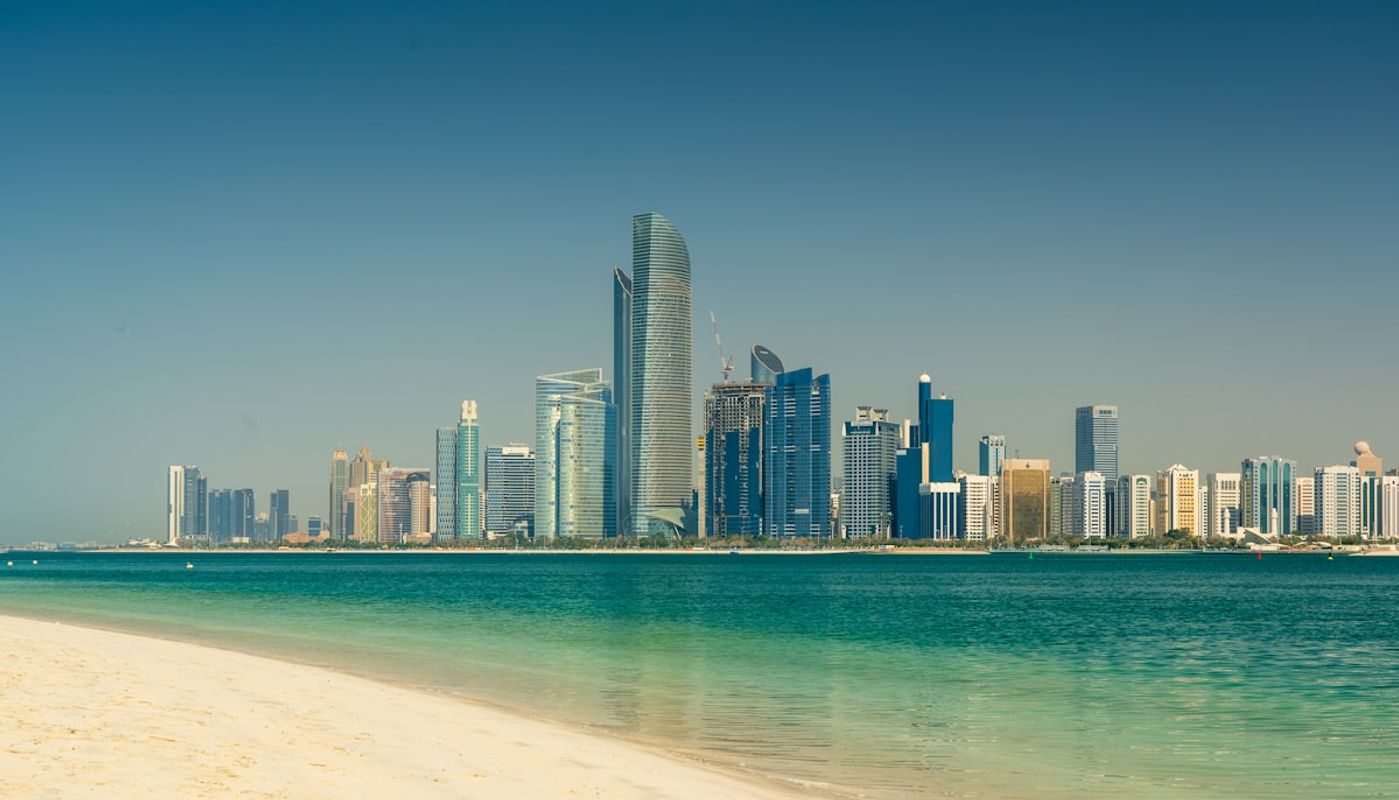
Abu Dhabi is the UAE capital and the wealthiest emirate by sovereign reserves. Its property market is smaller than Dubai's but has matured significantly since 2019, when Law No. 13 of 2019 expanded foreign freehold ownership to designated investment zones across the emirate. Abu Dhabi's market tends toward lower volatility, and its government has actively invested in infrastructure and cultural assets (Saadiyat Island, Yas Island, Louvre Abu Dhabi) that underpin property values.
Ras Al Khaimah (RAK) is the fastest-growing property market in the UAE by percentage. The emirate saw a 118% surge in real estate deal value in 2024, driven by mega-projects on Al Marjan Island (including the Wynn Resort development) and significantly lower entry prices than Dubai or Abu Dhabi. Foreign ownership has been permitted in designated areas, and RAK is positioning itself as the value alternative for investors priced out of Dubai.
Entry Prices: What Your Money Buys
The price gap between the three emirates is substantial and widening.
Dubai
Dubai's average residential price per square foot varies widely by area:
- Budget areas (International City, Dubai Silicon Oasis): AED 600 to AED 900/sq ft
- Mid-range (JVC, Al Furjan, Town Square): AED 900 to AED 1,300/sq ft
- Premium (Dubai Marina, Business Bay, JLT): AED 1,400 to AED 2,200/sq ft
- Ultra-premium (Downtown, Palm Jumeirah, DIFC): AED 2,000 to AED 4,000+/sq ft
A one-bedroom apartment in a mid-range area typically costs AED 700,000 to AED 1,200,000. In premium areas, the same unit runs AED 1,200,000 to AED 2,500,000.
Abu Dhabi
Abu Dhabi prices are generally 20% to 35% lower than comparable Dubai locations:
- Budget areas (Masdar City, Al Reef): AED 500 to AED 800/sq ft
- Mid-range (Al Reem Island, Yas Island): AED 800 to AED 1,400/sq ft
- Premium (Saadiyat Island, Al Maryah Island): AED 1,400 to AED 2,500/sq ft
A one-bedroom on Al Reem Island, Abu Dhabi's most popular investment zone, costs roughly AED 600,000 to AED 1,000,000. The equivalent positioning in Dubai would cost 25% to 40% more.
Ras Al Khaimah
RAK is the most affordable of the three, with prices 30% to 50% below Dubai:
- Standard residential areas: AED 400 to AED 700/sq ft
- Al Marjan Island (waterfront): AED 800 to AED 1,400/sq ft
- Branded residences and resort developments: AED 1,200 to AED 2,000/sq ft
AED 2 million in RAK buys a large waterfront apartment or a villa. In Dubai, the same budget gets a studio or compact one-bedroom in a premium area.
Rental Yields: Where the Numbers Work
Rental yield is where the three markets diverge most clearly.
Dubai
Dubai's average gross rental yield across all areas is approximately 6% to 7%, with significant variation:
- High-yield areas (JVC, Dubai Silicon Oasis, International City): 7% to 9%
- Mid-yield areas (Dubai Marina, JLT, Business Bay): 5.5% to 7%
- Low-yield premium areas (Downtown, Palm Jumeirah): 4% to 5.5%
Dubai's yield advantage comes from its deep rental market. The emirate's population is approximately 85% expatriate, creating persistent rental demand across all price segments.
Abu Dhabi
Abu Dhabi yields are competitive and, in some segments, exceed Dubai:
- Al Reem Island: 6.5% to 8%
- Yas Island: 6% to 7.5%
- Saadiyat Island: 5% to 6.5%
- Al Reef and affordable segments: 7% to 9%
Abu Dhabi's lower purchase prices relative to rental rates produce strong yields, particularly in the AED 500,000 to AED 1,500,000 bracket. The tenant base includes a significant government sector workforce, which provides rental demand stability.
Ras Al Khaimah
RAK yields average 5% to 6% across standard residential properties. Select waterfront and branded projects on Al Marjan Island report yields of 7% to 9%, though these figures should be treated with caution as the market is young and long-term rental data is limited.
The Wynn Resort development is expected to significantly boost short-term rental demand on Al Marjan Island, but this remains speculative until the project completes and operations stabilize.
Capital Appreciation: Historical Performance
Dubai
Dubai residential values rose approximately 10% year-on-year through 2025, with prime areas seeing stronger growth. Forecasts for 2026 project 3% to 5% growth in prime segments. Dubai's market is cyclical. It experienced significant corrections in 2009 and 2014-2019, followed by strong recoveries. The current cycle is supported by population growth, visa reforms, and diversified demand from European, CIS, and Asian buyers.
Abu Dhabi
Abu Dhabi has demonstrated lower volatility. Listing prices for affordable apartments rose up to 7% in the first half of 2025, with mid-tier apartments appreciating 6% to 11%. Abu Dhabi did not experience the same boom-bust cycles as Dubai, partly because its market is smaller, less speculative, and underpinned by government investment.
Ras Al Khaimah
RAK is in an early growth phase. The 118% surge in deal value in 2024 reflects rapid price appreciation from a low base. Investors buying now are betting on continued momentum from the Wynn development, infrastructure expansion, and spillover demand from buyers priced out of Dubai. The risk is proportionally higher: RAK's secondary market is thin, and exit liquidity is not comparable to Dubai.
Visa Rules for Property Investors
Visa eligibility is a major driver for foreign property investment in the UAE. The rules differ by value threshold, not by emirate.
Golden Visa (10-Year Residency)
The UAE Golden Visa for property investors requires a minimum investment of AED 2 million. This applies across all emirates. Key conditions as of 2026:
- The property must be completed (title deed issued) or off-plan with documented purchase value
- Mortgaged properties qualify, provided total purchase value meets the AED 2 million threshold
- The previous requirement to have AED 1 million paid upfront was removed in late 2025
- A No Objection Certificate from the financing bank is required for mortgaged properties
- Multiple properties can be combined to reach the AED 2 million total
- No minimum stay requirement: Golden Visa holders can remain outside the UAE for more than 180 days without losing status
- Family sponsorship is included (spouse, children, and parents)
Standard Property Visa (2-Year Residency)
A 2-year renewable residency visa is available for property investments. The minimum threshold was adjusted in April 2026. Standard property visas are processed through the respective land department in each emirate.
RAK's Lower Threshold
Ras Al Khaimah offers a 3-year renewable residency visa for property investments of AED 750,000, significantly lower than the Golden Visa threshold. This makes RAK the most accessible emirate for visa-linked property investment.
Regulatory Environment
Dubai
Dubai has the most mature regulatory framework. The DLD and RERA have been operating for nearly two decades. Escrow accounts are mandatory for off-plan sales under Law No. 8 of 2007%20of%202007.html). The Oqood system registers interim ownership. Ejari registers tenancies. Mollak manages service charges. The Rental Disputes Center handles tenant-landlord disputes. The system is imperfect but established.
Abu Dhabi
Abu Dhabi's regulatory framework has strengthened significantly. The Abu Dhabi Department of Municipalities and Transport (DMT) oversees property registration and regulation. The Tawtheeq system serves a similar function to Dubai's Ejari for tenancy registration. Abu Dhabi's escrow requirements and developer oversight have tightened in recent years, though the framework is less battle-tested than Dubai's.
Ras Al Khaimah
RAK's regulatory framework is the least developed of the three. The RAK Real Estate Regulatory Agency was established more recently and handles fewer transactions. Buyer protections exist but are less extensively documented and tested. Investors in RAK should conduct more independent due diligence.
Which Emirate Fits Which Investor
Dubai suits investors who prioritize liquidity, regulatory protection, and a deep secondary market. If you plan to buy and potentially sell within 3 to 5 years, Dubai's transaction volume ensures you can exit. If you want Golden Visa eligibility with the widest choice of properties, Dubai has the most options at the AED 2 million threshold.
Abu Dhabi suits investors seeking lower entry prices, competitive yields, and lower volatility. Government-backed infrastructure investment provides a floor under property values. Abu Dhabi is the conservative choice for long-term holds.
Ras Al Khaimah suits investors with higher risk tolerance who want maximum exposure to capital appreciation from a low base. The Wynn development and Al Marjan Island expansion represent a significant catalyst, but the market is early-stage. Bektu considers RAK appropriate for investors who can hold for 5 to 10 years and accept limited exit liquidity in the interim.
Sources:
- UAE Property Market 2025/2026 Analysis
- Abu Dhabi vs Dubai Property Investment 2026
- Property Investment in Dubai 2026: ROI & Rental Yield Guide
- RAK Property Investment for Foreigners
- UAE Golden Visa Official Portal
- Law No. 8 of 2007 Concerning Escrow Accounts%20of%202007.html)
Sign up to read the rest
Create a free account to keep reading. It only takes a minute.
Considering a developer you read about here?
You cannot walk the land from another country. But you can verify the developer. Bektu contacts them on your behalf and sends you a scored report. They never see who asked.
Search and verify any developerMore from Bektu

Stay a step ahead of the wire transfer
Get the occasional note from Bektu on verifying developers before you commit. No noise, just what matters.
We will never share your email. You can opt out at any time.