Digital Nomad Visa and Property Investment in Colombia: The 2026 Connection
Colombia launched its digital nomad visa (Visa Tipo V - Nomada Digital) in October 2022, and the program has reshaped the rental market in Medellin, Bogota, and Cartagena. For property investors, the digital nomad visa represents both a demand driver and a strategic opportunity. Understanding how the visa works, who holds it, and what these visa holders want from rental accommodation directly informs investment decisions.
The Digital Nomad Visa: Requirements and Structure
Colombia's digital nomad visa is governed by Resolution 5477 of 2022 from the Ministry of Foreign Affairs, with subsequent updates. The visa allows foreign nationals who work remotely for companies outside Colombia or who earn income from foreign sources to live in Colombia for up to two years.
The key requirements as of 2026 are as follows. Applicants must demonstrate remote employment or freelance income from non-Colombian sources. The minimum monthly income threshold is three times Colombia's minimum wage, which for 2026 is approximately 4.5 million COP (roughly $1,050 USD). This is one of the lowest income thresholds of any digital nomad visa globally. Health insurance valid in Colombia is mandatory. A clean criminal record from the applicant's country of residence is required. The application is submitted online through the Ministry of Foreign Affairs visa portal.
The visa is valid for two years and is renewable. It does not grant a path to permanent residency on its own, but time spent in Colombia on this visa counts toward the three-year continuous residence requirement for a Residente (R) visa if the holder transitions to another qualifying visa category.
Application Logistics
The visa fee is approximately $177 USD and processing typically takes 5 to 15 business days. Your passport must have at least six months of remaining validity at the time of application. After the visa is granted, you must register with Migracion Colombia and obtain a cedula de extranjeria (foreign ID card) within 15 days of arrival. The cedula is what banks, utilities, and notaries will ask for, so it is a prerequisite for almost everything else on this list.
The Rental Market Impact
The digital nomad visa has created a distinct rental market segment that did not exist before 2022. These are not tourists staying for a week, nor are they traditional expats relocating permanently. Digital nomads typically stay for one to six months, prefer furnished apartments with reliable high-speed internet, value walkability to cafes and coworking spaces, and have budgets that exceed the local long-term rental market but fall below tourist short-stay pricing.
This mid-term rental segment (stays of 30 to 180 days) occupies a pricing sweet spot for property investors. Monthly rents for furnished one-bedroom apartments in neighborhoods popular with digital nomads run approximately 3,500,000 to 6,500,000 COP ($815 to $1,512 USD) in El Poblado, 2,500,000 to 4,500,000 COP ($582 to $1,047 USD) in Laureles, 3,000,000 to 5,500,000 COP ($698 to $1,280 USD) in Chapinero (Bogota), and 3,500,000 to 7,000,000 COP ($815 to $1,629 USD) in Bocagrande (Cartagena).
These rates are significantly higher than unfurnished long-term rental rates and are achievable with lower vacancy than pure short-term (nightly) rental strategies.
Property Investment Strategy for the Digital Nomad Market
Investors targeting this segment should consider several factors.
Location Criteria
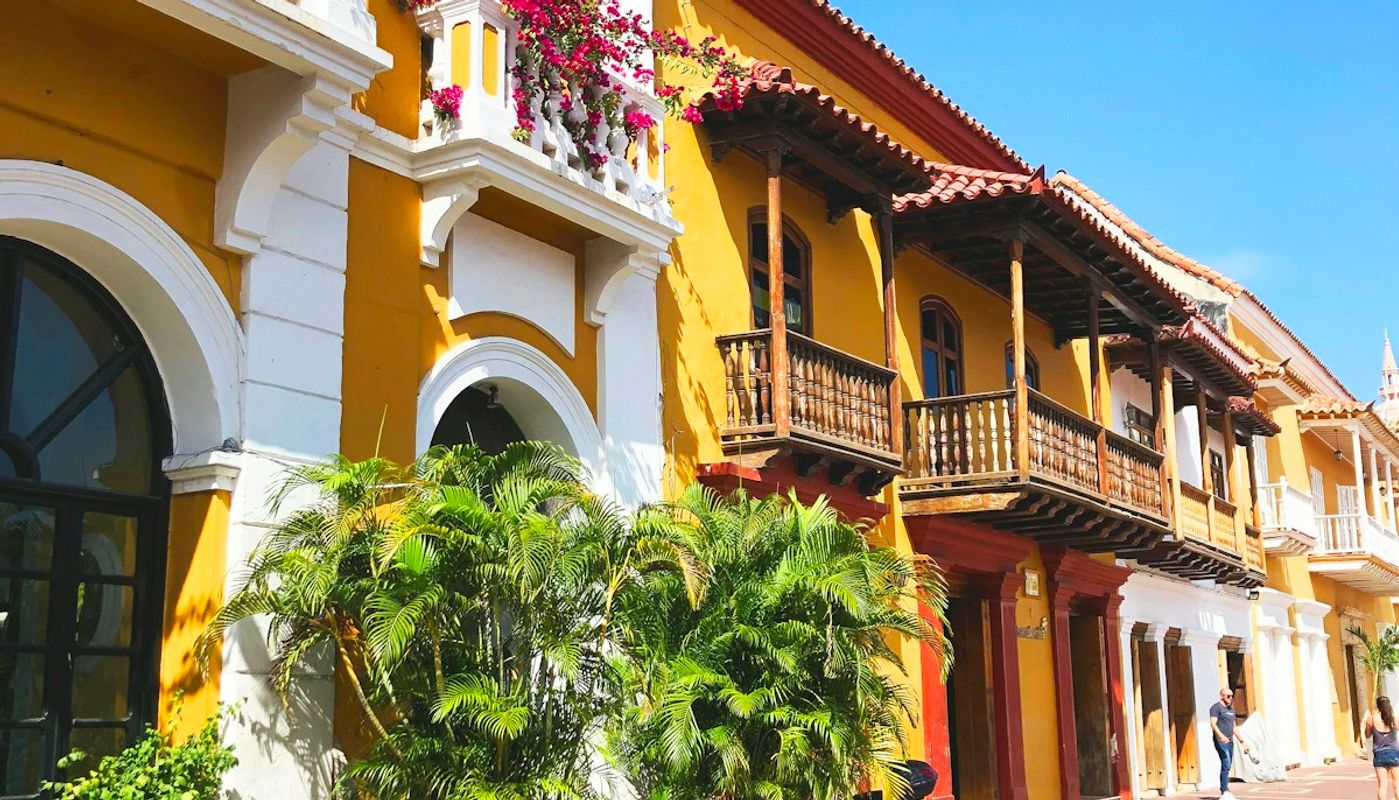
Digital nomads cluster in specific micro-neighborhoods. In Medellin, the area around Parque Lleras and Calle 10 in El Poblado, and the area around Primer Parque and La 70 in Laureles, have the highest concentration. In Bogota, Chapinero Alto and the Zona G area dominate. In Cartagena, Getsemani and Bocagrande attract the most nomads.
Proximity to coworking spaces (Selina, WeWork, local options), reliable fiber internet infrastructure, and walkable dining and nightlife are the primary location drivers. Properties more than a 15-minute walk from a coworking hub or cafe cluster see significantly lower demand from this segment.
Unit Configuration
One-bedroom and studio apartments between 35 and 65 square meters are the most in-demand configurations. Digital nomads traveling solo or as couples rarely need more space. Two-bedroom units can work for nomad couples who use the second bedroom as a home office, but three-bedroom units are generally too large for this market unless priced competitively against one-bedrooms in the same area.
Furnishing Standards
The digital nomad market demands a higher furnishing standard than the traditional Colombian rental market. Essential features include a dedicated workspace (desk, ergonomic chair, good lighting), high-speed internet (minimum 100 Mbps, with fiber preferred), a fully equipped kitchen, a quality mattress, and reliable air conditioning in Cartagena and during Medellin's warmer months. Properties that feel like a home rather than a hotel room consistently outperform on platforms like Airbnb and Furnished Finder.
Tax Implications of the Digital Nomad Visa
The digital nomad visa creates a specific tax situation that both visa holders and property investors should understand.
For the Visa Holder
Under Colombia's Tax Statute (Estatuto Tributario), an individual who spends 183 or more days in Colombia during any 365-day period becomes a tax resident. Tax residents are subject to Colombian income tax on worldwide income. Digital nomads who stay for extended periods may inadvertently trigger tax residency.
However, Colombia has tax treaties with several countries, and the DIAN (Direccion de Impuestos y Aduanas Nacionales) has issued guidance suggesting that digital nomad visa holders whose income is exclusively from foreign sources may qualify for certain treaty benefits. The specifics depend on the nomad's country of citizenship and the applicable double taxation agreement. This is an evolving area of Colombian tax law, and professional advice is essential.
The 183-day test sits in Article 10 of the Estatuto Tributario. Once tax residency is triggered, worldwide income is taxed at progressive rates reaching 39%. Colombia's treaty network includes Spain, Switzerland, Canada, Mexico, Chile, Portugal, the United Kingdom, France, the Czech Republic, South Korea, India, Italy, the UAE, and Japan, among others, and DIAN maintains the current list.
For the Property Investor
Rental income from digital nomad tenants is taxable in Colombia regardless of the property owner's residency status. Non-resident property owners are subject to withholding tax (retencion en la fuente) on rental income. If you rent through a property management company (which most foreign investors do), the management company is required to withhold and remit tax to DIAN on your behalf.
The withholding rate for non-resident rental income is currently 20% of gross rent. However, deductible expenses (property management fees, maintenance, utilities if included in rent, depreciation) can reduce the effective tax rate. Filing an annual tax return with DIAN allows you to claim these deductions and potentially receive a refund of over-withheld tax.
Regulatory Risks
Medellin's municipal government has taken an increasingly restrictive approach to the impact of digital nomads on the local housing market. Decree 0440 of 2022 and subsequent enforcement actions reflect concerns about gentrification, rising rents for local residents, and the conversion of residential buildings into de facto tourist accommodation.
In 2025, Medellin introduced additional requirements for short-term and mid-term rental operators, including mandatory registration with the Secretaria de Gobierno, compliance with noise and security standards, and limits on the percentage of units in a building that can operate as rentals. Non-compliance carries fines and potential closure orders.
Foreign investors should monitor these regulatory developments closely. Properties in buildings with established rental operations and proper licensing face lower regulatory risk than those in primarily residential buildings where rental activity is new or concentrated.
The Connection Between Visa and Investment
Several investors have combined the digital nomad visa with property investment as a strategy. The visa provides legal residency in Colombia for two years, during which the investor can identify properties, manage renovations, and build a rental operation on the ground. After two years, investors who want to stay can transition to an investment visa (Visa Tipo M - Inversionista), which requires a minimum investment of 100 times the Colombian monthly minimum wage in Colombian real estate (approximately 150 million COP or $35,000 USD in 2026).
This pathway allows investors to test the market before committing to a larger investment and provides the legal framework to manage their properties in person rather than relying entirely on remote management.
Banking and Capital Repatriation
Bancolombia, Davivienda, and BBVA Colombia generally open accounts for foreign residents holding a cedula de extranjeria. An account simplifies the purchase itself, utility payments, and rental income collection.
Register the incoming purchase funds with the Banco de la Republica through its cambios internacionales system at the time of the investment. That registration creates the official record that later allows you to repatriate both the original capital and any gain when you sell. Investors who skip this step at purchase routinely discover the problem years later, at exit, when it is expensive to fix.
What Bektu Monitors
Bektu tracks rental demand patterns from the digital nomad segment across Colombia's major cities, including occupancy rates, average lengths of stay, and pricing trends by neighborhood. The platform also monitors regulatory changes affecting short-term and mid-term rentals in Medellin, Bogota, and Cartagena, providing early warning of policy shifts that could affect investment returns.
Sources: Ministry of Foreign Affairs - Visa Resolution, DIAN, Estatuto Tributario, Medellin Municipality.
Sign up to read the rest
Create a free account to keep reading. It only takes a minute.
Considering a developer you read about here?
You cannot walk the land from another country. But you can verify the developer. Bektu contacts them on your behalf and sends you a scored report. They never see who asked.
Search and verify any developerMore from Bektu


Stay a step ahead of the wire transfer
Get the occasional note from Bektu on verifying developers before you commit. No noise, just what matters.
We will never share your email. You can opt out at any time.