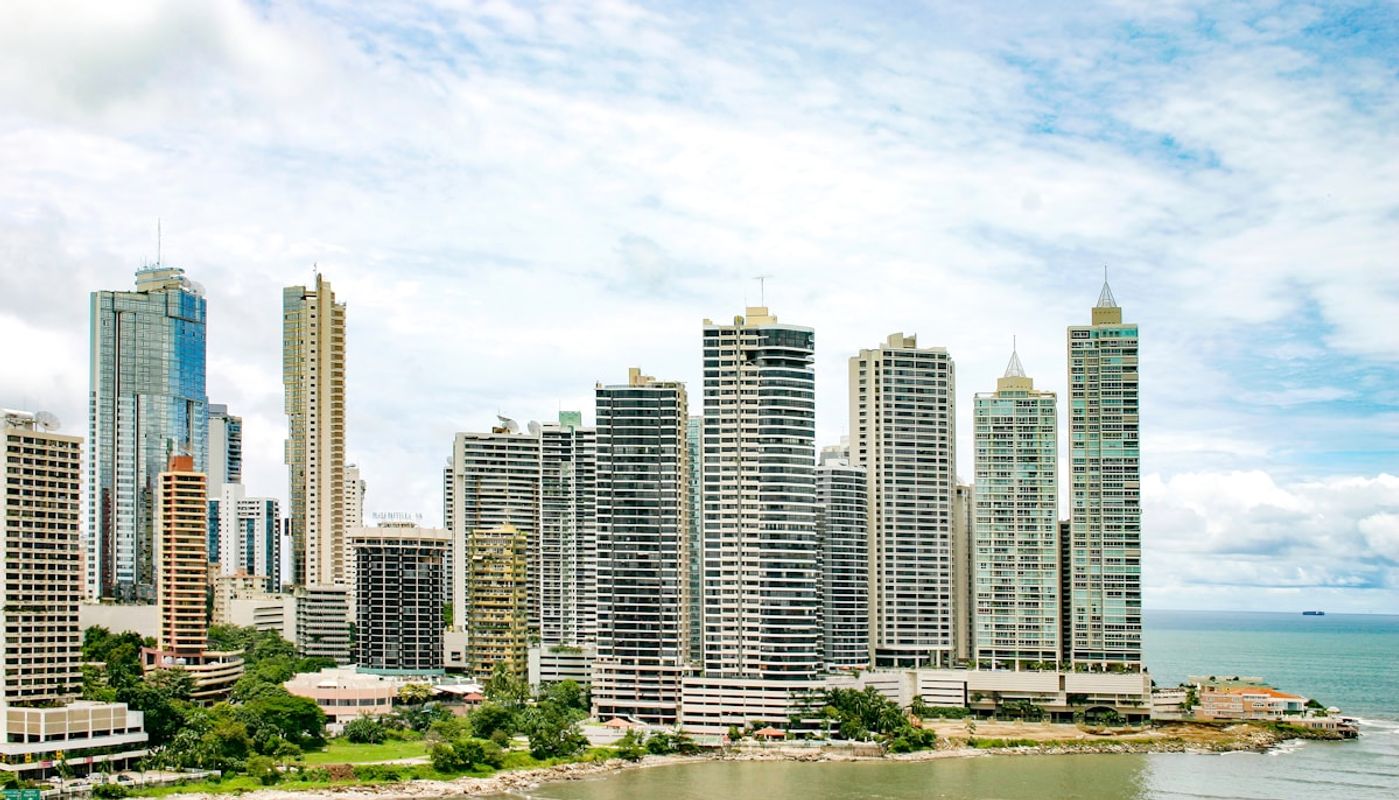
Complete Property Buying Process in Panama for Foreigners Step by Step
Complete Property Buying Process in Panama for Foreigners Step by Step
Buying property in Panama as a foreigner is legally straightforward for titled property. The process typically takes four to eight weeks from accepted offer to registered ownership. Panama's system runs through three institutions: the notary (notario), the Registro Publico (Public Registry), and the Direccion General de Ingresos (tax authority). Each has a defined role, and understanding them prevents the most common mistakes.
Step 1: Appoint a Lawyer
Panamanian law does not require you to have a lawyer for a property purchase. The notary handles the deed, and the Registro Publico handles registration. But the notary is neutral (they verify legality, not your interests), and the Registro Publico is a filing office, not an advisor.
Choose a lawyer (abogado) registered with the Colegio Nacional de Abogados de Panama. Look for experience in real estate transactions involving foreign buyers. Fees typically range from USD 1,500 to USD 3,000 for a straightforward purchase.
Critical rule: Use your own lawyer, not one recommended by the seller, developer, or real estate agent. Conflicts of interest are the root cause of most preventable problems in Panamanian property transactions.
Your lawyer's responsibilities include verifying the property's title at the Registro Publico, confirming there are no liens, mortgages, or encumbrances, verifying that the property is titled (not right-of-possession), reviewing and negotiating the purchase agreement, attending the notary signing, and handling registration of the new title.
Step 2: Determine Your Ownership Structure
You have several options for how to hold the property.
Personal ownership: The simplest and cheapest option. The title is registered in your individual name at the Registro Publico. Suitable for most straightforward purchases.
Panamanian corporation (Sociedad Anonima, S.A.): The property is held in the name of a Panamanian corporation that you control. This was historically popular for privacy and estate planning reasons, but Panama's compliance with international transparency standards has reduced the privacy advantage. A corporation adds annual maintenance costs (registered agent fees, annual government franchise tax of USD 300). Still useful for the border zone restriction (foreigners cannot own property within 10 kilometers of the border in their personal name but can through a corporation with Panamanian directors).
Foundation (Fundacion de Interes Privado): A Panamanian private interest foundation can hold property for estate planning purposes, similar to a trust. This is a more complex and expensive structure, suitable for high-value properties or complex succession planning.
For most foreign buyers purchasing a single property in Panama City or Coronado, personal ownership is sufficient.
Step 3: Property Search
Search channels include licensed real estate agents, online portals (Encuentra24, Compreoalquile), developer sales offices, and word-of-mouth referrals in the expat community.
Panama has no formal licensing system for real estate agents. The Asociacion Panamena de Corredores y Promotores de Bienes Raices (ACOBIR) runs a voluntary accreditation scheme, publishes market data, and holds its members to a code of ethics and insurance requirements. ACOBIR affiliation is the closest thing to a credential in the Panamanian market, and it is worth checking before you hand any intermediary a deposit.
Panama does not have a unified MLS (Multiple Listing Service) system. Agent listings are fragmented, and the same property may be listed by multiple agents at different prices. This makes independent price verification through your lawyer particularly important.
Key screening questions: Does the property have a finca number? (If not, it is not titled.) Is the property within the maritime zone? (If yes, it is a concession, not ownership.) Is the property within 10 kilometers of a border? (If yes, you may need a corporate structure.) What is the annual property tax status?
Step 4: Due Diligence
Your lawyer conducts the following checks.
Registro Publico title search: Using the property's finca number, your lawyer verifies current ownership (does the seller match the registered owner?), the chain of title (ownership history), any registered mortgages (hipotecas), liens, or encumbrances (gravamenes), easements or rights of way (servidumbres), and any pending legal actions.
Municipality verification: Your lawyer checks with the local Municipio that all property taxes (impuesto de inmueble) are current and that there are no pending municipal actions against the property.
Physical survey: For land purchases, commission an independent land survey (by an agrimensor autorizado) to confirm the boundaries match the registered description. Boundary discrepancies are common, particularly outside Panama City.
Condominium status (for apartments): If buying in a condominium building, verify that the building is registered as a Propiedad Horizontal (horizontal property) at the Registro Publico, that the specific unit has its own finca number, and that all common area fees are current.
Environmental and zoning: For land or development purchases, verify zoning classification with the Ministerio de Vivienda y Ordenamiento Territorial (MIVIOT) and check for any environmental restrictions, particularly near coastlines, rivers, or protected areas.
Cadastral verification: Confirm the registered boundaries and area against the cadastre held by ANATI (Autoridad Nacional de Administracion de Tierras) as well as the municipal records. The title chain search should reach back at least 10 to 20 years to surface historical defects that a single current certificate will not show.
Corporate due diligence: If the property is held inside an S.A. and the deal is structured as a transfer of the company's shares rather than a transfer of the property, you are buying the company and everything attached to it. Your lawyer must then also verify the corporation's good standing, its tax compliance, and any outstanding liabilities, because those travel with the shares.
Step 5: Negotiate and Sign a Promise to Purchase
Once due diligence is satisfactory, both parties sign a Promesa de Compra Venta (Promise to Purchase and Sell). This is a binding preliminary contract that sets the purchase price, payment terms, timeline for completion, conditions (such as satisfactory title search or mortgage approval), and deposit amount (typically 10 percent of the purchase price).
The Promesa de Compra Venta is a binding contract under the obligations and contracts provisions of the Panamanian Civil Code, Articles 1215 to 1294. Due diligence periods written into it typically run 30 to 60 days.
The deposit is usually paid to the seller or held by the seller's lawyer. Panama does not have a standardized escrow system, though escrow arrangements through banks or law firms can be negotiated for larger transactions. If the buyer withdraws without legal cause, they typically forfeit the deposit. If the seller withdraws, they return double the deposit (though enforcement depends on the contract terms).
Step 6: Arrange Financing (If Applicable)
Foreign buyers can obtain mortgages from Panamanian banks, though terms are less favorable than for residents. Typical lending conditions include loan-to-value (LTV) of 50 to 70 percent for non-residents, interest rates of 5 to 7 percent (variable, tied to Panama's reference rate), terms of 15 to 25 years, and income verification and credit history requirements.
Banks that commonly lend to foreign buyers include Banco General, BAC International Bank, and Global Bank. The mortgage approval process typically takes three to six weeks.
Step 7: Sign the Public Deed Before the Notary
The final transfer is executed through a public deed (escritura publica) signed before a Panamanian notary (notario publico). The notary verifies identities, confirms tax clearance, and witnesses the signatures.
At the signing: Both parties (or their authorized representatives holding powers of attorney) attend. The notary reads the deed. The balance of the purchase price is paid, typically by certified check (cheque de gerencia) drawn on a Panamanian bank. Both parties sign the deed. The notary retains the original and issues certified copies (copias certificadas).
If you cannot attend in person, your lawyer can sign on your behalf with a notarized power of attorney (poder especial).
Step 8: Pay Transfer Tax and Register
Transfer tax (impuesto de transferencia): 2 percent of the registered value or the sale price, whichever is higher. This is paid to the Direccion General de Ingresos (DGI, the tax authority) before or at the time of registration.
Registration at the Registro Publico: Your lawyer submits the signed deed, proof of transfer tax payment, and supporting documents to the Registro Publico. Registration typically takes one to four weeks. Upon registration, the property's finca record is updated to show you as the new owner.
Registration fees are approximately 0.5 percent of the property value.
Other Closing Costs and Withholdings
Capital gains withholding: The buyer is required to withhold 3 percent of the total sale price as an advance against the seller's capital gains tax and remit it to the DGI. This is set by Law 8 of 2010. If the seller's actual liability comes in lower, the seller claims the difference back from the DGI. The obligation sits with the buyer, so it has to be handled at closing rather than after.
Notary fees: typically USD 200 to USD 500 depending on transaction value.
Agent commission: typically 3 to 5 percent of the purchase price, most commonly paid by the seller, though this is negotiable.
Step 9: Post-Purchase Administration
Utility transfer: Change electricity (Naturgy, ENSA), water (IDAAN), and internet/cable accounts into your name. Bring your passport, the registered deed, and the previous owner's final bills.
Property management: If you will not be living in Panama full-time, arrange for property management. Management companies in Panama City charge approximately 8 to 12 percent of rental income for full management, or a flat monthly fee (USD 100 to USD 300) for vacant property maintenance.
Property tax: Annual property tax (impuesto de inmueble) is calculated on the registered value. Properties valued below USD 120,000 (primary residences) are exempt. Above that threshold, rates range from 0.5 to 0.7 percent. New construction receives exemptions for 5 to 20 years. File annually with the DGI or set up automatic payments.
Insurance: Property insurance is not mandatory but strongly recommended. Coverage for fire, earthquake, flood, and liability is available from Panamanian insurers (ASSA, Mapfre Panama, ASSA Compania de Seguros).
Residency applications: If the purchase is intended to support a Friendly Nations Visa or another residency category, coordinate with an immigration lawyer so the registered deed can be filed as evidence of the investment. The deed has to be registered first, which is one more reason not to let registration drift after closing.
Timeline Summary
| Step | Duration |
|------|----------|
| Lawyer appointment | 1-3 days |
| Property search | Variable |
| Due diligence | 1-3 weeks |
| Promise to purchase | 1-2 days |
| Financing (if applicable) | 3-6 weeks |
| Notary signing | 1 day |
| Tax payment and registration | 1-4 weeks |
| Utility transfer | 1-2 weeks |
Total typical elapsed time: 4 to 8 weeks for a cash purchase of titled property, longer if financing is involved.
For a comprehensive overview of Panama's property market and ownership structures, Bektu's Panama country guide provides current data and legal guidance.
Sign up to read the rest
Create a free account to keep reading. It only takes a minute.
Considering a developer you read about here?
You cannot walk the land from another country. But you can verify the developer. Bektu contacts them on your behalf and sends you a scored report. They never see who asked.
Search and verify any developerMore from Bektu
Stay a step ahead of the wire transfer
Get the occasional note from Bektu on verifying developers before you commit. No noise, just what matters.
We will never share your email. You can opt out at any time.