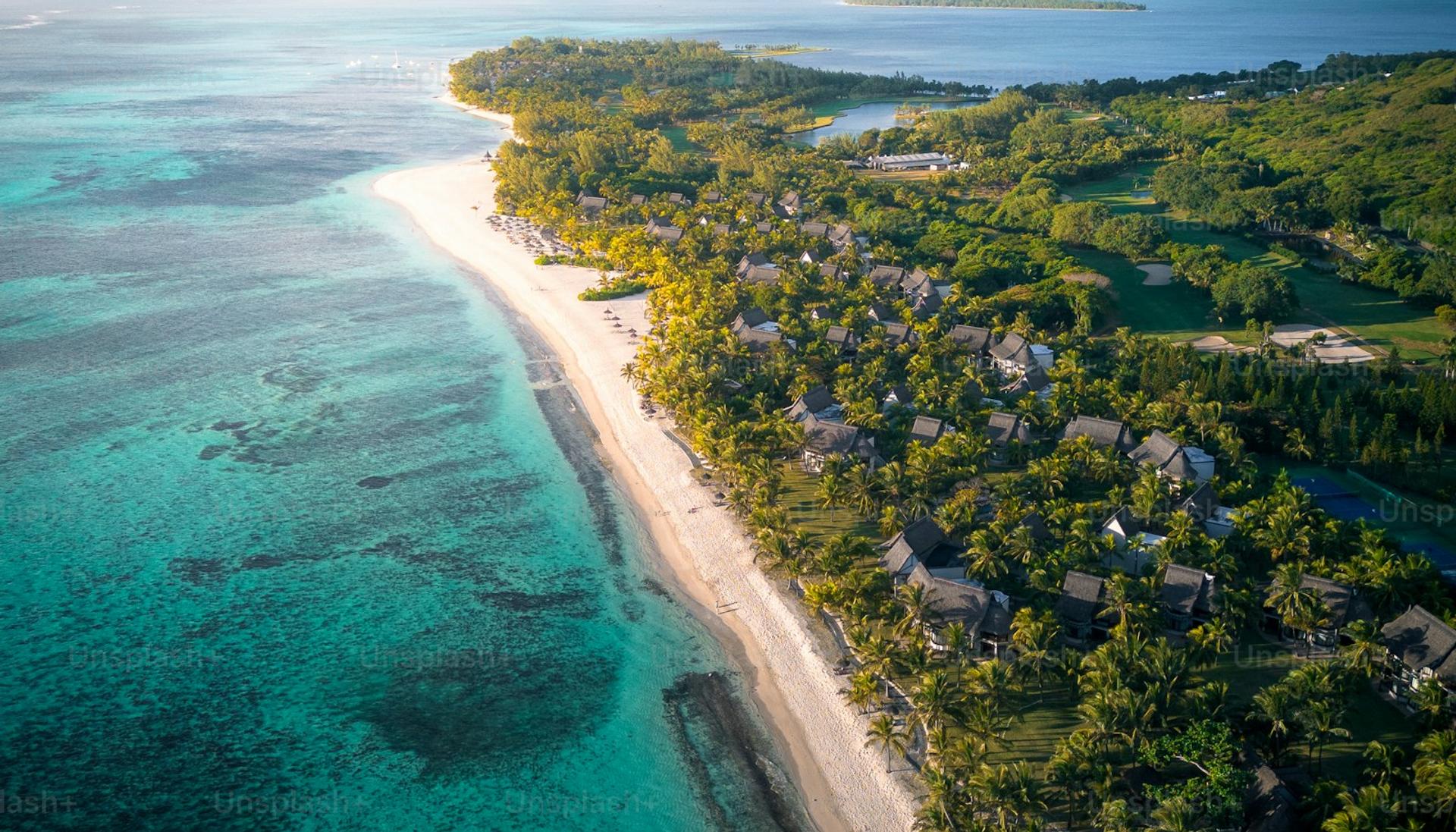
Can Foreigners Own Property in Mauritius? The 2026 Legal Guide
Yes, foreigners can own freehold property in Mauritius, but only within specific government-approved frameworks. Outside those frameworks, the Non-Citizens (Property Restriction) Act 1975 makes it a criminal offence for a non-citizen to acquire, hold, or lease property in Mauritius without prior authorisation.
The Legal Foundation: Non-Citizens (Property Restriction) Act 1975
The Non-Citizens (Property Restriction) Act 1975 (Act 22 of 1975, enacted 12 July 1975) is the primary statute governing foreign property ownership in Mauritius. It prohibits non-citizens from acquiring, holding, or leasing immovable property without prior approval. Historically that approval came from the Prime Minister's Office; today it is administered by the Economic Development Board (EDB) of Mauritius, the body responsible for managing all approved foreign acquisition schemes.
The Act has been amended multiple times, and its practical effect in 2026 is this: a foreign national wishing to buy residential property in Mauritius may only do so through one of five EDB-approved scheme frameworks, or through the G+2 open-market route for qualifying apartments. A purchase completed outside those frameworks is not just legally precarious, it may be void and could attract criminal liability.
What Changed with the Finance Act 2025
The 2025 Finance Act removed a route that had briefly existed since December 2023: non-citizens holding a valid Mauritian residence permit could previously purchase residential property outside the approved schemes if the value exceeded USD 500,000. That pathway was abolished. From the date of the Finance Act 2025, only the five scheme frameworks or the G+2 route are available to foreign buyers, regardless of permit status.
The Five Approved Schemes
IRS (Integrated Resort Scheme, 2002)
The first framework opened to foreign buyers. IRS projects are luxury resort-style developments on land of at least 10 hectares, often including golf courses, beach clubs, and hotel-managed services. The minimum purchase price is USD 375,000. No new IRS project approvals have been issued since 2015, but existing IRS estates continue to operate, and secondary market transactions remain active. Examples include Anahita on the east coast and Heritage Villas Valriche in the south-west.
RES (Real Estate Scheme, 2007)
Introduced for smaller luxury developments under 10 hectares that did not meet the IRS land threshold. RES has no minimum purchase price, but the USD 375,000 threshold still applies for residence permit eligibility. No new RES approvals have been issued since 2015. Existing RES stock continues to be bought and sold on the secondary market.
PDS (Property Development Scheme, 2015)
The PDS replaced both the IRS and RES for new project approvals. It is now the most common framework foreign buyers encounter when looking at new-build developments. PDS projects cover villas, townhouses, apartments, and serviced plots, and must include a social contribution component addressing cultural, environmental, or community needs. There is no minimum purchase price, but the USD 375,000 residence permit threshold applies. Under PDS, the buyer's spouse, children under 24, and parents also qualify for a residence permit once the threshold is met.
Smart City Scheme (SCS, 2015)
The broadest scheme in scope, covering entire planned urban developments certified as Smart Cities by the EDB. Foreign buyers can acquire residential units, commercial property, and serviced residential plots within a certified Smart City. The USD 375,000 residence threshold applies to residential acquisitions. Active Smart City developments include Moka (developed by ER Property/ENL Group), Beau Plan (Novaterra), Cap Tamarin (Trimetys), and Mont Choisy Smart City. Note: the Finance Act 2025 removed several tax incentives previously granted to Smart City developers, including exemptions from land conversion tax and registration fees at the developer level. Smart City projects certified before 5 June 2025 retain transitional benefits; new certificates do not.
G+2 (Ground+2, 2016)
A separate route from the four scheme frameworks. G+2 allows foreigners to buy apartments in any building with at least two floors above ground level, anywhere in Mauritius, provided the unit meets EDB requirements for foreign acquisition. The minimum price is MUR 6 million (approximately USD 130,000 to 140,000 at mid-2026 rates). The USD 375,000 threshold still applies for residence permit eligibility. Being in a tall building alone is not sufficient: the unit, the building, and the documentation must each satisfy the G+2 requirements, which the notary is required to verify before proceeding.
What Foreigners Cannot Buy
Foreigners cannot buy:
- Freehold land outside an approved scheme
- Agricultural land (with very limited exceptions requiring approval)
- Residential property outside the five frameworks listed above (the USD 500,000 outside-scheme route was abolished by the Finance Act 2025)
- Any immovable property without a notarised transaction processed through the EDB framework
The EDB Approval Process
For transactions within the four scheme frameworks (IRS, RES, PDS, SCS), the EDB approval is built into the developer's scheme authorisation. The buyer does not individually apply for a new EDB authorisation; instead, they purchase within a pre-approved development. The notary verifies scheme eligibility and EDB compliance before the deed is executed.
Ask Bektu
Still have a question about buying in Mauritius?
Answers come from the records on file, with links to every source.
Considering a developer you read about here?
You cannot walk the land from another country. But you can verify the developer. Bektu contacts them on your behalf and sends you a scored report. They never see who asked.
Search and verify any developerMore from Bektu
Stay a step ahead of the wire transfer
Get the occasional note from Bektu on verifying developers before you commit. No noise, just what matters.
We will never share your email. You can opt out at any time.