Can Foreigners Own Property in Costa Rica? The 2026 Legal Guide
Can Foreigners Own Property in Costa Rica? The 2026 Legal Guide
Yes, foreigners can own real property in Costa Rica on the same legal terms as Costa Rican citizens. There is no nationality or residency requirement for fee simple ownership of titled land. A foreign buyer takes the same registered title (folio real) and gets the same constitutional protection of private property under Article 45 of the Costa Rican Constitution.
The exception is coastal land inside the Maritime Zone, which operates under a separate concession regime with foreign-ownership limits. That carve-out is small in surface area but large in practical importance, because most foreign-buyer interest is exactly on the coast.
The governing framework
Costa Rican property law sits across several statutes:
- Constitution of Costa Rica, Article 45: protects private property
- Civil Code (Código Civil), Articles 264-322: defines property rights, transfers, and registration
- National Registry Law (Ley sobre Inscripción de Documentos en el Registro Público, Law No. 3883): governs the Registro Nacional and the folio real system
- Maritime Zone Law (Ley sobre la Zona Marítimo Terrestre, Law No. 6043 of 1977): governs the 200-meter coastal strip
- Notary Code (Código Notarial, Law No. 7764): governs the role of notaries in property transfers
- Tourism Development Law (Law No. 6758): governs concessions in defined tourism zones, including Peninsula Papagayo
- Law No. 9996 of 2021: governs investor residency through real estate at the $150,000 threshold
Fee simple (titled) property
Outside the Maritime Zone, foreigners can hold fee simple title with no restrictions. "Fee simple" in Costa Rican practice means propiedad inscrita or propiedad titulada: absolute ownership recorded under a folio real at the Registro Nacional. The registered owner can sell, mortgage, gift, will, or develop the property without further governmental authorization beyond the standard municipal and environmental permits any owner would need.
Foreign buyers can hold title in their personal name, through a Costa Rican corporation (sociedad anónima or sociedad de responsabilidad limitada), or through a foreign entity registered locally. The personal-name approach is now the only one that qualifies for investor residency under Law 9996.
The Maritime Zone (Zona Marítimo Terrestre)
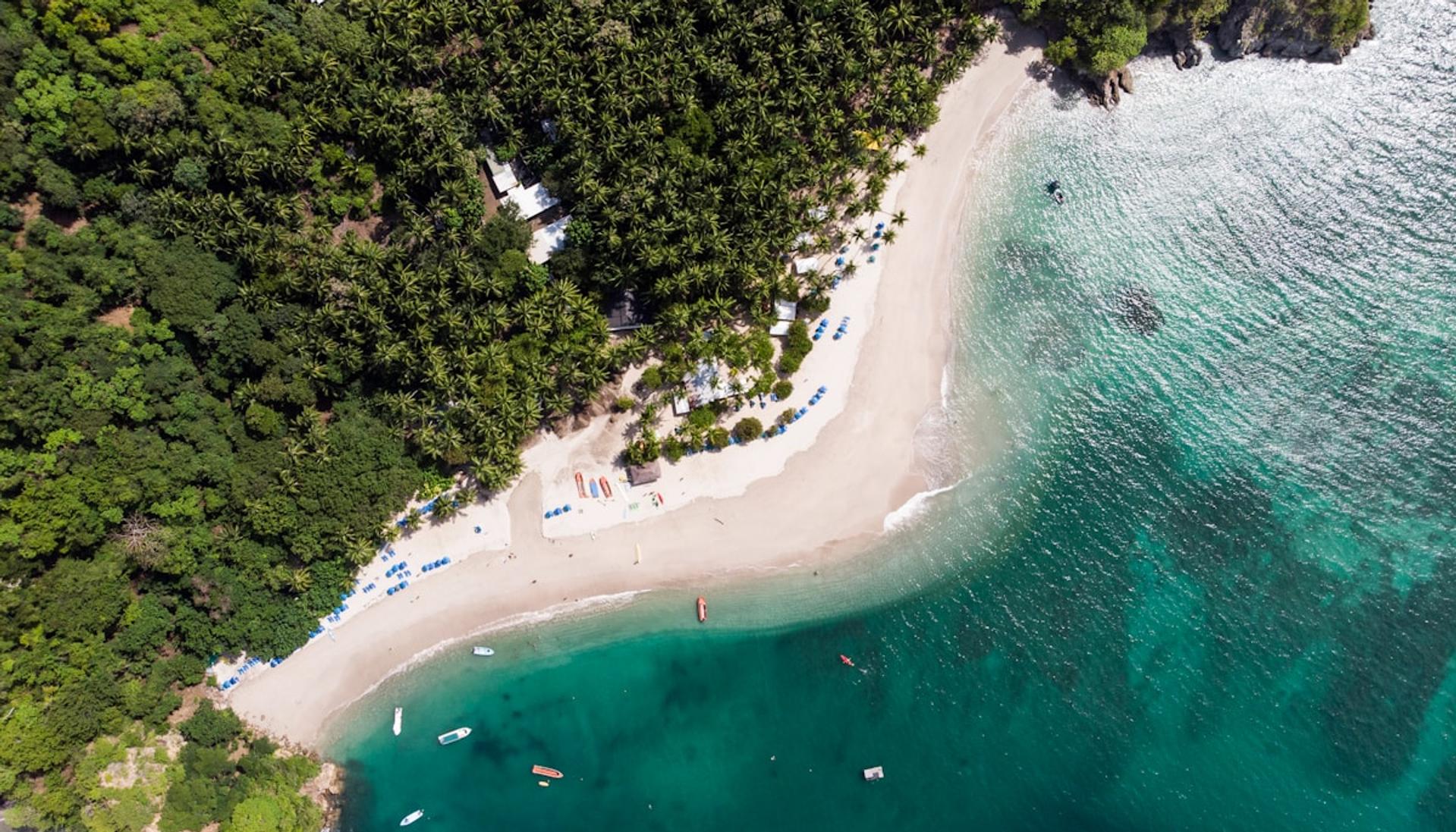
Law 6043 of 1977 created the Zona Marítimo Terrestre: the first 200 meters from the high-tide line along Costa Rica's coastlines.
- First 50 meters (Zona Pública): completely public. Nobody can own it. No building. No fencing. This is constitutional.
- Next 150 meters (Zona Restringida): held only by concession, not by fee simple. Concessions are granted by the local municipality, regulated by the Costa Rican Tourism Institute (ICT) in tourism zones, and typically last 20 years renewable.
For foreigners, the Maritime Zone has a specific restriction in Article 47 of Law 6043: a foreigner who has not resided in Costa Rica for at least five years cannot hold more than 49 percent of a concession. A corporation can hold a concession only if at least 51 percent of its capital is owned by Costa Ricans.
Roughly 95 percent of Costa Rica's beachfront sits inside the Maritime Zone. Only about 5 percent of beachfront is titled fee simple, which is why fee simple coastal parcels carry a steep premium.
Tourism Development Concessions (Law 6758)
Certain areas, most notably Peninsula Papagayo, sit under Law 6758 rather than Law 6043. Law 6758 allows concessions specifically for tourism development under different rules, and many of the residential brands on Peninsula Papagayo are structured under this framework. The mechanics differ from Maritime Zone concessions: longer terms, different government counterpart, different transfer rules.
Companies in Costa Rica with the most evidence on file
Ranked by BektuScore, which measures how much a buyer can verify about a company from public records. It does not rate build quality or returns.
America Free Zone
DeveloperHeredia, Costa Rica
Andaz Papagayo Residences
DeveloperGuanacaste, Costa Rica
Bahia Papagayo
DeveloperGuanacaste, Costa Rica
Ask Bektu
Still have a question about buying in Costa Rica?
Answers come from the records on file, with links to every source.
Considering a developer you read about here?
You cannot walk the land from another country. But you can verify the developer. Bektu contacts them on your behalf and sends you a scored report. They never see who asked.
Search and verify any developerMore from Bektu


Stay a step ahead of the wire transfer
Get the occasional note from Bektu on verifying developers before you commit. No noise, just what matters.
We will never share your email. You can opt out at any time.