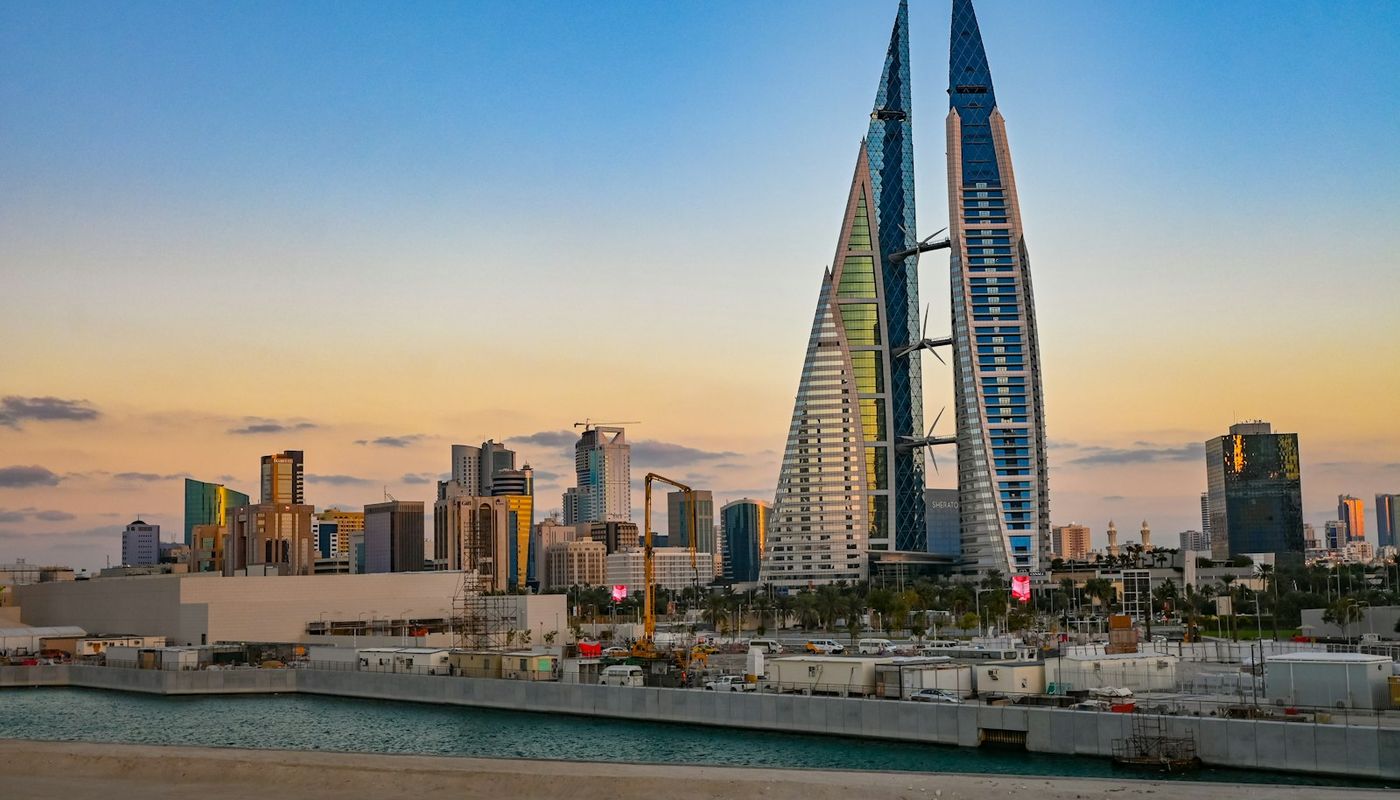
Can Foreigners Own Property in Bahrain? The 2026 Legal Guide
Yes. Foreigners of any nationality can own freehold property in Bahrain, with full ownership of both the unit and the land beneath it, but only within government-designated zones. Outside those zones, purchase by non-GCC nationals is not permitted under current law.
This guide explains the legal basis for that right, which zones qualify, how GCC nationals differ from other foreigners, what protections exist for off-plan buyers, how property ownership links to residency, and what it costs to complete a transaction.
The Legal Foundation
The right of non-Bahrainis to own freehold property originates with a Royal Decree issued in 2001, which established the principle of foreign freehold ownership in principle. The enabling legislation came through Legislative Decree No. 43 of 2003, titled "Ownership of Property and Land by Non-Bahrainis in the Kingdom of Bahrain." This decree nominated the designated areas and formalised the legal mechanism.
The framework has since been amended twice:
- Edict No. 67 of 2006 expanded and clarified the list of designated zones.
- Edict No. 38 of 2023 introduced further amendments to the framework.
Bilaj Al Jazayer, a beachfront area on Bahrain's eastern coast, was added to the designated zones in April 2025.
The real estate sector as a whole is regulated under Law No. 27 of 2017 Promulgating the Real Estate Sector Regulation Law, which came into effect in stages between September 2017 and March 2018. This law established the Real Estate Regulatory Authority (RERA) and set licensing requirements for developers, brokers, and valuers. It contains 109 articles covering every major aspect of the sector.
All property ownership transfers must be registered with the Survey and Land Registration Bureau (SLRB) to be legally recognised. The SLRB issues the title deed (the definitive document of ownership), and since 2023 it has offered electronic title deed issuance.
Designated Freehold Zones for Non-GCC Nationals
Non-GCC nationals can own freehold property outright in the following designated areas:
- Amwaj Islands (northern Bahrain, reclaimed island chain)
- Bahrain Bay (central waterfront, Manama)
- Reef Island (reclaimed island adjacent to central Manama)
- Seef / Marsa Al Seef (Bahrain's main commercial and mixed-use district)
- Durrat Al Bahrain (south coast resort and residential islands)
- Diyar Al Muharraq (large master-planned community, north of Muharraq)
- Juffair (established residential district south of Manama centre)
- Riffa Views (inland villa community)
- Dilmunia (development island, Muharraq area)
- Bilaj Al Jazayer (eastern beachfront, added April 2025)
Outside these zones, non-GCC nationals cannot purchase property. Long-term leasehold (up to 99 years) or usufruct arrangements are sometimes available outside designated zones, but freehold ownership is not.
GCC Nationals: Broader Rights
Citizens of Saudi Arabia, Kuwait, the UAE, Qatar, and Oman (the other GCC member states) enjoy near-parity with Bahraini nationals. GCC nationals can purchase freehold property across most of the Kingdom, including areas outside the designated zones, subject to registration with the SLRB. Inheritance and family transfers for GCC nationals are governed by Bahraini succession laws.
Off-Plan Buyer Protections: Escrow and RERA Licensing
For buyers purchasing a property before construction is complete (off-plan), Law No. 27 of 2017 and its subsidiary regulations create a specific protective framework.
Developer licensing: A developer must obtain a licence from RERA before marketing or selling any off-plan project. Advertising or collecting payments without a licence is a violation subject to penalties.
Escrow accounts: Under RERA Resolution No. 3 of 2018 on Escrow Accounts of Off-Plan Sale Projects and Central Bank of Bahrain Resolution No. 19 of 2018 on Regulating the Activity of the Escrow Account Agent, every off-plan project must operate a dedicated escrow account:
- The escrow account agent must be a retail bank licensed by the Central Bank of Bahrain and accredited by RERA.
- Buyer payments flow into the escrow account and may only be disbursed for construction costs on that specific project.
- A deposit equivalent to 20% of project costs must be maintained.
- A retention sum must remain in the escrow account for one year after project completion.
- The agent provides RERA with detailed monthly statements.
RERA has demonstrated that it will act on these rules. In 2020, it suspended the licence of a developer for three months over violations of Law No. 27 of 2017, the first major enforcement action under the post-2018 regulatory framework, explicitly citing buyer fund protection as the rationale.
Buyers should verify that any off-plan project they are considering has a valid RERA off-plan licence before signing a sale and purchase agreement or paying a deposit.
Residency Options Linked to Property Ownership
Owning property in Bahrain can qualify a foreigner for a residence permit. There are two main pathways.
Self-Sponsorship Residence Permit (Property Owner Track)
Foreigners who own a residential property with a title deed value of at least BHD 50,000 (approximately $133,000) can apply for a self-sponsorship residence permit. The permit is issued by the Nationality, Passports and Residence Affairs (NPRA) directorate. Requirements as listed on the official NPRA website include:
- Valid passport (more than 6 months remaining)
- Certified title deed showing property value of at least BHD 50,000
- Evidence of stable monthly income of BHD 500 or more
- Valid Bahrain-issued medical insurance
- Certificate of good conduct
- Bank statements (3 months)
Permit durations and fees:
- 2 years: BHD 200
- 5 years: BHD 400
- 10 years: BHD 600
Processing time is stated as 40 working days.
Golden Residency Visa
A higher-tier residency is available through Bahrain's Golden Residency programme. In late 2025, the minimum real estate investment threshold was reduced from BHD 200,000 to BHD 130,000 (approximately $345,000). The Golden Residency provides a 10-year renewable permit with full work rights and family sponsorship.
Transaction Costs
Bahrain has no annual property tax on residential property and no capital gains tax. The main costs of completing a purchase are:
- SLRB registration fee: 1.7% of the property value if submitted within 60 days of the notarised sale contract; 2% if submitted after 60 days.
- Legal fees: Typically 1% to 1.5% of the property value.
- Agent commission: Typically around 2% total, split between buyer and seller.
- SLRB administrative forms: 1 Bahraini dinar per transaction form.
Budget approximately 2.5% to 4.5% of the purchase price for all transaction costs combined.
Note: foreign property owners pay a 10% annual tax on the property's assessed monthly rental value, even if the property is owner-occupied rather than let. This is a Bahraini municipal levy applied to non-nationals.
Step-by-Step: How a Foreign Purchase Works
1. Identify a property within a designated freehold zone.
2. Confirm the project or developer holds a valid RERA licence (for off-plan) or that the existing title is clean (for secondary market).
3. Instruct a lawyer to review the sale and purchase agreement before signing.
4. Pay the deposit into the RERA-registered escrow account (off-plan) or directly to the seller (completed property).
5. Complete payment per the agreed schedule.
6. Submit the transfer documents to the SLRB within 60 days of notarisation to qualify for the 1.7% registration fee.
7. Receive the title deed (now available in electronic format).
Platforms such as Bektu publish verified information on developer track records and RERA registration status, which allows buyers to check compliance before engaging.
Key Laws and Authorities to Know
| Item | Detail |
|---|---|
| Primary ownership law | Legislative Decree No. 43 of 2003 (amended by Edict No. 67 of 2006 and Edict No. 38 of 2023) |
| Sector regulation law | Law No. 27 of 2017 |
| Regulatory authority | RERA (rera.gov.bh) |
| Land and title registration | SLRB (slrb.gov.bh) |
| Residency (property track) | NPRA (npra.gov.bh) |
| Off-plan escrow framework | RERA Resolution No. 3 of 2018; CBB Resolution No. 19 of 2018 |
Sources
- Law No. 27 of 2017 Promulgating the Real Estate Sector Regulation Law | RERA Bahrain (official PDF)_Real_Estate_Regulation.pdf)
- Self-Sponsorship Residence Permit and Re-entry Visa (Property Owner) | NPRA Bahrain
- Regulating Escrow Accounts and Escrow Account Agents | Lexology
- Survey and Land Registration Bureau | Kingdom of Bahrain
- Real Estate Regulatory Authority | Kingdom of Bahrain
- Bahrain: list of property taxes and fees (Sept 2025) | Sands of Wealth
Sign up to read the rest
Create a free account to keep reading. It only takes a minute.
Considering a developer you read about here?
You cannot walk the land from another country. But you can verify the developer. Bektu contacts them on your behalf and sends you a scored report. They never see who asked.
Search and verify any developerMore from Bektu
Stay a step ahead of the wire transfer
Get the occasional note from Bektu on verifying developers before you commit. No noise, just what matters.
We will never share your email. You can opt out at any time.