Bali vs Thailand for Foreign Villa Buyers in 2026
Foreign buyers choosing between Bali and Thailand for a villa or condo purchase are weighing two markets that have very different ownership frameworks, very different tax structures, and very different residency options. The two markets are competitive across price ranges, the most popular foreign-buyer enclaves (Canggu and Uluwatu in Bali, Phuket and Koh Samui in Thailand) overlap in lifestyle but diverge in legal exposure. The comparison below walks through ownership rules, prices, taxes, visa options, and developer trust as of 2026.
Can foreigners own property in Bali compared to Thailand?
Foreigners cannot own freehold in either country, but the workarounds differ materially. In Bali, foreigners can hold Hak Pakai (Right to Use, up to 80 years under Government Regulation 18/2021) directly on apartments and houses above minimum-value thresholds, or hold land through a foreign-investment company (PT PMA) with Hak Guna Bangunan. In Thailand, foreigners can own condominium units up to a 49 percent quota per building under the Condominium Act B.E. 2522 (1979), can take 30-year registered leases (renewable contractually), or use Thai limited companies with majority Thai shareholding under the Foreign Business Act B.E. 2542 (1999). Neither country allows foreigners freehold over land in their own personal name.
What is the Bali ownership structure for villas?
Bali villa buyers use one of three structures: a long-term leasehold (Hak Sewa, commonly 25 to 30 years with extension clauses) signed before a notary, a PT PMA holding HGB or Hak Pakai over the land, or a personally registered Hak Pakai over a finished house above the Bali foreign-buyer thresholds (IDR 5 billion for apartments, IDR 3 billion for landed houses under Ministerial Regulation 18/2021). Each has trade-offs: leasehold is simplest but weakest; PT PMA is strongest but adds annual filings and corporate tax; personal Hak Pakai requires the value threshold and gives no zoning protection. Nominee structures using Indonesian citizens as titleholders are void under UUPA Article 26.
What is the Thailand ownership structure for villas?
Thailand villa buyers usually combine a 30-year registered lease on the land with full freehold ownership of the structure (the house itself). The lease is registered at the Land Department under Civil and Commercial Code Sections 540 and 564, with the maximum statutory term of 30 years and contractual renewal options that are not automatically binding on a future landowner. The alternative is a Thai limited company with foreign minority shareholding under the Foreign Business Act, which has been the subject of intermittent Department of Business Development enforcement against nominee Thai shareholders. The third option, common on Phuket and Samui, is a leasehold of the villa land combined with foreign freehold of a strata-titled villa unit where the project is registered as a condominium.
Which country has stronger title security?
Both countries register titles in a national land registry (BPN in Indonesia, Department of Lands in Thailand), and titles issued through the official process are generally enforceable. Thailand's Chanote (Nor Sor 4 Jor) full freehold title with GPS-surveyed boundaries is the strongest title type globally, although foreigners cannot hold it directly. Indonesia's BPN system has more variation in title quality, particularly outside major urban centers. For the structures actually available to foreigners, Thai condominium freehold and Thai registered 30-year leases have the cleanest registration paper trail. Bali leaseholds depend heavily on the strength of the notarial drafting and the underlying landowner's freehold (Hak Milik) certificate.
What is the typical villa price in Bali compared to Phuket?
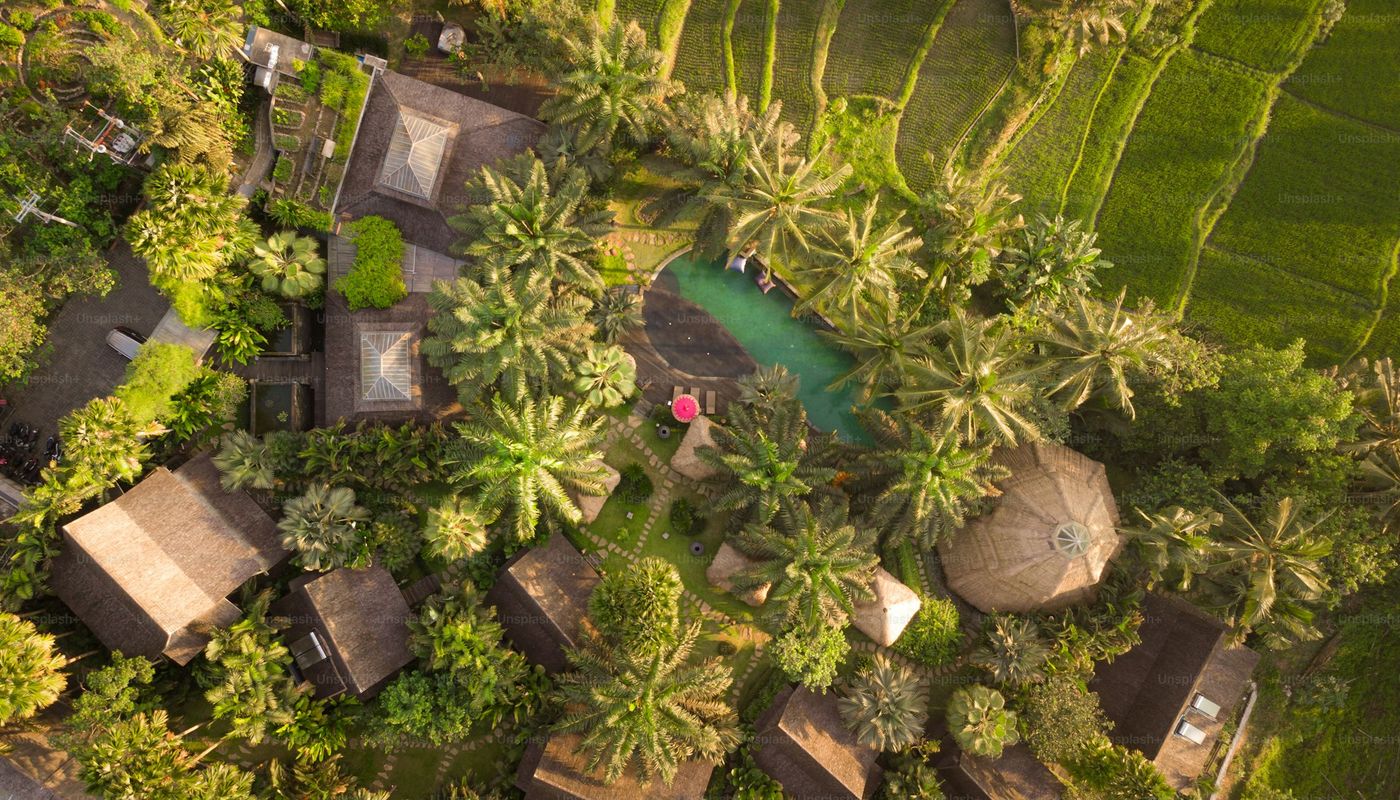
In 2026, a three-bedroom villa in the popular foreign zones (Canggu, Berawa, Uluwatu, Pererenan) ranges from IDR 8 to 25 billion (approximately USD 500,000 to USD 1.5 million) for completed units on 30-year leasehold, with HGB-titled freehold-equivalent reaching IDR 25 to 60 billion. Comparable Phuket villas (Bang Tao, Layan, Kamala, Rawai) range from THB 25 to 80 million (approximately USD 700,000 to USD 2.3 million) for 30-year leasehold land with freehold structure, with full-condominium-registered villas in projects like Anchan Lagoon or Botanica reaching THB 40 to 150 million. Koh Samui is roughly 70 to 90 percent of Phuket pricing. Northern Bali (Lovina, Munduk) is roughly 30 to 50 percent of southern Bali.
What is the typical condo price in Jakarta compared to Bangkok?
Jakarta foreign-eligible condominium pricing in central districts (Sudirman, Kuningan, Senayan) ranges from IDR 30 to 60 million per square meter (USD 1,900 to 3,800), with premium serviced residences reaching IDR 70 to 120 million per square meter. Bangkok foreign-eligible condominium pricing in the central business district (Sukhumvit, Sathorn, Silom) ranges from THB 200,000 to 400,000 per square meter (USD 5,800 to 11,600), with branded residences reaching THB 500,000 to 800,000 per square meter. Bangkok central condos are meaningfully more expensive than Jakarta central condos at equivalent specification, although Bangkok yields are typically lower.
What taxes apply when buying in Bali?
The buyer pays BPHTB (transfer tax) at 5 percent of the transaction value above the local exemption threshold under Law 28/2009, the seller pays PPh Final at 2.5 percent of gross transaction value under Government Regulation 34/2016, and notary and PPAT fees add 0.5 to 1 percent. New-build apartments above the luxury VAT threshold are subject to 11 percent VAT. Annual PBB (property tax) is 0.1 to 0.3 percent of assessed value. PT PMA share transfers are taxed under corporate rules at 22 percent on gains or 5 percent on gross transaction for non-resident sellers.
What taxes apply when buying in Thailand?
Property transfer tax at the Land Department is 2 percent of the appraised value, paid by the buyer or split per contract. The Specific Business Tax of 3.3 percent applies if the seller has held the property for less than five years and is not a personal-residence exemption case, and stamp duty of 0.5 percent applies if SBT does not apply (under the Revenue Code). Withholding tax on the seller ranges from progressive personal rates (up to 35 percent on profit) for individuals to 1 percent of appraised value for corporate sellers. Annual Land and Building Tax (Land and Building Tax Act B.E. 2562, in force since 2020) is 0.02 to 0.7 percent of appraised value depending on use.
What visa options come with property in Bali?
Indonesia offers the Second Home Visa (five-year, renewable) requiring an IDR 2 billion bank deposit or proof of property ownership above the thresholds. The Investor KITAS attaches to PT PMA shareholders investing IDR 1 billion or more in shares. The Bali-specific Second Home Visa scheme launched in 2023 has been used by retirees and remote workers. None of these visas grant the right to take employment for an Indonesian employer; PT PMA shareholders can take a director role with proper structuring.
What visa options come with property in Thailand?
Thailand offers several property-relevant visa options. The Long-Term Resident Visa (LTR Visa), launched in 2022 by the Board of Investment, is a 10-year visa for four categories including Wealthy Pensioner (USD 80,000 annual income), Wealthy Global Citizen (USD 1 million in assets including USD 500,000 in Thai investment), Work-from-Thailand Professional, and Highly Skilled Professional. The Thailand Privilege Visa (formerly Thailand Elite) offers 5 to 20 year visas at THB 900,000 to 5 million membership fees. Property ownership itself does not grant any visa, but capital invested in registered freehold condominiums above THB 10 million can qualify under certain Investment Visa subcategories.
How does developer trust compare?
Both markets have a mix of reputable institutional developers and smaller operators with mixed records. In Thailand, large listed developers (Sansiri, Land and Houses, SC Asset, Ananda, Magnolia, Singha Estate) operate under Stock Exchange of Thailand disclosure rules with stronger escrow practice on registered condominium projects. Bali villa development is more fragmented; reputable developers include several Indonesian and foreign-owned firms operating under PT PMA structures, but many smaller villa projects sell off-plan without bank-guaranteed escrow. Indonesia's escrow framework under POJK 13/POJK.04/2017 exists but is unevenly applied. Bektu maintains transparency profiles on developers in both markets, with notes on completion records and any registered complaints.
What are the main scam risks in Bali?
The most common Bali risks are: villas built on agricultural-zoned land sold as tourist accommodation without legal permits; nominee Hak Milik structures that the nominee later claims as their own; misrepresented title types (sertifikat photocopies that do not match the actual BPN record); off-plan villas where the developer disappears or fails to deliver; and double-pledged leasehold land where the same plot is leased to multiple foreigners. The 2024 to 2026 villa moratoria in Badung and Tabanan and increased enforcement against unzoned tourist rentals have raised the operational risk for buyers acquiring villas already operating without proper PBG and NIB.
What are the main scam risks in Thailand?
The most common Thailand risks are: Thai limited companies with nominee Thai shareholders being targeted by Department of Business Development investigations; chanote disputes in islands where boundary surveys were historically incomplete; off-plan condominium projects in Pattaya and certain Phuket areas where developers have failed to deliver; and 30-year lease agreements that are not properly registered at the Land Department, making them unenforceable against subsequent buyers. The use of foreign lawyers without proper Thai-law-firm partnerships also exposes buyers to unenforceable opinion letters.
Which country has lower running costs?
Bali running costs are lower in absolute terms. Annual PBB on a typical villa is well under USD 1,000. Pool and garden maintenance, security, and utilities for a three-bedroom villa run USD 500 to 1,500 per month. Thailand running costs are higher: annual Land and Building Tax on a USD 1 million villa is USD 1,000 to 3,000, common area maintenance fees at branded condominium projects in Phuket and Bangkok run THB 70 to 150 per square meter per month (USD 25 to 50 per square meter per year), and electricity is meaningfully higher due to active cooling.
Where can I learn more?
Bektu maintains transparency profiles for developers in both markets, with notes on title structures, delivery history, and any registered complaints. Title structures, tax rates, and visa thresholds change with each annual budget cycle in both countries, so always confirm current figures with a licensed lawyer in the relevant jurisdiction before signing any deposit or reservation contract.
Sources
- Basic Agrarian Law No. 5 of 1960 (UUPA) — JDIH Kementerian ATR/BPN
- Government Regulation No. 18 of 2021 — JDIH ATR/BPN
- Condominium Act B.E. 2522 (1979) — Thailand Department of Lands
- Foreign Business Act B.E. 2542 (1999) — Department of Business Development
- Land and Building Tax Act B.E. 2562 — Revenue Department of Thailand
- Thailand Long-Term Resident Visa — Board of Investment
- Indonesia Second Home Visa — Direktorat Jenderal Imigrasi
- Government Regulation No. 34 of 2016 on Income Tax from Real Estate Transfers — JDIH Kemenkeu
Sign up to read the rest
Create a free account to keep reading. It only takes a minute.
Considering a developer you read about here?
You cannot walk the land from another country. But you can verify the developer. Bektu contacts them on your behalf and sends you a scored report. They never see who asked.
Search and verify any developerMore from Bektu

Stay a step ahead of the wire transfer
Get the occasional note from Bektu on verifying developers before you commit. No noise, just what matters.
We will never share your email. You can opt out at any time.