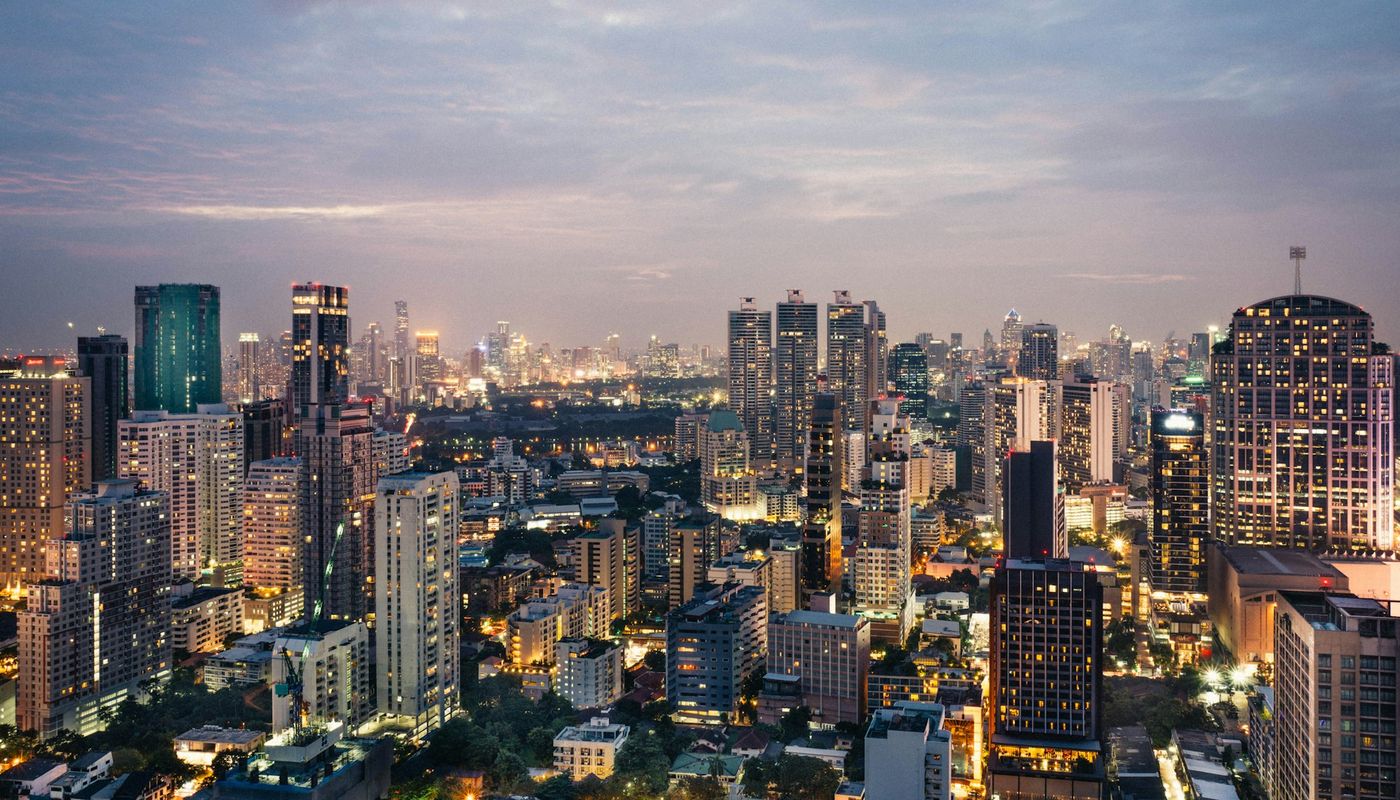
Thailand's 49% Condo Quota Rule: A Complete Foreign Ownership Guide for 2026
Thailand's 49% Condo Quota Rule: A Complete Foreign Ownership Guide for 2026
Foreigners cannot own land in Thailand. They can own a condominium unit outright, in their own name, with a Chanote title — but only if the building has room left in its foreign quota. That quota is fixed by Section 19 bis of the Condominium Act B.E. 2522 (1979) at 49% of the total saleable floor area of the project. Once a building hits the cap, no more foreign-name registrations are possible in that building until a foreign owner sells back to a Thai buyer.
This is the single most important number for any foreign buyer looking at Thai property. Misunderstanding it is the most common reason transactions collapse at the Land Office.
What the law actually says
The governing instrument is the Condominium Act B.E. 2522 (1979), amended several times, most consequentially by the Act (No. 4) B.E. 2551 (2008). The relevant operative section is Section 19 bis, which states that aliens and alien-controlled juristic persons may collectively hold ownership of units representing no more than 49% of the total saleable floor area in any condominium project.
Three things matter about how that 49% is measured:
The calculation is based on floor area, not the number of units. A building with 100 units could in theory have all of them foreign-owned if the foreign-owned units are smaller than the Thai-owned ones, as long as the foreign square-meter total stays under 49%.
Common areas (corridors, lobbies, gyms, pools) are excluded from the calculation. Only saleable area counts.
Quota compliance is verified at the Land Office at the moment of registration. The Land Office issues a quota certificate (Foreign Quota Letter, sometimes called the "Section 19" letter) on the day of transfer, signed by the juristic person manager of the condominium, confirming that the building is still under 49% foreign ownership after this transaction.
If the certificate cannot be issued, the transfer does not happen. There is no workaround at the registration counter.
What ownership inside the quota actually gives you
When you buy inside the 49% quota, you receive freehold title to that specific unit. It is recorded in your name at the relevant Provincial Land Office and you receive a Chanote (Title Deed). You can sell it, mortgage it, gift it, or bequeath it without needing Thai consent. You become an automatic member of the condominium juristic person and vote your area-weighted share on building matters.
This is the only structure under Thai law that gives a foreign individual genuine ownership of immovable property in their own name without restrictions on duration.
What happens when the quota is full
If you want a specific unit in a building that has already hit its 49% cap, you have three real options.
Leasehold. You can sign a 30-year lease registered against the unit, noted on the reverse of the Chanote at the Land Office. This is the standard fallback when foreign quota is exhausted. The registered lease is enforceable against subsequent owners and survives sale of the underlying freehold. Two further 30-year renewal options written into the contract are common but legally fragile. Thai courts have historically declined to enforce automatic 30-year renewals beyond the first term as contractually binding on successor owners. Treat a 30-year lease as a 30-year lease.
Wait. Foreign quota in established buildings frees up over time as foreign sellers sell back to Thai buyers. You can ask the juristic person to put you on a waiting list, though there is no statutory obligation to do so.
Buy a different unit, or a different building. This is usually the right answer.
The structures that do not work
The Foreign Business Act B.E. 2542 (1999) and the Land Code prohibit using a Thai company as a nominee to hold land or freehold property on behalf of a foreigner. A Thai majority company can hold land and freehold property in its own right, but only if the Thai shareholders are genuine commercial participants, not paid stand-ins. The Department of Lands and the Department of Business Development have run periodic enforcement campaigns since 2024, examining the source of funds and active involvement of Thai shareholders in companies that hold property near foreign demand corridors. Penalties include forced divestment within a court-ordered period and criminal liability for both the foreign principal and the nominee shareholders.
The "buy through a Thai spouse" structure has its own discrete legal pathway. A Thai citizen married to a foreigner can buy land, but at the time of registration both spouses must sign a declaration at the Land Office that the funds used are the personal property of the Thai spouse and that the foreign spouse waives any claim to the land. The property then sits outside the marital estate.
Nominee schemes structured as preferred share arrangements, golden share arrangements, or layered offshore-Thai holding companies have been repeatedly struck down. Avoid them.
Funds-transfer requirements
Section 19 of the Condominium Act requires that the purchase funds be transferred from outside Thailand in foreign currency. The receiving Thai bank issues a Foreign Exchange Transaction Form (FET, formerly TT3) for transfers above USD 50,000 equivalent, confirming the amount converted to baht and the purpose of the transfer.
The Land Office will not register the transfer of a foreign-quota unit without the FET. Failing to get this paperwork right is the second most common transaction failure after quota exhaustion. The transfer must be in foreign currency, not in baht held in a Thai account, and the FET must explicitly state that the funds are for the purchase of a condominium.
Verifying the quota before you commit
Before signing a sale and purchase agreement, request three documents from the seller or developer:
The current Foreign Quota Status Letter from the juristic person, dated within the last 30 days, showing total foreign-owned floor area as a percentage of total saleable area.
A copy of the Chanote (title deed) for the specific unit.
If buying off-plan from the developer, the construction permit, the EIA approval, and the condominium juristic person registration documents. A project cannot legally sell foreign-quota units before the building is registered as a condominium with the Land Department, which usually does not happen until construction is substantially complete.
Bektu (https://bektu.com) tracks developer delivery histories so foreign buyers can verify which developers have a clean record of registering quotas correctly and which have delivery delays that have stranded foreign deposits.
Common ways the rule gets misrepresented
Sales agents sometimes describe the quota in misleading ways. Three patterns to watch for:
"The quota is being increased to 75% next year." Proposals to raise the cap have been floated repeatedly since 2008 and again in 2022 and 2024. None has been enacted. As of March 2026, the cap remains 49%.
"This unit is in the Thai quota but we can flip it to foreign quota at registration." This is not possible. The quota is determined at the moment of registration by the juristic person, based on actual foreign-owned floor area, not by reassignment.
"You can buy through a Thai company and it counts as Thai quota." A Thai juristic person that is more than 49% foreign-owned is treated as alien under Section 19 bis and counts against the foreign quota. The structure does not change the quota math, only the paperwork.
Bottom line
The 49% rule is rigid, well-enforced, and not going to change in 2026. Verify quota availability in writing before you commit. Transfer the purchase funds from offshore in foreign currency. Get the FET. Take freehold title in your own name. If the building is full, take a registered 30-year lease and price it accordingly. Do not use a nominee structure.
Sources
- Condominium Act B.E. 2522 (1979) – English translation
- Thai Condo Foreign Quota: The 49% Rule Explained (Terms.Law)
- Department of Lands of Thailand
- Thailand Foreign Business Act B.E. 2542 (1999) – DBD
- Buying Property in Thailand: 2026 Guide (Thai Law Online)
- Foreign Quota in Thai Condos: Navigating the 49% Rule (Ocean WWP)
- Can Foreigners Buy Property in Thailand? (Taxes for Expats)
Sign up to read the rest
Create a free account to keep reading. It only takes a minute.
Developers referenced
- Sansiri Bangkok, Thailand
- AP Thailand Bangkok, Thailand
- Ananda Development Bangkok, Thailand
Thinking about Sansiri?
You cannot walk the land from another country. But you can verify the developer. Bektu contacts them on your behalf and sends you a scored report. They never see who asked.
Verify Sansiri anonymouslyThinking about AP Thailand?
You cannot walk the land from another country. But you can verify the developer. Bektu contacts them on your behalf and sends you a scored report. They never see who asked.
Verify AP Thailand anonymouslyThinking about Ananda Development?
You cannot walk the land from another country. But you can verify the developer. Bektu contacts them on your behalf and sends you a scored report. They never see who asked.
Verify Ananda Development anonymouslyMore from Bektu


Stay a step ahead of the wire transfer
Get the occasional note from Bektu on verifying developers before you commit. No noise, just what matters.
We will never share your email. You can opt out at any time.