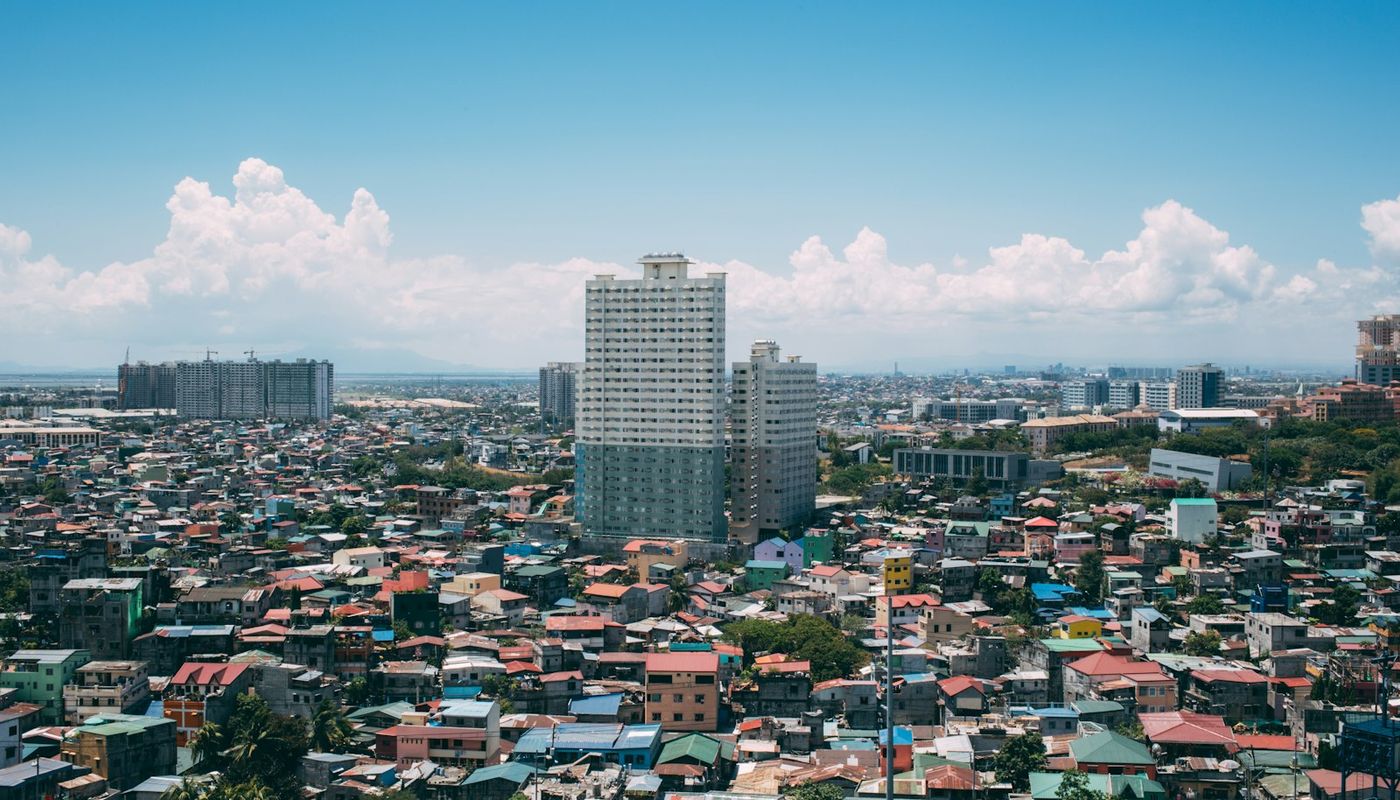
Philippines Real Estate Scams: What Foreign Buyers Need to Know
Philippines Real Estate Scams: What Foreign Buyers Need to Know
Most foreign buyers who lose money in the Philippines lose it to one of four schemes: nominee or dummy arrangements, fake title fraud, double-selling, and unlicensed pre-selling. None of these are rare. The Philippines has functioning property registration and courts, but enforcement is slow and the burden falls on the buyer to verify documents before paying. Here's what each scam looks like and how to detect it before you wire money.
1. The Nominee or Dummy Arrangement
This is the most common and the most expensive mistake foreign buyers make. The pitch sounds reasonable: foreigners can't own land, but a "trusted" Filipino friend, agent, or attorney will hold the title for you, backed by a private side agreement (often called a Declaration of Trust, Memorandum of Agreement, or undated Deed of Sale).
The arrangement is illegal under the Anti-Dummy Law, Republic Act 2630, which criminalizes the use of dummies to evade nationality requirements in land ownership. Penalties under Section 3 of the Act include imprisonment of 5 to 15 years, forfeiture of the property to the State, and deportation of the foreign national involved.
The side agreement is unenforceable. The Supreme Court has repeatedly held that contracts designed to circumvent the constitutional restriction on foreign land ownership are void ab initio (Krivenko v. Register of Deeds, G.R. No. L-630; Philippine Banking Corporation v. Lui She, G.R. No. L-17587; Muller v. Muller, G.R. No. 149615). The Filipino titleholder can sell, mortgage, or refuse to honor the side agreement, and the foreign buyer has no legal recourse to recover the property or the purchase price.
Red flags: any agent or lawyer who says "we can structure this so you effectively own the land" or "everyone does it this way." If the structure depends on a private agreement that contradicts the public title, you are inside the Anti-Dummy Law.
2. Fake Title Fraud
Forged Transfer Certificates of Title (TCTs) are widely available in the Philippines. The forgery industry has improved to the point where high-quality fakes can fool buyers, agents, and even some lawyers on visual inspection. The seller presents a clean-looking title, the buyer pays, and the buyer later discovers the title is not registered with the Registry of Deeds.
How it works: the scammer either creates an entirely fabricated TCT for a property they don't own, or alters a real TCT to substitute their name for the true owner's. They may target properties owned by overseas Filipinos who don't physically check on the land for years.
How to detect: pull the title yourself from the Registry of Deeds in the city where the property is located. The certified true copy from the Registry is the only authoritative document. Match every detail (title number, lot number, block, technical description, owner's full name, encumbrances) against the document the seller presented. Any discrepancy means walk away.
For condominiums, the Condominium Certificate of Title (CCT) is the equivalent and follows the same verification process at the Registry of Deeds.
Budget PHP 5,000 to PHP 15,000 for professional title verification, covering the certified true copy fee and a lawyer's review. For land, a licensed geodetic engineer should confirm the technical description on the title matches what is on the ground. Some forged titles carry numbers that do not exist in the registry's system at all, which a direct search exposes immediately.
3. Double-Selling and Multiple Reservations
A developer or seller takes reservation fees and down payments from multiple buyers for the same unit, then delivers to whichever buyer paid in full first or to whichever buyer they prefer. The losing buyers chase refunds for years.
This is particularly common in pre-selling condominium projects where construction is years away from completion. Reservation agreements are often informal documents that don't get registered anywhere, so there's no public record preventing the developer from accepting another reservation for the same unit.
How to detect: insist that the reservation agreement reference a specific unit number and floor plan, and that it commit the developer to deliver that exact unit. Get a Contract to Sell (not just a reservation receipt) as soon as possible, and have it notarized. Annotate the Contract to Sell with the Registry of Deeds where possible. Pay through traceable channels (bank transfer, manager's check) and keep all official receipts issued in the developer's corporate name.
Philippine law decides double sales by registration, not by payment date. Under Article 1544 of the Civil Code, where the same immovable is sold to more than one buyer, ownership goes to whoever first registers the sale in good faith with the Registry of Deeds. Paying first protects nothing. Move directly from the Deed of Absolute Sale to the Bureau of Internal Revenue for Capital Gains Tax and Documentary Stamp Tax, obtain the Certificate Authorizing Registration (CAR), and file at the Registry of Deeds. For pre-selling condominiums, confirm the project's Master Deed is registered and ask the developer to annotate your purchase against it.
Double-selling is separately chargeable under Article 316 of the Revised Penal Code (Other Forms of Swindling), independent of any administrative case under PD 957.
4. Unlicensed Pre-Selling
Section 4 of Presidential Decree 957 (the Subdivision and Condominium Buyers' Protective Decree) requires every pre-selling subdivision or condominium project to register with the Department of Human Settlements and Urban Development (DHSUD) and to obtain a License to Sell before accepting any payment from buyers.
Unlicensed pre-selling happens when a developer (sometimes a real developer, sometimes an outright fraud) collects reservation fees and down payments for a project that has not yet received DHSUD authorization. In the best case, the project eventually gets licensed and built, but the buyer's money sat at risk for months or years. In the worst case, the project is never built, the developer dissolves, and the buyer's money is gone.
How to detect: ask for the License to Sell number. It should appear on all marketing materials. Verify the number on the DHSUD website's project registry. If the developer says "the license is in process," do not pay anything. PD 957 makes any payment collected without a license recoverable, but recovery requires a lawsuit you don't want to have to file.
5. Side Agreement Refund Scams
A variation on dummy arrangements: the foreign buyer is told they cannot own the land directly, but the agent offers a "rent-to-own" or "lease with option to buy" structure that supposedly gives them effective ownership for a one-time payment. After payment, the buyer discovers the lease term is much shorter than represented, the option to buy is conditional on events that never happen, or the option is unenforceable because of the underlying constitutional restriction.
How to detect: any "ownership-equivalent" structure that requires a one-time upfront payment greater than 10 to 20 percent of the property's full value is suspicious. Legitimate long-term leases under RA 12252 or PD 471 are documented, registered, and don't claim to be functionally identical to ownership.
6. Title Encumbrances Hidden at Sale
A property can have valid title but carry hidden encumbrances: an unpaid mortgage, a tax lien, a pending litigation annotation (lis pendens), or an adverse claim by another party. Sellers sometimes present a clean-looking title and conceal these encumbrances until after payment.
How to detect: the certified true copy of the title from the Registry of Deeds shows all registered encumbrances. Check the back of the title (the annotations page) for any registered mortgages, adverse claims, or lis pendens. Also obtain a Tax Clearance from the city treasurer confirming all real property taxes are paid current.
7. Pre-Selling Project Abandonment
The developer is licensed, the project is real, the reservation is legitimate, but the developer runs out of capital, files for rehabilitation or insolvency, and the project either never gets completed or gets handed off to a different developer at a different specification.
This is not technically a scam, it's developer failure. But the financial consequence for the buyer is similar. PD 957 and the Maceda Law (Republic Act 6552) provide partial refund rights, but recovery from an insolvent developer is slow and often partial.
How to detect: look at the developer's other completed projects, ideally three or more. What was the gap between advertised turnover and actual turnover? What does the building look like five years after completion? Is the developer publicly listed (more disclosure, more scrutiny) or privately held (less of both)?
Turnover is the other point where money leaks. Once you sign the turnover acceptance form, proving a defect existed at delivery becomes much harder. A professional snagging inspection costs PHP 10,000 to PHP 25,000 and checks plumbing, electrical work, tiling, waterproofing, and structural elements first.
8. Unlicensed Agents and Brokers
Republic Act 9646, the Real Estate Service Act, requires every real estate broker, appraiser, assessor, and consultant to hold a license from the Professional Regulation Commission (PRC), and requires salespersons to be registered under a licensed broker. Operating without that license is a criminal offense.
Unlicensed operators collect reservation fees and commissions and disappear. Others invent charges that do not exist in a legitimate transaction: "foreigner processing fees," "DHSUD clearance fees," or "title expedition fees." Inflated pricing is the quieter version, with markups of 10 to 20 percent above the developer's published price list pocketed by the agent.
How to detect: verify the broker's PRC license number on the PRC verification portal at online.prc.gov.ph, and ask any salesperson for their supervising broker's name and license number. Request the official price list from the developer's own sales office. Never pay into an agent's personal bank account.
9. Rental Guarantee and Pag-IBIG Scams
Guaranteed rental returns of 5 to 8 percent a year are a standard closing tool. The guarantee is often absent from the Contract to Sell, runs only one or two years already priced into the unit, or is issued by a management company that no longer exists when the period starts. Require it in writing, backed by an escrow account or performance bond.
Pag-IBIG Fund (Home Development Mutual Fund) housing loans are for Filipino citizens only, and no intermediary can obtain one for a foreign national. Anyone offering Pag-IBIG access for a fee is running a scam.
How to Verify a Developer Before Reserving
Pull the developer's DHSUD registration. Every legitimate developer has one. The DHSUD maintains a public list at dhsud.gov.ph.
Pull the project's License to Sell. Verify the project name, location, total units, and turnover date match what the developer is selling you.
Verify the title to the land. Pull the Transfer Certificate of Title from the Registry of Deeds in the city of the project. The land should be owned by the Condominium Corporation or by the developer's corporate entity, with no adverse annotations.
Verify the Building Permit and DENR Environmental Compliance Certificate. These are issued by the local government and the DENR respectively and confirm the project has cleared regulatory review.
Check the developer's track record. Bektu is one source that compiles developer delivery histories across multiple countries, including the Philippines. Independent track-record data matters more than marketing claims, especially for mid-tier and smaller developers where brand reputation alone doesn't tell you whether projects get delivered.
Look up the developer's litigation history. The DHSUD publishes complaint records and adjudicated cases. A developer with multiple unresolved complaints is a signal.
If You've Already Been Scammed
File a complaint with DHSUD if the case involves an unlicensed project or developer non-delivery. DHSUD has administrative authority to impose sanctions and order refunds.
File a criminal complaint with the Department of Justice or the local prosecutor's office for fraud (estafa under Article 315 of the Revised Penal Code), syndicated estafa (Presidential Decree 1689) if multiple buyers were defrauded together, or falsification of public documents (Article 171 of the Revised Penal Code) for fake titles.
File a civil case in the Regional Trial Court for damages and recovery of payments. Civil cases in the Philippines are slow, often taking 5 to 10 years to resolve. Pursue criminal charges in parallel where the facts support them, because the threat of criminal liability often drives settlement.
For nominee arrangements, recovery is unlikely. The buyer is also liable under the Anti-Dummy Law, which limits both legal options and the willingness to bring the matter to court.
Bottom Line
The Philippines property market is not uniquely dangerous, but it is unforgiving of buyers who skip verification. The four major scams (nominee arrangements, fake titles, double-selling, unlicensed pre-selling) are all detectable with documents you can pull yourself from public registries. The cost of one afternoon at the Registry of Deeds and the DHSUD office is dramatically lower than the cost of any of the above going wrong.
Sources
- Buying property in the Philippines: risks, scams and pitfalls 2026 (Bamboo Routes)
- Risks of Buying Property in the Philippines (InvestAsian)
- 5 Real Estate Scams in the Philippines (OwnPropertyAbroad)
- Land Purchase Scam and Real Estate Fraud (Respicio Law)
- Property Title Fraud and Ownership Dispute (Respicio Law)
- Top 5 Real Estate Scams in the Philippines (Cebu Grand Realty)
- How to Prevent Real Estate Scam in the Philippines (Joanna Law Office)
Sign up to read the rest
Create a free account to keep reading. It only takes a minute.
Considering a developer you read about here?
You cannot walk the land from another country. But you can verify the developer. Bektu contacts them on your behalf and sends you a scored report. They never see who asked.
Search and verify any developerMore from Bektu



Stay a step ahead of the wire transfer
Get the occasional note from Bektu on verifying developers before you commit. No noise, just what matters.
We will never share your email. You can opt out at any time.