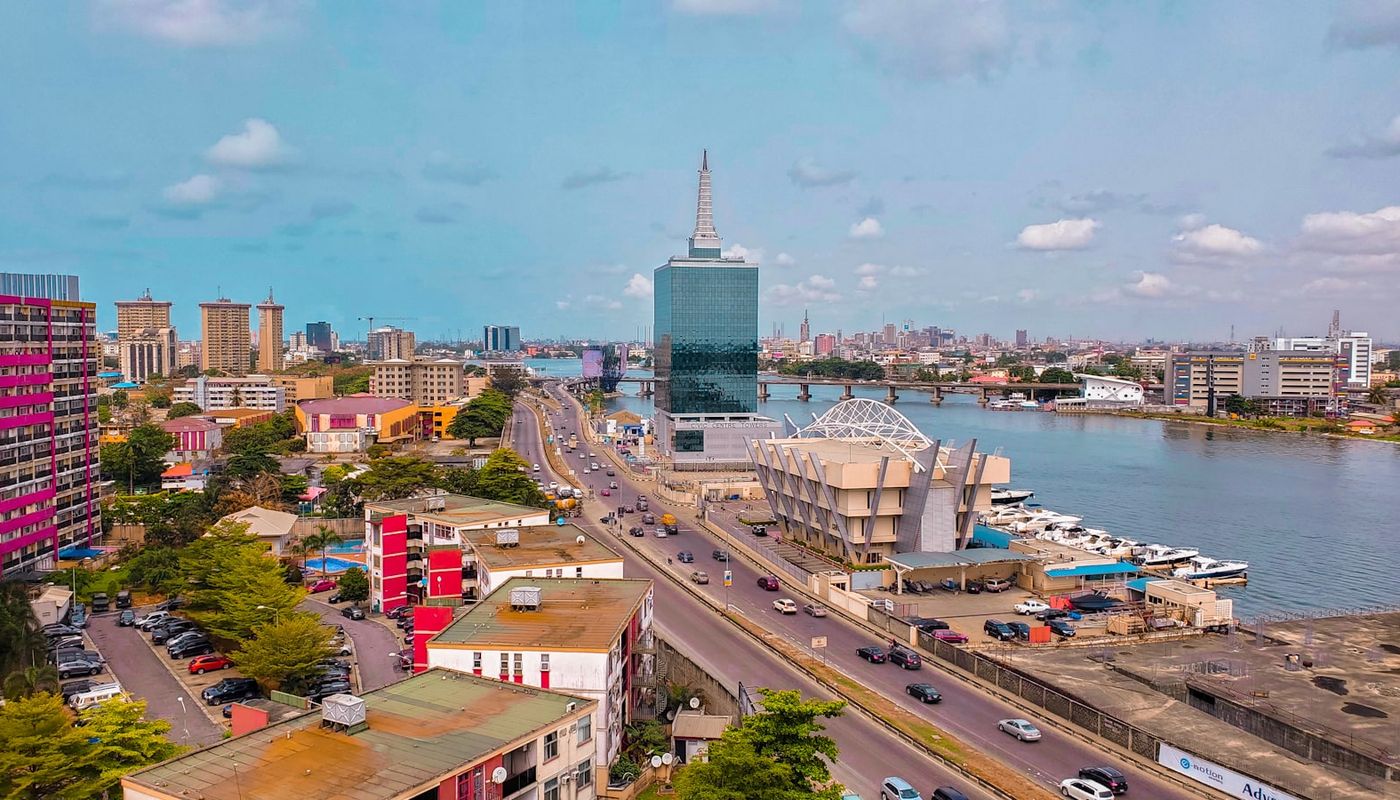
The N288m Asokoro Fraud: What the Latest EFCC Arrest Tells Diaspora Buyers About Abuja
The ₦288m Asokoro Fraud: What the Latest EFCC Arrest Tells Diaspora Buyers About Abuja
On April 1, 2026, the Economic and Financial Crimes Commission arrested an Abuja-based house agent, Hajia Adama Ahmed Adamu, over an alleged ₦288 million property fraud. According to the commission, she collected the money from one Alhaji Tanko Yawale under the pretext of facilitating the purchase of a property at House 31 Haile Selassie Street, Asokoro. The address is real. The money moved. The property, from everything the EFCC has said so far, did not change hands the way the buyer was told it would.
If you are sitting in London, Houston, Toronto or Dubai and thinking about buying in Abuja this year, this case is worth reading slowly. Not because it is unusual. Because it is so ordinary.
Why this pattern keeps repeating
Abuja is in the middle of a boom. Prices in Maitama, Asokoro, Katampe Extension and Guzape have run up sharply through 2025 and into 2026, with some developers reporting that 40 to 60 percent of their sales now come from the diaspora. A 2025 industry analysis cited by Vanguard estimates that property fraud costs Nigeria roughly $4 billion a year, and Abuja sits in the top five states for fraud incidents nationally.
That combination of high prices, foreign currency flowing in, and weak verification at the land registry is exactly what fraudsters hunt for. The Asokoro case follows a template we have seen over and over again.
A buyer, often represented by a relative, identifies a property in a prestigious district. An intermediary with the right connections, usually a woman or man with a long list of happy past clients, takes over. Payments are routed through the agent, not to the titled owner directly. Papers are promised in a few weeks. The buyer goes back to their life abroad. Months pass. The C of O never arrives, or arrives and does not match the actual plot, or matches a plot the seller never owned in the first place.
In the Asokoro case the sum is ₦288 million. For a middle-class professional abroad, that is a life's worth of savings. For the fraud ring that collected it, it is one transaction in a pipeline.
What the EFCC action actually changes
The arrest is real enforcement, and that matters. It sits alongside other recent EFCC activity, the sealing of multiple Abuja properties linked to former Attorney General Abubakar Malami in March, the push to permanently forfeit 57 properties allegedly tied to Malami, and the return of four stolen land titles in Kaura, Jahi, Guzape and Katampe Extension to their rightful owners after syndicates forged identity documents, declared the genuine titles missing and obtained replacements from the FCT land registry using fabricated credentials. Combined value of those stolen assets: over ₦1 billion.
What the arrest does not do is refund the victim. Criminal prosecution and asset recovery in Nigeria are slow. Bail happens. Cases drag. The ₦152 million Victoria Island dispute between businessman Olukayode Olusanya and Nigerian-American engineer Anthony Ugbebor has already been adjourned to April 22, 2026, because the EFCC failed to serve its final written address on the parties. That is the honest picture. Even when the agency moves, the courts move on their own timeline.
So if you are a diaspora buyer, the EFCC arrest should do one thing for you: convince you that waiting for the state to protect you after the fact is not a plan.
The specific mistakes that keep showing up
Walk through the cases and the same handful of errors repeat.
Money is paid to an intermediary's account rather than to the registered owner. The buyer never sees a sworn search report from the state land registry. The buyer relies on a solicitor recommended by the agent rather than one they found on their own. The "C of O" shown is a scan, not an original verified at the registry. The property is in a high-demand area where a legitimate seller would never be in that much of a rush.
Foreign currency is almost always part of the story. Dollars and pounds concentrate the fraudster's attention because a single successful run can match ten local deals.
What protection actually looks like for diaspora buyers
Title verification in Nigeria is doable, but it is a discipline. The Ogun State Digital Land Registry, which as of April 1, 2026 now requires electronic Governor's Consent for all transactions, is the direction things are slowly moving. Lagos and the FCT are still largely manual, which means a physical search at the registry remains the only reliable way to confirm that a C of O or Governor's Consent is genuine and unencumbered. In February 2026 the FCTA cancelled 485 Area Council land documents across Bwari, AMAC and Kuje after confirming they were fake. Every one of those documents had a buyer who believed they were legitimate.
A few habits cut most of the risk. Separate the lawyer from the agent. Do the registry search yourself or pay an independent firm to do it and show you the result. Pay the registered owner, not the middleman. Treat any seller who pressures you to close before verification as a red flag regardless of how well connected they appear.
And look at the developer, not just the plot. Who built their last estate? Did the C of Os actually come through? Did buyers get what they paid for, on time, with clean titles?
That last question is where Bektu comes in. Bektu (https://bektu.com) is a transparency and research platform that tracks developer delivery history in Nigeria. It is not a marketplace, not a brokerage, and not trying to sell you a unit. The point is to give diaspora buyers a place to check whether a developer has actually closed out previous projects, whether buyers got clean titles, and whether past promises matched what was delivered. If the name you are being pitched does not have a track record you can verify independently, that is information worth having before ₦288 million leaves your account.
The calmer takeaway
The Asokoro arrest is not a reason to panic about Abuja. Genuine stock exists, genuine developers exist, genuine lawyers exist. The naira's relative stability around ₦1,400 to ₦1,500 to the dollar in 2026 has made Abuja and Lagos real estate a credible wealth preservation play for Nigerians abroad. That part of the story is intact.
What the case does say, very plainly, is that the weakest link in almost every fraud is trust without verification. If the only reason you believe a deal is legitimate is that someone you respect vouched for the agent, you are inside the scam pattern, not outside it. Slow down, verify the title at the registry, verify the developer's history, pay the registered owner, and assume that every party in the transaction is new to you until their paperwork proves otherwise.
The buyers who keep their money are almost never the luckiest ones. They are the ones who asked the boring questions first.
Sign up to read the rest
Create a free account to keep reading. It only takes a minute.
Considering a developer you read about here?
You cannot walk the land from another country. But you can verify the developer. Bektu contacts them on your behalf and sends you a scored report. They never see who asked.
Search and verify any developerMore from Bektu
Stay a step ahead of the wire transfer
Get the occasional note from Bektu on verifying developers before you commit. No noise, just what matters.
We will never share your email. You can opt out at any time.