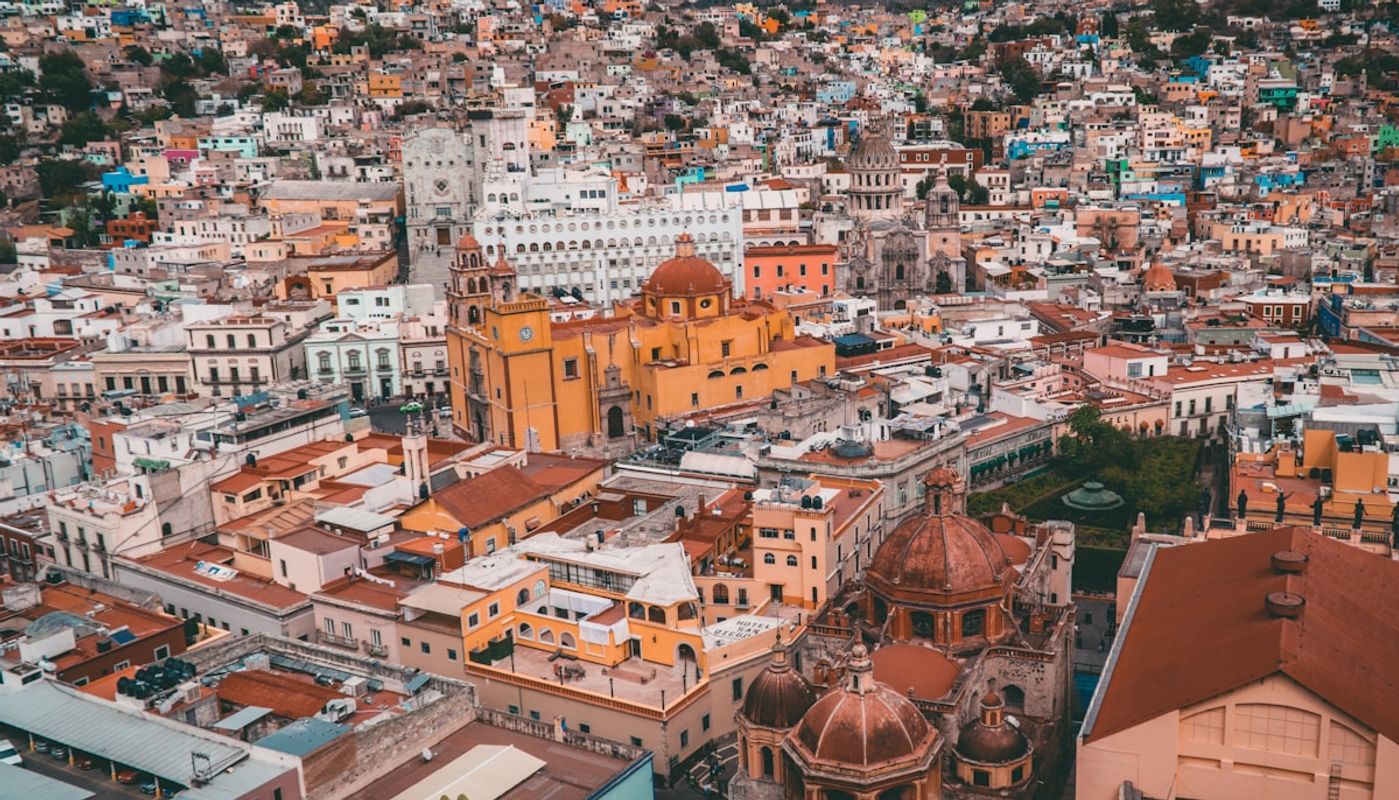
Mexico Temporary vs Permanent Residency Through Property: The 2026 Guide
Mexico does not offer a direct "golden visa" or citizenship-by-investment program tied to property purchase. This is one of the most common misconceptions among foreign buyers. You cannot buy a property in Mexico and automatically receive residency. However, property ownership in Mexico can support and strengthen a residency application, and the income or investment thresholds for Mexican residency are among the most accessible in Latin America.
Mexico's Residency Categories
Mexico's immigration system, governed by the Ley de Migracion (Immigration Law) and administered by the Instituto Nacional de Migracion (INM), offers several categories relevant to foreign property buyers.
Residente Temporal (Temporary Resident)
The temporary resident visa allows foreign nationals to live in Mexico for one to four years. It is the most common pathway for foreign property owners. The visa can be obtained through economic solvency, meaning you demonstrate sufficient financial resources to support yourself in Mexico without working locally.
As of 2026, the economic solvency requirements for a temporary resident visa are as follows. Monthly income of approximately $2,500 to $3,500 USD (calculated as a multiple of Mexico City's UMA, the Unidad de Medida y Actualizacion, which is updated annually by INEGI). This income must be demonstrated through bank statements showing consistent deposits over the prior 12 months. Alternatively, you can demonstrate savings or investments of approximately $40,000 to $60,000 USD maintained over the prior 12 months. These thresholds vary by Mexican consulate and are interpreted with some discretion by consular officers.
Property ownership in Mexico does not directly qualify you for temporary residency, but it strengthens your application in several ways. It demonstrates ties to Mexico and a legitimate reason for seeking residency. It may satisfy or contribute to the investment threshold if the property value meets the minimum. Some consulates consider Mexican property ownership as evidence of economic solvency, particularly when combined with rental income.
Residente Permanente (Permanent Resident)
Permanent residency grants the right to live and work in Mexico indefinitely. It can be obtained through several pathways relevant to property owners.
By points system, which considers age, education, employment experience, and connections to Mexico (including property ownership and family ties). Through four consecutive years of temporary residency, after which you can apply to convert to permanent residency. By demonstrating economic solvency at a higher threshold than temporary residency, typically four times the UMA-based requirement, meaning approximately $4,000 to $5,000 USD monthly income or $170,000 to $200,000 USD in savings/investments. Through retirement, if you receive a pension that meets the income threshold.
Property ownership again does not guarantee permanent residency, but it is a supporting factor in applications, particularly those based on economic solvency or the points system.
The Application Process
Step 1: Apply at a Mexican Consulate
Residency applications begin at a Mexican consulate in your home country or country of current residence. You cannot apply from within Mexico on a tourist visa (though there are limited exceptions for visa conversion). The consulate reviews your documentation and, if approved, issues a visa stamp in your passport that authorizes entry to Mexico as a temporary or permanent resident.
Required documents typically include a completed visa application form, a valid passport with at least six months remaining, passport-sized photographs meeting Mexican consulate specifications, proof of economic solvency (bank statements, investment accounts, pension statements, property ownership documents), and the consular fee (approximately $50 to $200 USD depending on the visa type).
Step 2: Entry and INM Registration
After entering Mexico with your consular visa stamp, you must register with the local INM office within 30 days. The INM office will issue your physical resident card (tarjeta de residente temporal or tarjeta de residente permanente). This registration requires presenting your passport with the visa stamp, the completed INM registration form (available on the INM website), proof of address in Mexico (a utility bill or property deed in your name, or a letter from your landlord), and the INM processing fee.
Step 3: Annual Renewal (Temporary Residents)
Temporary resident cards are issued for one year initially and must be renewed annually at the local INM office. Renewal requires demonstrating continued eligibility. After four years of continuous temporary residency, you can apply for permanent residency.
How Property Ownership Specifically Helps
While Mexico does not have a property investment visa, property ownership supports residency applications in concrete ways.
A property deed (escritura publica) registered in your name serves as proof of economic ties to Mexico. Rental income from Mexican property, if declared to the SAT, serves as Mexican-source income that contributes to economic solvency requirements. A Mexican address on your property deed satisfies the proof-of-address requirement for INM registration without needing a landlord's letter. Property tax (predial) payment receipts further demonstrate your ongoing presence and economic activity in Mexico.
Some consulates, particularly those serving countries with high application volumes, are more receptive to property-ownership-based applications than others. The Mexican consulates in the United States and Canada generally have well-established processes for retiree and investor applicants who own Mexican property.
Tax Implications of Residency
Mexican residency has tax implications that property investors must consider. Under the Income Tax Law (Ley del ISR), Mexican tax residents are taxed on worldwide income. If you become a Mexican tax resident (by establishing your "center of vital interests" in Mexico, which includes having your primary home there), your global income, not just your Mexican rental income, becomes subject to Mexican tax.
Mexico has double taxation treaties with over 50 countries, which can mitigate the impact of worldwide taxation through foreign tax credits. However, the interaction between residency status, tax residency, and treaty benefits is complex and requires professional tax advice specific to your situation.
Many foreign property owners in Mexico deliberately maintain temporary resident status (which does not automatically make you a tax resident) and manage their physical presence to avoid triggering Mexican tax residency. The 183-day threshold and "center of vital interests" tests under the Ley del ISR are the key factors.
Common Misconceptions
Several misunderstandings persist about property and residency in Mexico. Buying property does not automatically grant residency. You must apply through the standard INM process and meet the economic solvency requirements. Temporary residents cannot work in Mexico for Mexican employers without a separate work permit. Rental income from your own property is permitted, but employment is not. Permanent residents can work in Mexico without restriction. Time spent in Mexico on a tourist visa (FMM) does not count toward the four-year threshold for converting temporary to permanent residency. Residency does not automatically convey tax residency, but the two can overlap depending on your circumstances.
Visa Runs and the FMM Alternative
Some foreign property owners avoid the formal residency process and instead use successive tourist visas (Forma Migratoria Multiple, or FMM) to spend time in Mexico. The FMM allows stays of up to 180 days. While technically legal, this approach has several disadvantages: it does not allow you to register a vehicle, it complicates banking relationships, and INM has been tightening enforcement at entry points, occasionally granting shorter FMM periods to repeat visitors.
For property owners who plan to spend significant time in Mexico, formal residency is the more stable and practical approach.
What Bektu Provides
Bektu includes residency pathway information for each country where it operates, including current economic solvency thresholds, consulate-specific documentation requirements, and estimated processing times. The platform helps property investors understand how their purchase fits into a broader residency strategy.
Sources: Immigration Law, INM, Income Tax Law, INEGI - UMA.
Sign up to read the rest
Create a free account to keep reading. It only takes a minute.
Considering a developer you read about here?
You cannot walk the land from another country. But you can verify the developer. Bektu contacts them on your behalf and sends you a scored report. They never see who asked.
Search and verify any developerMore from Bektu


Stay a step ahead of the wire transfer
Get the occasional note from Bektu on verifying developers before you commit. No noise, just what matters.
We will never share your email. You can opt out at any time.