Medellin vs Cartagena vs Bogota: Where to Buy Property as a Foreign Investor in 2026
Colombia has become one of Latin America's most active markets for foreign property investors, driven by favorable exchange rates, a growing digital nomad population, and relatively straightforward foreign ownership rules. Unlike many countries in the region, Colombia places no restrictions on foreign property ownership. A foreign national can buy, own, and sell property with the same rights as a Colombian citizen. But the three cities attracting most foreign capital offer very different risk-return profiles.
Medellin: El Poblado vs Laureles
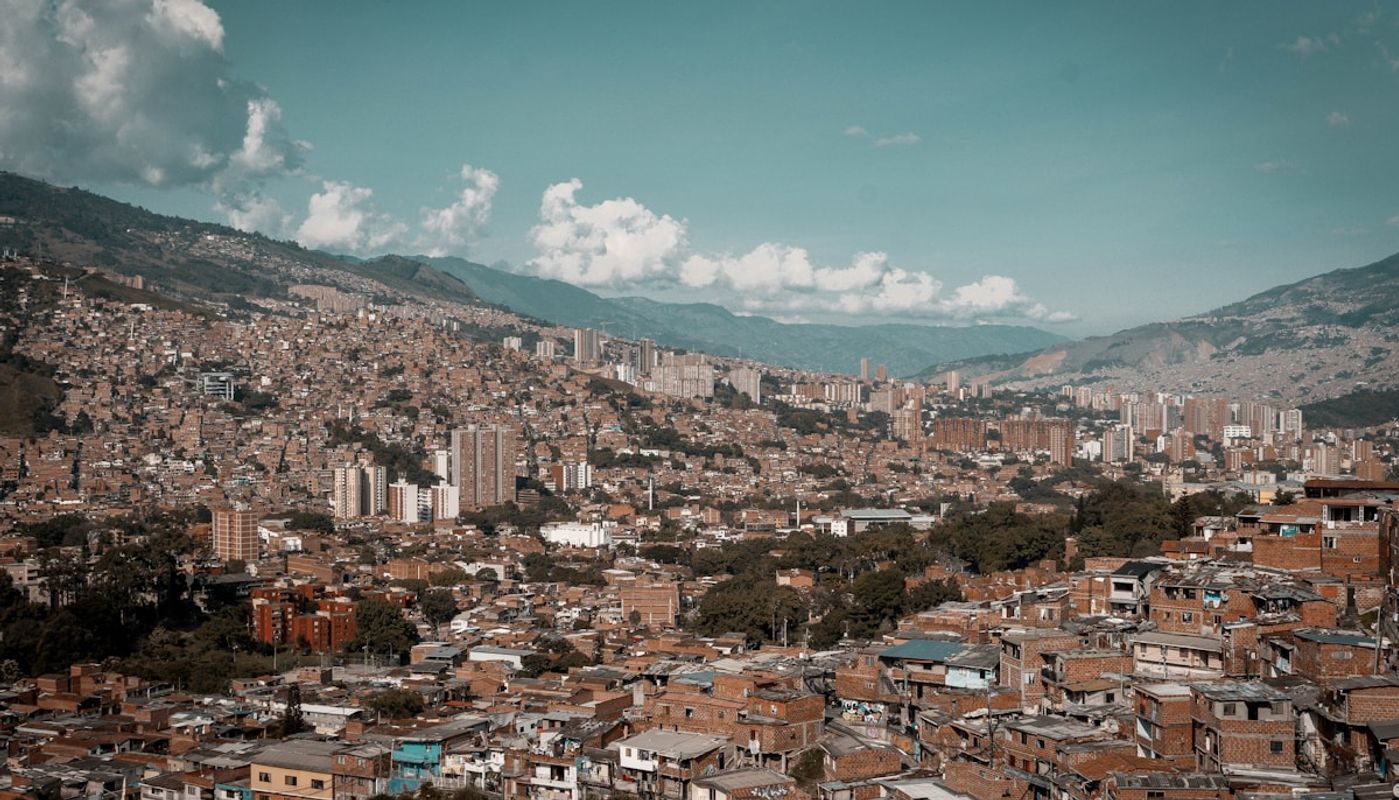
Medellin accounts for the largest share of foreign property investment in Colombia, and the city's transformation from its cartel-era reputation to a hub for remote workers and retirees has been well-documented. The two neighborhoods that dominate foreign buyer activity are El Poblado and Laureles.
El Poblado
El Poblado is Medellin's most expensive neighborhood and the default landing zone for foreign buyers. The area around Parque Lleras and the Provenza corridor has become a dense cluster of short-term rental apartments, restaurants, and nightlife. Prices in El Poblado in 2026 range from 6.5 to 12 million COP per square meter (approximately $1,500 to $2,800 USD) for apartments, depending on the specific micro-location, building age, and amenities. New-build luxury apartments in the upper parts of El Poblado (near Santa Fe de Antioquia road) can reach 14 million COP per square meter.
Rental yields in El Poblado for furnished short-term rentals average 6% to 9% gross, with well-located, well-managed units near Parque Lleras achieving higher yields due to consistent demand from tourists and digital nomads. However, Medellin's municipal government has been increasingly restrictive on short-term rentals. Decree 0440 of 2022 and subsequent enforcement actions have targeted buildings where more than a certain percentage of units are used for short-term rentals. Buildings that exceed the threshold face fines, and individual units can be ordered to cease short-term rental operations.
Separately from the municipal rules, any property let to tourists must be registered in the National Tourism Registry (Registro Nacional de Turismo) through the CITUR portal at citur.gov.co, under Law 300 of 1996 as amended by Law 2068 of 2020. Unregistered operation is a fineable offence in its own right. Check the building's estrato classification and zoning before buying for short-term letting, since the restrictions bite by strata.
Long-term rental yields in El Poblado are lower, typically 4% to 5.5% gross, reflecting the high purchase prices relative to the local long-term rental market.
Laureles
Laureles sits across the Medellin River from El Poblado and has emerged as the preferred neighborhood for longer-stay foreign residents. The area is more residential, with wider streets, better walkability, and a more authentically Colombian atmosphere than the increasingly touristy Provenza strip.
Prices in Laureles are 20% to 35% lower than El Poblado. Apartments range from 4.5 to 8 million COP per square meter ($1,050 to $1,850 USD). The Primer Parque and Segundo Parque areas command the highest prices, while the areas closer to La 70 (Carrera 70) offer the best combination of price and rental demand.
Rental yields in Laureles for furnished mid-term rentals (one to six months) average 5.5% to 8% gross. The tenant profile skews toward digital nomads staying for several months rather than tourists staying for days, which means lower turnover, lower management costs, and more predictable income. Short-term rental enforcement in Laureles has been less aggressive than in El Poblado, partly because the concentration of rental units is lower.
Two municipalities south of the city widen the range. Envigado, a separate municipality bordering Medellin, runs $900 to $1,600 per square meter with good metro connectivity, and the Zuniga and Otro Lado areas draw value-focused foreign buyers. Sabaneta and Bello, further out, start at $700 to $1,200 and are value plays rather than lifestyle purchases. Medellin's draw is partly climatic: at 1,500 meters the city averages around 22C year-round.
Cartagena: Bocagrande and the Walled City
Cartagena attracts a different buyer profile than Medellin. The city's colonial architecture, Caribbean beaches, and status as Colombia's premier tourist destination draw buyers looking for vacation properties with rental income potential.
Bocagrande
Bocagrande is Cartagena's high-rise beachfront district. The area looks and feels more like Miami Beach than colonial Colombia, with modern apartment towers lining the shoreline. Prices in Bocagrande range from 5.5 to 10 million COP per square meter ($1,300 to $2,300 USD), with beachfront units at the top of this range.
Rental yields in Bocagrande are highly seasonal. During Cartagena's high season (December through March, and June through August), well-located apartments can command $80 to $200 per night. During the low season (September through November), occupancy drops significantly and nightly rates fall by 30% to 50%. Annualized gross yields average 5% to 7%, but the seasonal variance makes cash flow management more complex than in Medellin.
Cartagena's peak also includes Semana Santa, and peak months can account for roughly 70 percent of a property's annual rental income. Two adjacent markets are worth pricing against Bocagrande: Castillogrande and Manga are quieter at $1,200 to $2,500 per square meter, and Getsemani, the gentrified neighborhood next to the walls, runs $2,000 to $4,000 and has become the centre of the boutique hotel trade.
Hurricane exposure is minimal because Cartagena sits south of the belt, but low-lying areas flood during the September to November rains. Check the property's flood history with the UNGRD, the national disaster risk management unit.
Walled City (Ciudad Amurallada)
The Walled City represents Cartagena's premium market. Colonial-era buildings converted to boutique apartments or small hotels command prices of 8 to 18 million COP per square meter ($1,850 to $4,200 USD). Supply is extremely limited because the Ministry of Culture restricts modifications to listed historical buildings, and new construction within the walls is essentially prohibited.
The heritage constraints run through Law 397 of 1997, the General Culture Law, alongside Ministry of Culture regulation, and they govern restoration as well as modification. Nightly rates of $150 to $500 are common for quality walled-city properties, which is what supports the yields despite the maintenance burden.
Rental yields in the Walled City for licensed tourist accommodation can reach 8% to 12% gross during peak periods, but operating costs are high due to the maintenance requirements of colonial buildings, mandatory preservation standards, and higher property taxes in the historical district. Net yields after expenses typically fall to 4% to 6%.
Bogota: Chapinero and Beyond
Bogota is often overlooked by foreign property investors who are drawn to the lifestyle appeal of Medellin and Cartagena. This is a mistake for certain investor profiles. Bogota is a city of 8 million people with Colombia's strongest employment market, highest average incomes, and deepest long-term rental demand.
Chapinero
Chapinero is Bogota's most cosmopolitan neighborhood and the center of the city's growing tech and startup scene. The sub-neighborhoods of Chapinero Alto, Rosales, and the Zona G restaurant district are the most sought-after addresses.
Prices in Chapinero range from 6 to 11 million COP per square meter ($1,400 to $2,550 USD). Newer developments in Chapinero Alto can reach 13 million COP per square meter for luxury finishes with views of the Andes.
Rental yields in Chapinero for long-term rentals average 5% to 6.5% gross, which is competitive with El Poblado but with lower vacancy risk due to Bogota's year-round corporate demand. Short-term rentals in Chapinero perform well among business travelers and are less affected by seasonal fluctuation than Cartagena.
Beyond Chapinero, Usaquen, a former colonial town absorbed by the city's northward growth, runs $1,200 to $2,500 per square meter, Chico and Santa Barbara sit at $1,500 to $2,800, and La Candelaria, the historic center, is cheapest at $800 to $1,500 with a thinner rental market outside tourist season. The infrastructure story is the Transmilenio BRT network and the Metro de Bogota, whose first line is expected to be complete by 2028. Bogota sits at 2,600 meters, and the cool, overcast climate is the reason many foreign buyers pass on it.
Legal Framework for Foreign Buyers
Foreign property purchases in Colombia require registration of the investment with the Banco de la Republica (Central Bank) through a Declaracion de Cambio filed when you bring investment funds into the country. This registration is critical because it allows you to repatriate sale proceeds and rental income in foreign currency when you eventually sell. Without this registration, converting your COP proceeds back to dollars or euros can be restricted.
The purchase process itself involves signing a promesa de compraventa (promise to purchase), conducting due diligence through a Certificado de Tradicion y Libertad obtained from the Superintendencia de Notariado y Registro, and executing the escritura publica (public deed) before a notary. The transaction is then registered with the Oficina de Registro de Instrumentos Publicos.
The statutory frame is the Civil Code (Law 57 of 1887, as amended), the Public Registry Law (Law 1579 of 2012), which is what makes registration rather than the deed the moment ownership becomes legally effective, and the Urban Development Law (Law 388 of 1997) for zoning and land use.
On documentation, a foreign buyer needs a cedula de extranjeria or passport and a NIT tax identification number from DIAN. A Colombian bank account is not strictly required for the purchase itself but is recommended, and it makes the Declaracion de Cambio process cleaner.
Tax Implications by City
All three cities fall under the same national tax framework, but property tax (impuesto predial) rates vary by municipality. Bogota's property tax rates, set by the Secretaria Distrital de Hacienda, tend to be the highest, ranging from 0.3% to 3.3% of the cadastral value depending on the property's estrato (strata) classification. Medellin's rates are slightly lower. Cartagena's rates for properties in the historical district include surcharges for cultural preservation.
Rental income tax for non-residents is withheld at source at rates ranging from 15% to 20% depending on the type of rental and the withholding agent, under Colombia's Tax Statute (Estatuto Tributario).
What Bektu Tracks
Bektu provides neighborhood-level price data and rental yield estimates for all three cities, updated with transaction data from the Superintendencia de Notariado y Registro. The platform also tracks short-term rental regulatory enforcement by district, which is particularly relevant for El Poblado and Bocagrande where rules are changing rapidly.
Sources: Banco de la Republica, Superintendencia de Notariado y Registro, DIAN, Medellin Municipality.
Sign up to read the rest
Create a free account to keep reading. It only takes a minute.
Considering a developer you read about here?
You cannot walk the land from another country. But you can verify the developer. Bektu contacts them on your behalf and sends you a scored report. They never see who asked.
Search and verify any developerMore from Bektu
Stay a step ahead of the wire transfer
Get the occasional note from Bektu on verifying developers before you commit. No noise, just what matters.
We will never share your email. You can opt out at any time.