HD Mon Holdings: Profiling the Hanoi Developer Behind Mon City and The Zei for Foreign Buyers
HD Mon Holdings: Profiling the Hanoi Developer Behind Mon City and The Zei for Foreign Buyers
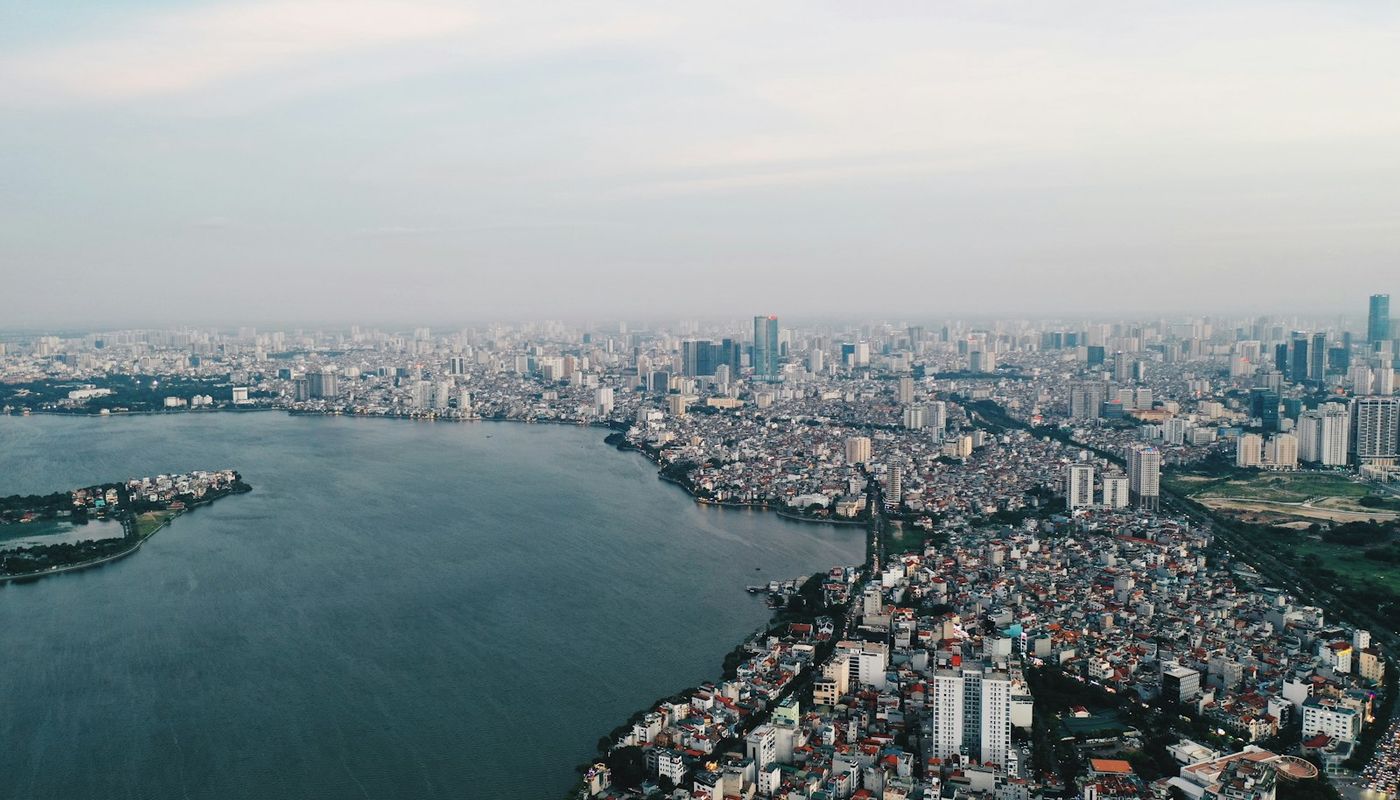
HD Mon Holdings is a Hanoi-based property developer best known for Mon City in My Dinh and The Zei in Nam Tu Liem, both mixed-use residential complexes in the western Hanoi development corridor that has absorbed most of the city's new-build activity over the last decade. Mon City is a self-contained development with two and three-bedroom units (60 to 90 square metres) overlooking My Dinh Lake Park, with the standard amenity stack of pool, gym, parking, and 24-hour security. For foreign buyers researching the HD Mon name, the basic answer is that this is a Vietnamese developer with real, completed Hanoi projects, and the verification questions are about foreign ownership eligibility, building licensing status, and the developer's current financial position.
The Vietnamese property market in 2026 sits in a complicated transition. The 2023 Land Law and the 2023 Housing Law, both effective from 1 August 2024, restructured the foreign ownership framework for the first time in nearly a decade. Foreign buyers approaching any Vietnamese developer now need to be sharper about which projects are eligible, what the 30 percent quota looks like in practice, and what happens at the end of the 50-year leasehold term. HD Mon's projects sit inside that regulatory frame like every other Vietnamese developer's, and the foreign-buyer due diligence has the same shape regardless of how strong the brand looks in Hanoi.
What Foreign Buyers Can Actually Own in a HD Mon Project
Under Article 17 of the 2023 Housing Law, foreign individuals and entities may own residential apartments and houses in licensed Vietnamese projects, subject to two key constraints:
The 30 percent per-building quota for foreign ownership in apartment buildings. If a building has 100 units, no more than 30 of those units may be foreign-owned at any time. The remainder must be Vietnamese-owned. The Ministry of Construction (Bo Xay Dung) maintains the list of projects eligible for foreign ownership and the foreign quota status is tracked per building.
The 50-year leasehold term, extendable once. Foreign owners hold their unit for an initial 50 years from the date the Pink Book (So Hong) is issued in their name. The lease may be extended once for an additional period under Article 161 of the 2023 Housing Law, but the practical mechanics of extension at year 50 are not yet well-tested because the 2014 Housing Law (the first to permit broad foreign ownership) only came into force on 1 July 2015. The first wave of foreign-owned apartments will reach the extension question in the late 2050s and 2060s.
For a HD Mon project, the verification questions are: is this specific building on the Ministry of Construction's approved list for foreign ownership, what is the current foreign quota status (how many units are already foreign-owned), and what is the Pink Book status on the specific unit being offered.
The Documentary Chain on a Hanoi Apartment
For any HD Mon unit, the documentary chain a foreign buyer needs to verify is:
The Construction Investment Project Approval (Quyet Dinh Chu Truong Dau Tu) issued by the Hanoi People's Committee, confirming the project is legally permitted to be built and sold.
The Land Use Right Certificate (So Do or Pink Book at the project level) held by HD Mon Holdings as the developer entity, with the file in good standing at the Hanoi Department of Natural Resources and Environment.
The Building Permit (Giay Phep Xay Dung) for the specific building, confirming the structure was approved at its current specifications.
The Pre-Sale Permit (Van Ban Du Dieu Kien Ban Nha) issued by the Hanoi Department of Construction, confirming the building has reached the construction milestone that allows units to be sold. Vietnamese law requires the developer to have built at least the foundation before pre-sales can begin, and most foreign-buyer trouble in Vietnam comes from off-plan sales that occurred before this permit was issued.
The Sale and Purchase Contract (Hop Dong Mua Ban Nha O), executed in both Vietnamese and English (with the Vietnamese version legally controlling), notarised, and registered with the relevant authority.
The Pink Book (So Hong, or Certificate of Land Use Right and Ownership of Housing and Other Assets) issued in the foreign buyer's name after completion and full payment. This is the title document. Foreign buyers should not consider the transaction complete until the Pink Book is issued.
The Foreign Investment Capital Account (DICA) registration with the buyer's Vietnamese commercial bank, required for foreign currency remittance into Vietnam for property purchase and required for repatriation of sale proceeds in the future.
The HD Mon Track Record Question
Mon City and The Zei are completed and operating projects, which means HD Mon Holdings has a verifiable delivery record. The relevant question for foreign buyers in 2026 is the developer's current financial position. The Vietnamese property market is in the aftermath of a multi-year bond and credit crisis that affected several major developers, including high-profile cases involving Hung Thinh and Novaland, where corporate bond restructuring left buyers exposed when projects stalled.
HD Mon has been less visible in the bond crisis narrative than the largest national developers, but the prudent foreign-buyer verification step is to:
Check the developer's most recent State Bank of Vietnam credit registry filings if available, or the developer's audited financial statements if accessible through the Hanoi Department of Planning and Investment.
Confirm the specific project's construction completion status and any pending litigation. Vietnamese law requires litigation against developers to be filed in the People's Court, and case status is searchable.
Speak with existing Mon City or The Zei residents to understand the actual handover experience, the defect-resolution behaviour, and the quality of the building management. A platform like Bektu is designed for exactly this developer track-record verification, allowing foreign buyers to evaluate Vietnamese developers against their actual delivery records before committing capital.
Where the Yield Math Actually Lands
The Hanoi apartment rental market in 2026 produces gross yields in the 4 to 6 percent range for mid-market units in the western development corridor, with The Zei and Mon City sitting in that segment. Net yields after management fees, the 5 percent personal income tax on rental income for foreign owners under the Personal Income Tax Law, building maintenance, and the gradual lease decay typically land in the 2.5 to 4 percent range. That is lower than Ho Chi Minh City and significantly lower than the boutique resort yields foreign investors see in Da Nang, Phu Quoc, or Bali.
The Hanoi case for foreign buyers is more about capital appreciation than rental yield. The 2024 to 2026 Hanoi price cycle has produced double-digit annual appreciation in some western corridor projects, driven by infrastructure delivery (the Metro Line 3 western extension) and demand from domestic upper-middle-class buyers. Foreign investors should not assume that appreciation pace continues, but the structural drivers (Hanoi population growth, supply constraints in central districts, expanding metro coverage) remain intact.
The Honest Read
HD Mon Holdings is a real, mid-sized Hanoi developer with completed and operating projects. It is not in the top tier of national Vietnamese developers and it is not a marketing-only operation. For a foreign buyer looking at a Mon City or Zei unit, the project-specific verification is what determines outcome: foreign ownership eligibility confirmation, quota check, building licence, pre-sale permit, Pink Book pathway, and DICA setup.
The structural risks (lease decay, the 30 percent quota, the year-50 extension uncertainty, the developer credit cycle) are not HD Mon-specific. They are how Vietnamese property works for foreign buyers in 2026. The buyers who do well in this market are the ones who treat each of those structural items as a separate verification step rather than a marketing footnote.
Sources
- Mon City project profile on FazWaz Vietnam
- List of property developers in Vietnam (FazWaz)
- Vietnam property developers' ambitions for 2026 (The Investor)
- 2023 Housing Law (Luat Nha O 2023)
- 2023 Land Law (Luat Dat Dai 2023)
- Vietnam Ministry of Construction (Bo Xay Dung)
- State Bank of Vietnam regulations on foreign exchange and DICA
Sign up to read the rest
Create a free account to keep reading. It only takes a minute.
Developers referenced
- HD Mon Holdings Hanoi, Vietnam
Thinking about HD Mon Holdings?
You cannot walk the land from another country. But you can verify the developer. Bektu contacts them on your behalf and sends you a scored report. They never see who asked.
Verify HD Mon Holdings anonymouslyMore from Bektu

Stay a step ahead of the wire transfer
Get the occasional note from Bektu on verifying developers before you commit. No noise, just what matters.
We will never share your email. You can opt out at any time.