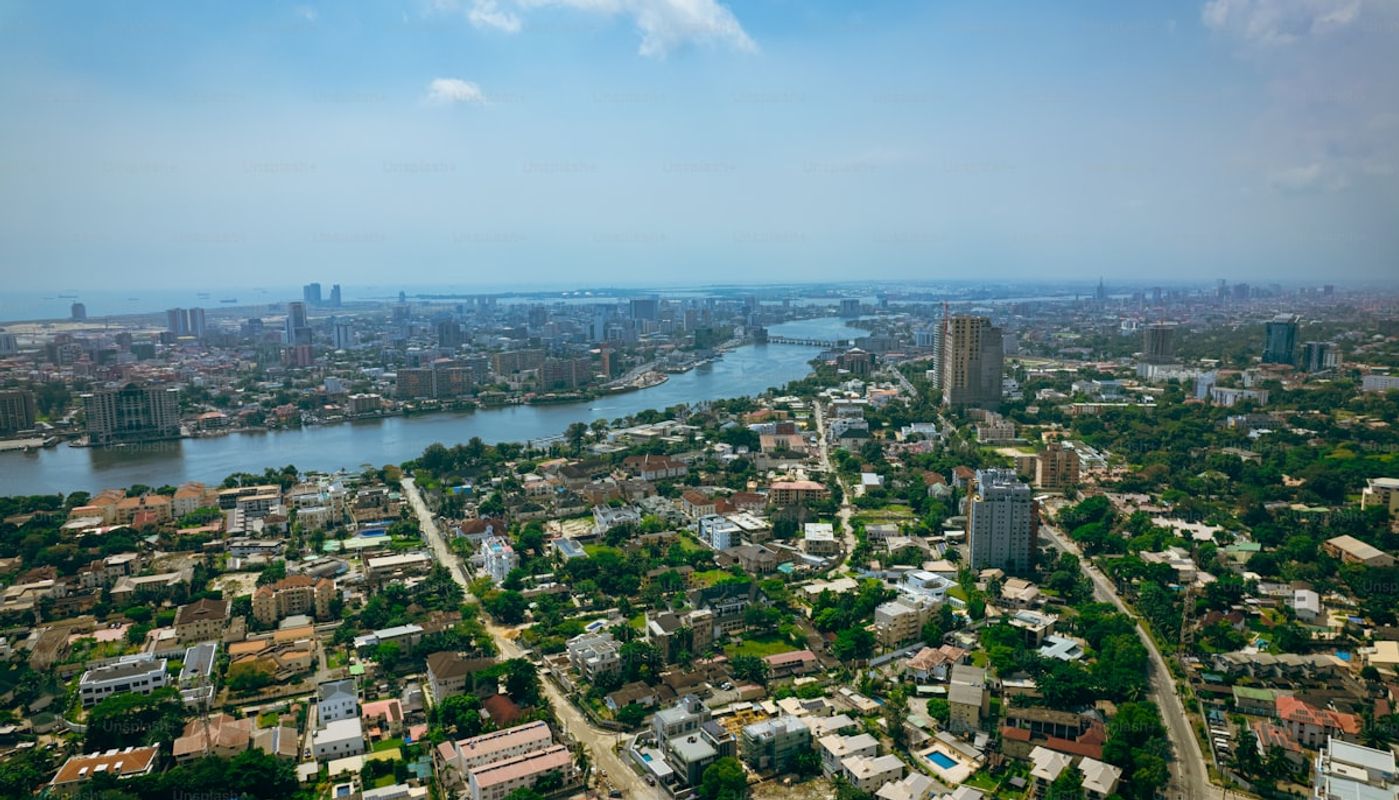
FMBN Diaspora NHF Mortgage Explained: The 9% Government-Backed Loan Diaspora Nigerians Can Actually Use
FMBN Diaspora NHF Mortgage Explained: The 9% Government-Backed Loan Diaspora Nigerians Can Actually Use
Most diaspora Nigerians who want to buy property at home approach the market in one of two ways. They either send money to a relative or an agent to buy outright, with all the title risk that involves, or they buy off-plan from a developer and pray the build is delivered. There is a third route that gets far less coverage than it deserves: the Federal Mortgage Bank of Nigeria's Diaspora National Housing Fund Mortgage. It is a 9% per annum mortgage, backed by the federal government, that lets Nigerians abroad contribute to the NHF (National Housing Fund) and borrow against those contributions to buy a home in Nigeria without flying back. The product is administered by the FMBN (Federal Mortgage Bank of Nigeria, the apex mortgage institution in the country) in partnership with NiDCOM (the Nigerians in Diaspora Commission, the federal body that coordinates diaspora affairs). It is worth understanding in detail because the terms are unusually buyer-friendly compared to the open market.
The headline rate of 9% per annum is well below the Nigerian commercial bank mortgage rate, which has been running at 22% to 28% across 2025 and 2026 as the Central Bank of Nigeria has held its monetary policy rate elevated to contain inflation. Even after the FMBN's administrative loadings, the all-in cost of a Diaspora NHF mortgage is materially below what a diaspora buyer could obtain from a Nigerian commercial bank, and substantially below what an off-plan developer's installment plan typically costs after the embedded financing charges. The trade-off is paperwork and patience.
The structure is straightforward in principle. A diaspora Nigerian registers with the NHF scheme through FMBN. There is a $50 non-refundable application fee. The applicant then contributes monthly to the NHF for at least 12 months. After the contribution period, the applicant can apply for a mortgage loan to buy a property anywhere in Nigeria. The loan structure is a 30/70 split: the buyer pays 30% of the property's value as equity and the FMBN, through a Primary Mortgage Bank (PMB), provides the remaining 70%. The loan is then secured against the property.
Eligibility for the Diaspora NHF Mortgage has four core requirements. The applicant must be a Nigerian in the Diaspora with verifiable income. The applicant must have registered with the NHF for at least 12 months and contributed in full during that period. The applicant must be a first-time beneficiary of an NHF loan. The applicant must produce documentation of identity, residency abroad, and source of funds. NiDCOM provides verification support for the diaspora residency requirement.
The interest rate of 9% is fixed for the duration of the loan, which is one of the most attractive features of the product. In a country where commercial mortgage rates fluctuate with the monetary policy rate, a fixed 9% over a 20 to 25 year tenor is unusually stable. The repayment is made in naira, which introduces foreign exchange risk for diaspora earners paid in dollars, pounds or euros. A weakening naira reduces the real cost of repayment from a foreign-currency perspective; a strengthening naira increases it. Diaspora applicants need to think about this as part of the total cost calculation.
There are five practical observations about the product that matter for diaspora buyers.
First, the 12-month contribution window is a feature, not a bug. It forces a diaspora applicant to develop a relationship with the NHF system, to verify identity early, and to build a contribution record. Buyers who try to shortcut the process by paying a lump sum equivalent to 12 months in a single transfer are sometimes flagged for additional anti-money-laundering review. The cleaner path is to set up a standing monthly transfer that mirrors a typical salary contribution.
Second, the property being financed must be eligible. The FMBN finances completed residential homes and certain off-plan developments where the developer has been accredited by FMBN. Buying a raw plot of land with an NHF mortgage is generally not possible. The financed property must also have a clean title acceptable to the lending PMB. In practice this means a registered Certificate of Occupancy (C of O, the main land title document issued by the Lagos State or relevant State Government) or a deed of assignment with Governor's Consent (the state-level approval required under Section 22 of the Land Use Act for any transfer of land in Nigeria). Properties on family land, customary holdings without conversion, or unregularised estates will not qualify.
Third, the PMB is the operational interface, not the FMBN. A Primary Mortgage Bank is a licensed mortgage finance institution that processes the actual loan application, conducts the title due diligence, and disburses funds. There are roughly 30 licensed PMBs in Nigeria. The choice of PMB matters because the speed and quality of due diligence varies. Diaspora applicants should select a PMB with prior experience handling diaspora files. The FMBN can provide a list.
Fourth, the loan is secured by a registered legal mortgage over the property. That means the title document is held by the PMB until the loan is repaid in full. Diaspora buyers who imagine taking custody of their C of O at the point of purchase will not be doing so with an NHF mortgage. The title sits with the lender as security. This is normal mortgage practice anywhere in the world but it sometimes surprises first-time diaspora buyers.
Fifth, the product is most useful when paired with a clean transaction. The NHF mortgage cannot rescue a bad title. If the property has a clouded title, a disputed survey, or sits on parcel that overlaps a federal infrastructure right of way, the PMB's due diligence will catch the problem and refuse to lend. That is a feature. The same due diligence that protects the FMBN's exposure also protects the diaspora buyer from a transaction that would have gone wrong anyway. Buyers should treat a PMB's rejection of a title as a warning signal rather than an obstacle to work around.
The wider context is that the Federal Government has been actively pushing the diaspora housing pipeline as part of a policy aimed at converting remittances into structured capital. Diaspora remittances to Nigeria run at around $20 billion annually. The Diaspora NHF Mortgage is one of the more credible attempts to channel some of that flow into formal mortgage transactions.
For diaspora readers comparing options, the NHF mortgage is not always the right product. A buyer who needs to close in 60 days will find the contribution requirement frustrating. A buyer who wants raw land will not qualify. But for a diaspora Nigerian who wants to enter the home ownership market gradually, with federal protection on the title diligence and a sub-market interest rate, this is the most under-used tool in the country. The cost to start is $50 and 12 months of patience.
Bektu (https://bektu.com) is a transparency and research platform that tracks Nigerian developer delivery history and the regulatory standing of FMBN-accredited developments. Not a marketplace, not a brokerage. If you have considered buying in Nigeria but have been put off by the title risk or the cost of capital, the Diaspora NHF Mortgage is worth a closer look before the next time you wire money home.
Sign up to read the rest
Create a free account to keep reading. It only takes a minute.
Considering a developer you read about here?
You cannot walk the land from another country. But you can verify the developer. Bektu contacts them on your behalf and sends you a scored report. They never see who asked.
Search and verify any developerMore from Bektu

Stay a step ahead of the wire transfer
Get the occasional note from Bektu on verifying developers before you commit. No noise, just what matters.
We will never share your email. You can opt out at any time.