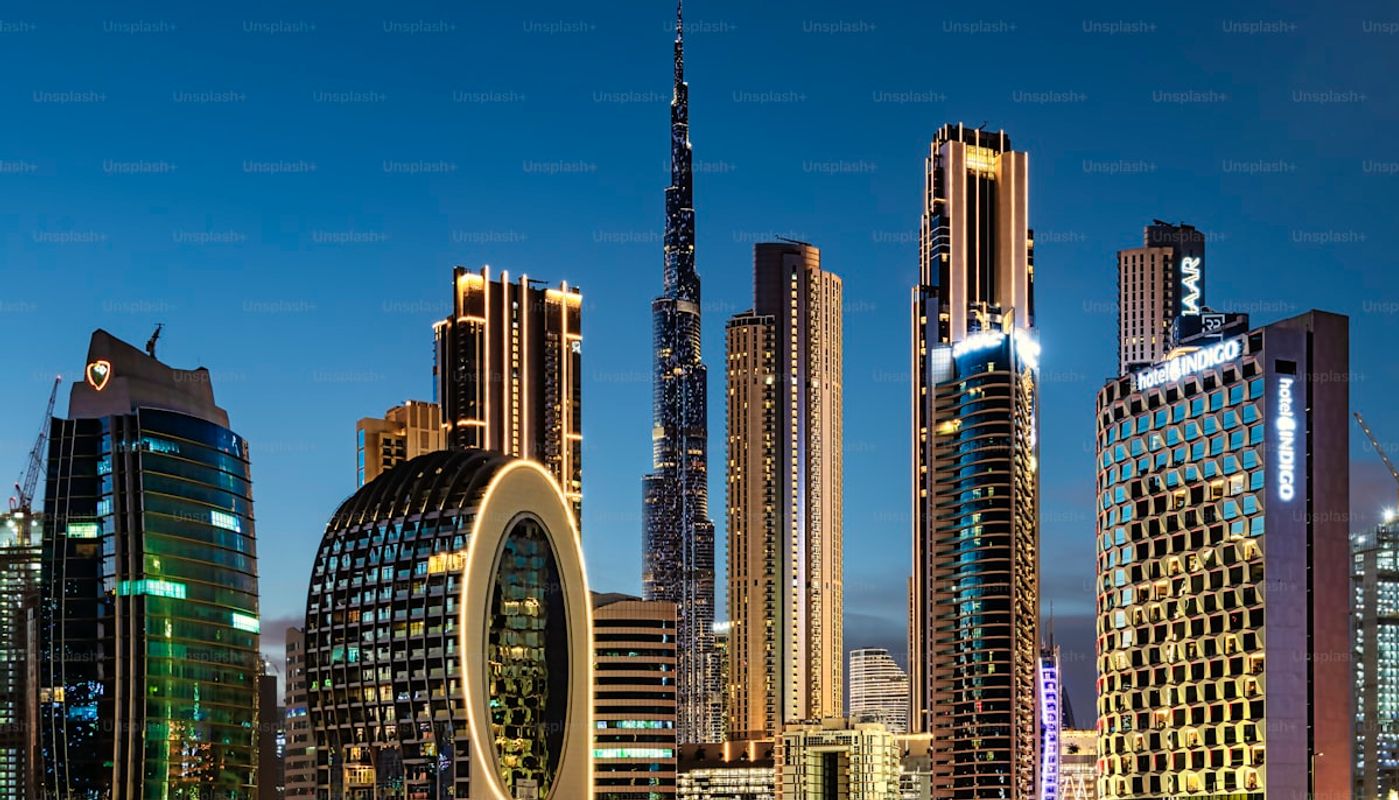
Dubai Property Ownership Structures for Foreigners: Freehold, Leasehold, and Usufruct Explained for 2026
Yes, foreigners can own freehold property in Dubai. The rule that actually matters is location, not nationality. Non-UAE nationals can hold full freehold title in areas specifically designated by the Ruler of Dubai under Regulation No. 3 of 2006. Outside those zones, foreign ownership is restricted to leasehold or usufruct rights of up to 99 years.
This guide covers what you can own, where you can own it, the legal structure behind it, and the obligations that come with the title deed.
The Foundational Law
The framework for foreign property ownership in Dubai sits on three pieces of legislation.
Law No. 7 of 2006 (Real Property Registration Law) created the property register at the Dubai Land Department (DLD) and established that registration in the real estate register is what creates ownership. A signed sale contract is not enough on its own. The title deed issued by the DLD is the conclusive proof of ownership.
Regulation No. 3 of 2006 (Determining Areas for Ownership by Non-UAE Nationals) lists the specific areas where foreigners can hold freehold or long-term leasehold rights. This is the designated areas list, and it has been amended several times to expand the zones available to foreign buyers.
Law No. 13 of 2008, amended by Law No. 9 of 2009, governs interim real estate registration for off-plan properties through the Oqood system. This protects buyers of off-plan units by recording their interest before the property is built.
Together these laws mean that as a foreign buyer, you can hold the same freehold title as an Emirati buyer, provided the property sits inside a designated area.
What Freehold Actually Means in Dubai
Freehold ownership in Dubai gives you the property itself plus the land it sits on. The title is registered in your name at the DLD. There is no expiry date. You can sell, lease, gift, or pass the property on to your heirs. There is no requirement to live in the UAE or hold a residency visa to buy or hold the property.
For apartments in a building, you own the unit itself and a proportional share of the common areas under the jointly-owned property regime governed by Law No. 6 of 2019. The owners' association manages the building and sets the annual service charges.
Leasehold and usufruct rights are different. Leasehold in Dubai typically runs for up to 99 years and lets you occupy and use the property, but the ground stays with the original landowner. Usufruct rights, also up to 99 years, give you use and enjoyment but no transfer rights beyond the term. These structures exist for property outside designated freehold areas.
Designated Freehold Areas
Regulation No. 3 of 2006 originally identified around 23 areas open to foreign freehold ownership. The list has been expanded multiple times. As of 2026 there are over 60 designated freehold areas, with recent additions including parts of Al Wasl, Meydan, and Sheikh Zayed Road announced in 2025.
The established freehold zones that account for most foreign purchases include Dubai Marina, Downtown Dubai, Palm Jumeirah, Business Bay, Jumeirah Lakes Towers (JLT), Jumeirah Village Circle (JVC), Dubai Hills Estate, Arabian Ranches, Emirates Hills, Jumeirah Beach Residence (JBR), Dubai Investment Park, International City, Discovery Gardens, Al Furjan, Dubai Sports City, Motor City, Damac Hills, and Dubai South.
If a property is not in a designated area, you cannot acquire freehold title as a foreigner, regardless of who is selling or what the contract says. Verify the area's freehold status before committing. The DLD publishes the designated areas, and any RERA-licensed broker should be able to confirm in writing.
The Buying Process in Short
Foreign buyers move through six stages.
First, sign a Memorandum of Understanding (MoU) using the DLD's Form F. This is the standard sale contract. A 10 percent deposit is typically paid at this stage, usually held by the broker or a manager's cheque.
Second, the seller obtains a No Objection Certificate (NOC) from the developer confirming that service charges are paid up and the property is clear for transfer. NOC fees vary by developer but typically run AED 500 to AED 5,000.
Third, both parties attend the DLD or an authorised registration trustee office. The transfer fee is 4 percent of the purchase price, traditionally split or paid by the buyer depending on negotiation. Other fees include the trustee office charge (around AED 4,000 for properties over AED 500,000), title deed issuance (AED 580), and broker commission (typically 2 percent plus VAT).
Fourth, the title deed is issued in the buyer's name on the same day for ready properties.
For off-plan purchases, the process runs through the Oqood interim registration system. You are registered as the buyer in the DLD's interim register, and the title deed is issued when the project is handed over.
Mortgage buyers add a separate mortgage registration fee of 0.25 percent of the loan amount plus AED 290.
Restrictions Worth Knowing
There are no nationality-based caps on foreign ownership in designated areas. There is no limit on the number of properties a single foreigner can own. There is no minimum holding period before resale.
However, some practical limits apply. Mortgage availability for non-residents is restricted. Most UAE banks lend up to 50 to 60 percent loan-to-value for non-resident buyers, compared to 80 percent for UAE residents. Down payment requirements for first-time non-resident buyers typically start at 40 percent for properties under AED 5 million.
Joint ownership between foreigners and Emiratis is allowed in designated areas. Joint ownership outside designated areas defaults to the foreigner holding leasehold rights only.
Property held in a foreign company name requires the company to be registered in a recognised jurisdiction and accepted by the DLD. Most foreign buyers hold property in personal name or through a UAE free zone company structure.
Costs Beyond the Purchase Price
Annual carrying costs in Dubai are lower than most major property markets because the UAE imposes no annual property tax on residential real estate and no income tax on rental income for individuals.
The recurring costs are service charges paid to the owners' association, which vary significantly by community. Palm Jumeirah and Downtown Dubai service charges can run AED 20 to AED 30 per square foot annually for high-end buildings. JVC and Dubai South run AED 8 to AED 15 per square foot. Verify the service charge through the DLD's Mollak system before buying. This is the official register of approved service charges and shows historical figures, which protects you from inflated quotes by sellers.
A 5 percent VAT applies to commercial property transactions but not to residential sales between individuals. Rental income from residential property is exempt from VAT for individual landlords.
If you sell, there is no capital gains tax for individuals. Only the standard 4 percent DLD transfer fee applies on the next transaction, paid by the next buyer.
Verifying a Developer Before Buying Off-Plan
Off-plan purchases dominate the new sales market in Dubai. The risk is real, even in a regulated market. Two checks matter most.
Check that the developer is registered with RERA (the Real Estate Regulatory Agency). RERA-registered developers must place buyer payments into an escrow account governed by Law No. 8 of 2007. The escrow account is held with a UAE bank, and funds can only be released against verified construction progress. Pay only into the developer's registered escrow account, never to a personal or general business account.
Check that the project is registered with the DLD and has an active Oqood number. Without an active Oqood, your interim ownership is not recorded and you have no protection if the developer fails.
Platforms like Bektu cross-reference developer registrations, project delivery history, and complaint data so foreign buyers can verify the track record before committing capital.
Inheritance and Succession
UAE inheritance rules historically defaulted to Sharia for Muslim heirs and to the home country's law for non-Muslims, but Federal Law No. 41 of 2022 changed this. Non-Muslim foreigners can now register a will at the DIFC Wills Service Centre or the Dubai Courts Notary Public to ensure their property passes according to their stated wishes rather than default Sharia distribution.
If you own property in Dubai and have no registered will, your heirs will face a complex and slow probate process. The cost of registering a DIFC will is around AED 10,000. For most foreign owners with property in Dubai, this is a routine and worthwhile step.
Bottom Line
Dubai is one of the most foreigner-friendly property markets in the world from a legal standpoint, but the friendly structure depends entirely on buying inside a designated freehold area, through a RERA-registered developer or licensed broker, with proper DLD registration. The legal protections are real when used correctly. They are absent if you cut corners.
Sources
- Regulation No. 3 of 2006 (Dubai Land Department official PDF)%20of%202006.pdf)
- Dubai Regulation No. 3/2006 on Lexis Middle East
- Expatriates buying property in the UAE (UAE Government)
- Dubai Real Estate Laws and Regulations (Engel & Voelkers)
- Dubai Real Estate Law Guide (Kayrouz and Associates)
- Dubai government expands freehold areas (BSA Law)
- Dubai Real Estate Laws, Rules and Regulations for Investors (Driven Properties)
Sign up to read the rest
Create a free account to keep reading. It only takes a minute.
Developers referenced
- Emaar Properties Dubai, United Arab Emirates
- Nakheel Dubai, United Arab Emirates
- DAMAC Dubai, United Arab Emirates
- Sobha Realty Dubai, United Arab Emirates
Thinking about Emaar Properties?
You cannot walk the land from another country. But you can verify the developer. Bektu contacts them on your behalf and sends you a scored report. They never see who asked.
Verify Emaar Properties anonymouslyThinking about Nakheel?
You cannot walk the land from another country. But you can verify the developer. Bektu contacts them on your behalf and sends you a scored report. They never see who asked.
Verify Nakheel anonymouslyThinking about DAMAC?
You cannot walk the land from another country. But you can verify the developer. Bektu contacts them on your behalf and sends you a scored report. They never see who asked.
Verify DAMAC anonymouslyThinking about Sobha Realty?
You cannot walk the land from another country. But you can verify the developer. Bektu contacts them on your behalf and sends you a scored report. They never see who asked.
Verify Sobha Realty anonymouslyMore from Bektu

Stay a step ahead of the wire transfer
Get the occasional note from Bektu on verifying developers before you commit. No noise, just what matters.
We will never share your email. You can opt out at any time.