Can Foreigners Own Property in Malta? The 2026 Legal Guide
Can Foreigners Own Property in Malta? The 2026 Legal Guide
The short answer is yes, foreigners can own property in Malta. The longer answer involves understanding which category you fall into, because the rules differ substantially between EU and non-EU nationals, and a specific set of designated developments sidesteps most restrictions entirely.
EU Citizens: Near-Unrestricted Rights
If you hold citizenship in any EU or EEA member state, buying property in Malta is straightforward. You can purchase a property for use as your primary residence without any special permit. There are no minimum price thresholds and no restrictions on property type.
After living in Malta continuously for five years or more, EU citizens gain fully unrestricted property purchase rights. At that point, you can buy second homes, investment properties, and multiple properties without any additional permissions. This five-year rule is established under the broader framework of Chapter 246 of the Laws of Malta, the Immovable Property (Acquisition by Non-Residents) Act, which governs all non-Maltese property acquisition.
For EU citizens who have not yet reached the five-year residency mark and want to buy a second property (not their primary residence), an AIP permit is technically required. In practice, this is rarely an obstacle for EU nationals, but it's worth being aware of the requirement.
Non-EU Buyers: The AIP Permit
Non-EU nationals face more structured requirements. The primary mechanism is the AIP (Acquisition of Immovable Property) permit, governed by Chapter 246. This is not a residency permit. It is a specific authorisation to purchase immovable property in Malta.
The AIP permit is issued by the Principal Permanent Secretary in the Office of the Prime Minister. The application process typically takes between four and eight weeks, though delays can occur. You'll need to provide proof of funds, a clean criminal record, and details of the property you intend to purchase.
The key restrictions under AIP are clear. You are limited to purchasing one property. That property must meet minimum price thresholds, which as of 2026 stand at 143,140 euros for apartments and maisonettes, and 247,701 euros for other property types including houses, villas, and townhouses. These thresholds are periodically revised upward, so confirm the current figures when you apply. The property must be used for residential purposes only, not for commercial activity.
The one-property limitation is strict. If you already own a property in Malta purchased under an AIP permit and want to buy another, you must sell the first before acquiring a second. There is no provision for accumulating multiple properties under the standard AIP framework.
The SDA Exception: No Permit Needed
Special Designated Areas are the most important concept for non-EU buyers to understand. SDAs are specific developments that have been designated under Legal Notice 227 of 2008 as areas where foreign nationals can purchase property without an AIP permit.
Within an SDA, there is no one-property limit. There are no minimum price thresholds imposed by the AIP framework (though the properties themselves are typically above those thresholds anyway, given the luxury positioning of most SDAs). There is no need to apply for any government permit. You buy the property through a standard notarial deed, the same way a Maltese citizen would.
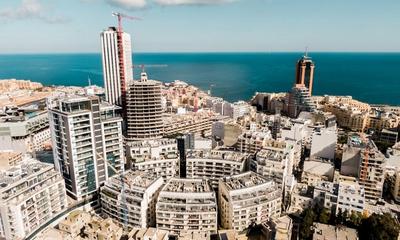
The major SDAs in Malta include Tigné Point (Sliema), Portomaso (St Julian's), SmartCity Malta (Kalkara), Mercury Towers (Paceville), Fort Cambridge (Sliema), Pendergardens (St Julian's), Tas-Sellum Residence (Mellieha), and Fort Chambray (Ghajnsielem, Gozo). The full list is maintained by the government and can change, so verifying current SDA status before committing to a purchase is essential. Platforms like Bektu track which developments hold active SDA designation.
Ask Bektu
Still have a question about buying in Malta?
Answers come from the records on file, with links to every source.
Considering a developer you read about here?
You cannot walk the land from another country. But you can verify the developer. Bektu contacts them on your behalf and sends you a scored report. They never see who asked.
Search and verify any developerMore from Bektu

Stay a step ahead of the wire transfer
Get the occasional note from Bektu on verifying developers before you commit. No noise, just what matters.
We will never share your email. You can opt out at any time.