Can Foreigners Own Property in Brazil? The 2026 Legal Guide
Yes, foreigners can own urban property in Brazil on the same legal terms as Brazilian citizens. There are no foreign ownership quotas on urban apartments, houses, or condominiums, and no residence permit or special visa is required to purchase. That is the headline fact. The complexity lies in a set of specific restrictions, registration requirements, and tax obligations that apply regardless of nationality, plus some rules that apply specifically to rural land, border zones, and coastal federal land.
This guide covers the complete legal framework as it stands in June 2026.
The CPF: Your First Requirement
Before signing any official document or completing any property transfer in Brazil, you must hold a CPF (Cadastro de Pessoas Físicas), Brazil's taxpayer identification number. The CPF is issued by the Receita Federal (Brazil's tax authority) and functions as a universal identifier for tax, banking, and property registration purposes.
Foreigners can obtain a CPF from abroad through two routes: by applying at a Brazilian consulate in their country of residence, or by using the Receita Federal's online portal for foreign nationals. The process requires a valid passport and proof of address. Once issued, the CPF number is permanent and not linked to your visa status.
No CPF means no escritura pública, no property registration, and no legal ownership. This is the non-negotiable starting point.
Urban Property: Open Access
For urban residential property, including apartments, houses, condominiums, and gated communities in cities such as São Paulo, Rio de Janeiro, Florianópolis, Recife, Fortaleza, or Salvador, there is no restriction on foreign ownership. You can own one property or multiple. You can own in your personal name. You do not need a Brazilian partner or a local company structure.
This openness is not a recent change. Brazil has allowed foreign urban property ownership for decades. The practical barriers are procedural and fiscal, not legal.
Rural Land: The Law 5,709/1971 Regime
Rural land is governed by a completely separate legal regime under Lei 5.709, de 7 de outubro de 1971, regulated by Decreto 74.965/1974. This law imposes binding restrictions on foreign individuals, foreign legal entities, and Brazilian companies under foreign control.
The key restrictions are:
- Size cap for individuals: A foreign individual may not acquire rural property exceeding 50 Módulos Fiscais (fiscal modules, a unit that varies by municipality but typically represents between 5 and 100 hectares depending on the region).
- Size cap for companies: A foreign-controlled company may not hold more than 100 Módulos Fiscais.
- Municipal concentration limit: Foreigners as a group cannot own more than 25% of the rural land in any single municipality. No more than 10% of that total may belong to nationals of the same country.
- INCRA oversight: The National Institute for Colonization and Agrarian Reform (INCRA) must be notified of, and in many cases must authorise, acquisitions of rural property by foreigners. Properties under approximately 3 Módulos Fiscais may be acquired without prior INCRA authorisation; larger parcels require formal approval.
- Nullity: Article 15 of Law 5,709/1971 states that acquisitions made in violation of the law are null and void. A purchase completed without required authorisations can be legally annulled.
Law 5,709/1971 is over 50 years old but remains fully in force and is actively enforced. There have been periodic legislative debates about reform, but as of June 2026 no substantive changes have been enacted.
A critical practical point: Brazilian law distinguishes between imóvel urbano (urban property) and imóvel rural (rural property) based on official land classification, not on what the land looks like or how it is used. A coastal holiday house outside a city boundary may be legally classified as rural. Always verify the official classification of any property before assuming urban rules apply.
Border Zone Restrictions (Faixa de Fronteira)
Under Lei 6.634, de 2 de maio de 1979, a 150-kilometre strip along Brazil's land borders constitutes a national security zone (faixa de fronteira). Within this zone, foreign nationals and foreign-controlled entities face heightened restrictions on acquiring any interest in rural property, and some urban properties may also attract scrutiny.
Acquiring property in this zone as a foreigner requires authorisation from the National Defence Council (Conselho de Defesa Nacional) and potentially other government bodies. This process is lengthy and approval is not guaranteed. In practice, foreign buyers are strongly advised to avoid the faixa de fronteira unless they have specific legal guidance and are prepared for a multi-year authorisation process.
The affected area encompasses regions bordering Argentina, Uruguay, Paraguay, Bolivia, Peru, Colombia, Venezuela, Guyana, Suriname, and French Guiana.
Terrenos de Marinha: The Coastal Leasehold Layer
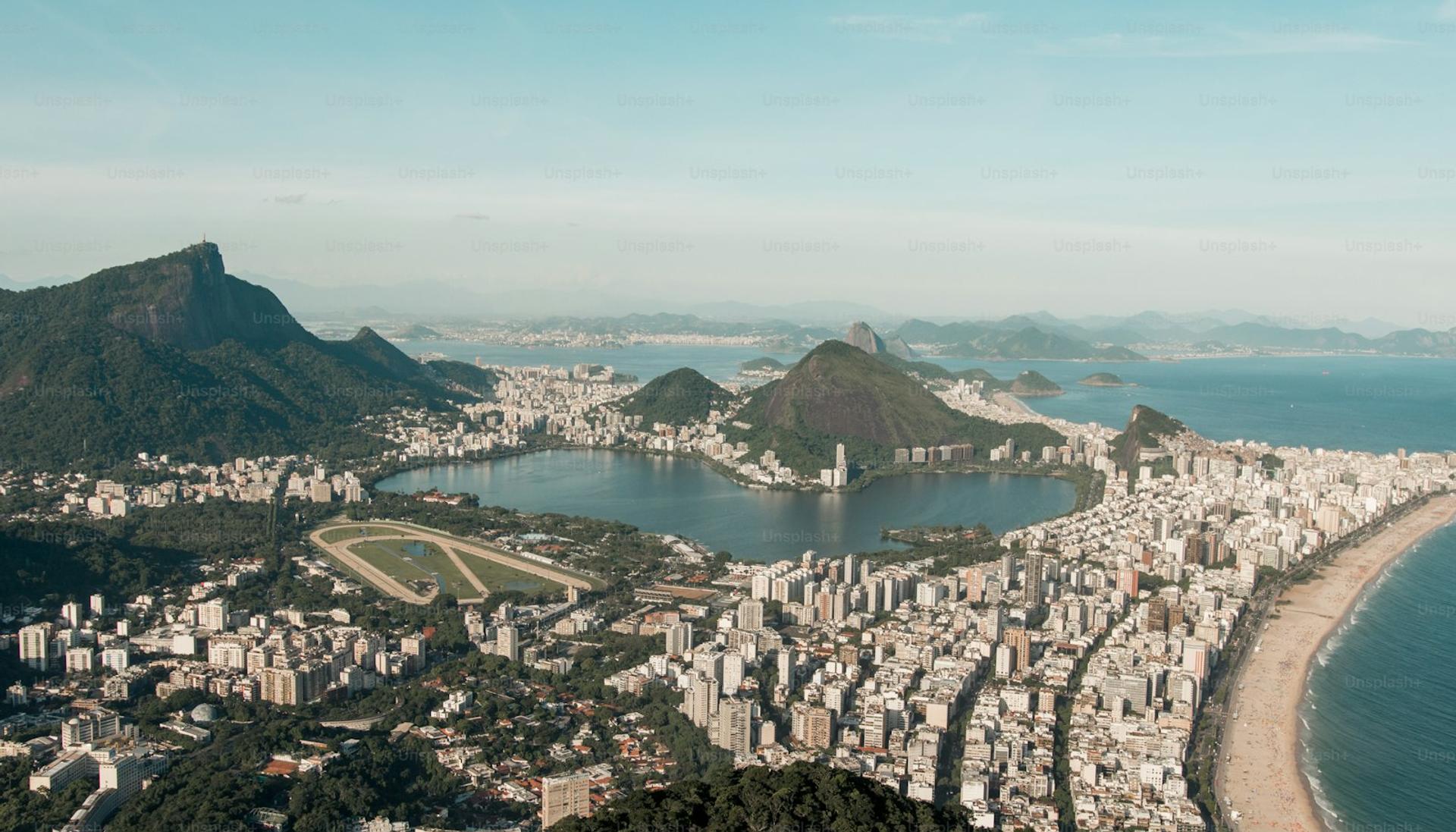
Brazil has no general prohibition on foreign ownership of coastal urban property. A foreign buyer can legally purchase a beachfront apartment in Rio de Janeiro, Florianópolis, or Fortaleza. However, buyers of coastal properties must understand the terrenos de marinha regime before signing anything.
Terrenos de marinha are federal lands defined under Decree-Law 9,760 of 1946 as the strip of land within 33 metres of the average high-tide line (measured landward). These lands belong to the federal government (the União) and cannot be sold outright. What is sold in transactions involving these properties is not full freehold title to the land, but rather the beneficial use rights (aforamento or ocupação).
In practical terms:
- The buyer acquires ownership of the building (or apartment fraction) and the right to use the federal land, not the land itself.
- Annual fees are payable to the Secretaria do Patrimônio da União (SPU, the federal property authority): a foro (ground rent) for properties under aforamento, and a taxa de ocupação for properties under ocupação regime.
Ask Bektu
Still have a question about buying in Brazil?
Answers come from the records on file, with links to every source.
Considering a developer you read about here?
You cannot walk the land from another country. But you can verify the developer. Bektu contacts them on your behalf and sends you a scored report. They never see who asked.
Search and verify any developerMore from Bektu
Stay a step ahead of the wire transfer
Get the occasional note from Bektu on verifying developers before you commit. No noise, just what matters.
We will never share your email. You can opt out at any time.