Cambodia Real Estate FAQ for Foreign Buyers: 25 Questions Answered
Cambodia Real Estate FAQ for Foreign Buyers: 25 Questions Answered
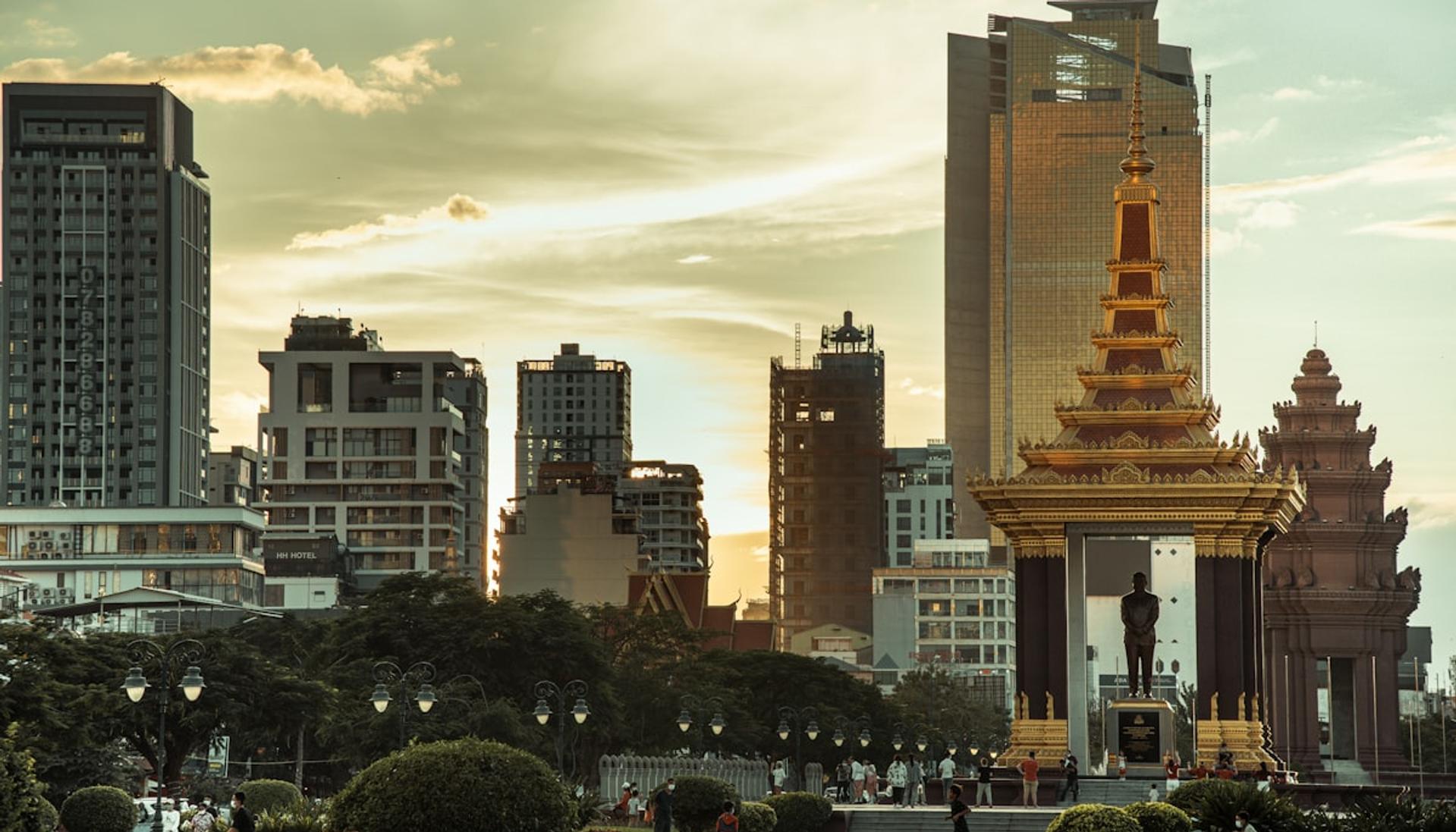
Cambodia keeps coming up in foreign-buyer searches because the entry prices for Phnom Penh condos and Sihanoukville coastal property are among the lowest in Southeast Asia, and because the legal framework opened to foreigners in 2010. Cambodia also has more land ownership complexity than its neighbors, with multiple title types, several foreign ownership paths, and persistent informality in some land transactions. The answers below cover the questions foreign buyers ask most often.
Can foreigners own property in Cambodia?
Foreigners cannot own land in Cambodia, but they can own units in co-owned buildings (apartments and condominiums) above the ground floor, up to 70 percent of total private units in any single building. This regime was created by the Law on Foreign Ownership of Co-Owned Buildings (Law No. NS/RKM/0510/006), promulgated May 24, 2010. Foreigners can also use long-term leases, nominee structures (with substantial risk), or own through a Cambodian company in which foreigners hold up to 49 percent of shares.
Why can't foreigners own land?
Cambodia's Constitution, in Article 44, restricts land ownership to Khmer citizens. The Land Law (NS/RKM/0801/14, promulgated August 30, 2001) implements this restriction at Article 8. The 2010 Foreign Ownership Law created the exception for co-owned buildings, but only for the strata-titled units above the ground floor, not for the underlying land.
What is a strata title?
A strata title is the certificate of ownership for an individual unit in a co-owned building, issued under the 2010 Foreign Ownership Law. The strata title is registered at the Land Office (Sangkat or Khan level) and at the Ministry of Land Management, Urban Planning and Construction (MLMUPC). Strata titles are sometimes called "indivisible titles" because the unit's owner has an exclusive right to that unit and an undivided share in the common parts of the building.
What is the 70 percent rule?
In any single co-owned building, foreigners can collectively own no more than 70 percent of the private units. The Ministry of Land issues a certificate confirming the building's eligibility for foreign ownership and tracks the foreign ownership ratio in the strata title registration. Developers selling to foreigners must ensure they do not exceed this cap when registering subsequent transfers. Some projects have been delayed in delivering hard titles when the cap was inadvertently exceeded.
What is the difference between a hard title and a soft title?
A hard title (Vorka Kantakor, also called LMAP title) is a certificate issued by the national land registry after a survey under the Land Management and Administration Project, recognized at the central government level. A soft title (Sak Daom Sangkat title) is a local commune-level certificate without national survey backing. Hard titles offer significantly stronger legal protection in disputes. Foreign-owned strata titles in modern condominium projects should always be hard titles. Many older properties, particularly in rural areas and some city-fringe land, still hold only soft titles.
What is the LMAP and why does it matter?
The LMAP (Land Management and Administration Project) was a World Bank-supported initiative that ran from 2002 to 2009 to systematically survey and register land across Cambodia, creating hard titles where soft titles or no titles existed. Coverage varies by district. Properties in LMAP-completed areas have stronger title certainty. The successor program is the LASED (Land Allocation for Social and Economic Development) and ongoing systematic registration. Always confirm whether your property's title is hard (LMAP-registered) or soft before signing.
How do long-term leases work?
A long-term lease is a registered leasehold right granted by a Khmer landowner for up to 50 years, renewable for an additional 50 years, under Article 106 of the Land Law. Leases over 15 years must be registered at the Land Office to bind third parties under Article 108. A registered long-term lease provides a strong, transferable, and inheritable right to the property for the lease term. Foreign buyers commonly use long-term leases for villas and landed property where ownership is not available.
What are nominee structures and are they legal?
A nominee structure is an arrangement where a Khmer national holds title to land on behalf of a foreign buyer, often supported by side agreements (powers of attorney, mortgages, declarations of trust) intended to protect the foreigner. The Land Law treats foreigner ownership of land as void under Article 8, which means side agreements have weak enforceability. Article 24 of the Land Law makes any agreement entered into to circumvent the foreign ownership restriction subject to confiscation of the property. Several cases have been reported of nominees claiming the property as their own. Bektu and other transparency platforms generally recommend long-term leases or condominium purchases over nominee structures.
Can a foreigner own through a Cambodian company?
Yes, a Cambodian limited liability company (LLC) with majority Khmer shareholders can own land in Cambodia. The foreign shareholder can hold up to 49 percent. This route is used for commercial property, mixed-use developments, and certain land acquisitions where direct foreign ownership is not possible. The Khmer shareholder requirement creates the same nominee-style risk as a direct nominee, and structuring around it (preferred shares, voting agreements, golden share arrangements) requires careful drafting by a Cambodian lawyer. Companies are registered with the Ministry of Commerce, and changes in shareholding require approval.
What taxes apply when buying property?
The buyer pays a 4 percent stamp duty (Property Transfer Tax) on the registered value of the property, payable to the General Department of Taxation (GDT). Strata title registration fees and notary fees add roughly 0.5 to 1 percent. Cash purchases require source-of-funds documentation under Cambodian anti-money-laundering rules, supervised by the Financial Intelligence Unit (FIU).
Is there annual property tax?
Yes, the annual property tax (Tax on Immovable Property, TIP) is 0.1 percent of the assessed value above a threshold of 100 million KHR (approximately USD 25,000), per the 2010 Law on Taxation and subsequent regulations. The assessed value is set by the General Department of Taxation, often well below market value. Most low-priced properties owe no property tax. Higher-value urban properties typically owe a modest amount.
What is the unused land tax?
The unused land tax (Tax on Unused Land) is 2 percent of the market value, levied on land in designated unused areas of urban centers under the 1995 Law on Tax on Unused Land. Implementation varies, and small condominium units do not face this tax. Larger landholdings that fall under the designation are exposed.
Ask Bektu
Still have a question about buying in Cambodia?
Answers come from the records on file, with links to every source.
Considering a developer you read about here?
You cannot walk the land from another country. But you can verify the developer. Bektu contacts them on your behalf and sends you a scored report. They never see who asked.
Search and verify any developerMore from Bektu
Stay a step ahead of the wire transfer
Get the occasional note from Bektu on verifying developers before you commit. No noise, just what matters.
We will never share your email. You can opt out at any time.