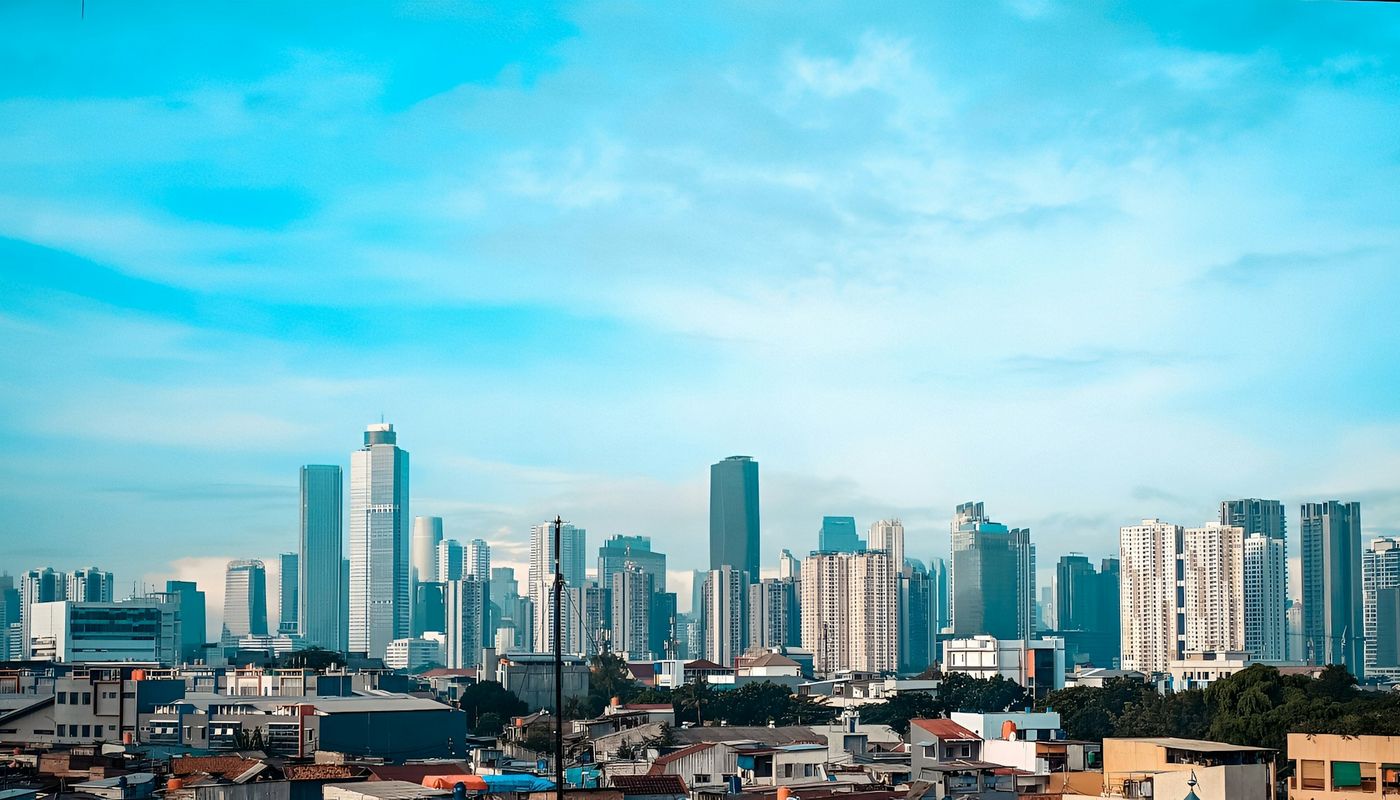
Bali, Jakarta, or Surabaya? Three Indonesian Property Markets Compared (2026)
Bali, Jakarta, or Surabaya? Three Indonesian Markets That Reward Different Buyers (2026)
The default conversation about Indonesian property among foreign buyers is a Bali conversation. That misses two of the country's biggest urban property markets and the structurally different buyer profiles that fit each.
Bali in 2026 is the country's tourism-yield market. Jakarta is the corporate-tenant and capital-preservation market. Surabaya is the industrial-anchor and entry-price market. The legal regime under UUPA is the same in all three. The economics are not.
Price Per Square Meter
Bali villa pricing in 2026 spans a wide range. Entry-level one-bedroom villas in Pererenan, Kediri, or deeper Tabanan start at USD 160,000 to USD 250,000, typically on shorter 20 to 25 year leaseholds. The mid-range, USD 300,000 to USD 550,000, covers two- and three-bedroom villas in Canggu, Berawa, and outer Uluwatu. Median sold villa prices held steady at approximately USD 299,000 in Q3 2025.
Jakarta apartment prices rose 0.8 percent year-on-year to approximately IDR 36 million per square meter in Q3 2025, equivalent to roughly USD 2,144 per square meter. Prime South Jakarta CBD apartments in Senopati, Kuningan, and SCBD reach IDR 60 million per square meter or more.
Surabaya apartment prices are materially lower, running IDR 18 million to IDR 30 million per square meter for new prime stock in the central business district. Surabaya landed houses in prime western and southern suburbs carry a substantial premium over apartments, reflecting Indonesian buyer preference for landed property.
Rental Yield and Tenant Profile
Bali gross rental yields on professionally managed short-stay villas in 2026 typically run 10 to 15 percent in prime areas. Canggu sits at 10 to 15 percent, Uluwatu at 9 to 14 percent, and Seminyak at 8 to 12 percent. These are gross numbers. Net yields after Article 26 withholding tax (20 percent for non-resident landlords without treaty relief), OTA commissions of 15 to 20 percent, property management fees of 15 to 20 percent of net revenue, staff costs, utilities, refurbishment reserves, and vacancy frequently land at 4 to 7 percent.
Jakarta apartment yields on long-term corporate leases run 5 to 7 percent gross, with stable occupancy at approximately 87 to 88 percent across the broader apartment market. Tenant demand is anchored by multinational employees, embassy staff, and senior Indonesian executives. The Jakarta apartment market is structurally different from the Bali villa market: it is a residential housing market, not a hospitality market.
Surabaya yields are competitive, often 6 to 8 percent gross on apartments in well-located prime stock. The tenant base is corporate executives at the industrial estates surrounding the city (East Java is Indonesia's industrial heartland), Surabaya-based regional offices, and students at the major universities. Vacancy is low, but the rental market depth is smaller than Jakarta's.
Supply Pipeline
Jakarta has approximately 3,200 apartment units scheduled for handover in 2026 and 2027, with roughly 70 percent concentrated in South Jakarta, particularly around TB Simatupang, the SCBD area, and along the MRT corridor. Developer focus has shifted to the middle and upper segments after years of mid-market oversupply.
Bali supply remains fragmented across hundreds of small and mid-size developers. The market is more difficult to measure because much of the supply comes through one-off villa projects rather than master-planned developments. The most visible institutional-scale project in 2026 is Nuanu City, a 44-hectare creative district near Nyanyi Beach with IDR 2.4 trillion in committed investment.
Surabaya new launches have slowed since 2023 and inventory is being absorbed at a steady rate. The supply story in Surabaya is less about new launches and more about turnover in existing stock as the city's industrial base continues to expand.
Foreign Ownership Regime by City
The legal framework is national, but the practical landscape varies.
In Bali, the dominant structures are PT PMA holding HGB for rental villas and long-term leasehold for personal-use villas. Personal Hak Pakai is used by foreign retirees on the Second Home Visa.
In Jakarta, foreign buyers most commonly purchase strata-title apartments (Sarusun) under the regulatory framework that allows direct foreign ownership of apartment units. The minimum purchase price for foreign-eligible Jakarta apartments is IDR 3 billion. Foreign ownership is capped at 20 percent of units per development.
In Surabaya, foreign purchase activity is thin. The same legal framework applies, but the foreign buyer pool is small because the tenant base is predominantly Indonesian corporate and academic professionals. The IDR 3 billion minimum that applies in Jakarta is lower in Surabaya, reflecting the East Java market's smaller scale.
Infrastructure and Macro Drivers
Jakarta in 2026 continues to expand its mass transit network. MRT Phase 2 (North-South extension) and the Jabodebek LRT are in progressive operation. The relocation of the national capital to Nusantara in East Kalimantan remains a long-term process, but the practical effect on Jakarta property has been muted: the city retains its corporate, financial, and consumer-services concentration.
Bali's infrastructure story in 2026 is the new Bali International Airport project at Bukit Beraban in North Bali. Construction continues but the airport is not yet operational. The North Bali corridor remains speculative on this basis. South Bali (Bukit, Canggu, Uluwatu) remains the established rental market.
Surabaya's growth driver is industrial. The Greater Surabaya industrial belt along the Surabaya-Mojokerto-Pasuruan corridor continues to absorb manufacturing investment relocating from China and Vietnam. The Tanjung Perak port expansion and the Trans-Java toll road network anchor the city's logistics position.
The Strategic Question
Bali rewards foreign buyers who can run, or pay to run, a tourism rental operation. The yields are attractive on paper but require active management, a PT PMA structure for legitimate operation, and tolerance for tax friction and seasonality. The exit is liquid because the foreign buyer pool is deep.
Jakarta rewards foreign buyers seeking long-term residential income with corporate-grade tenants and a structurally stable market. Yields are lower than Bali's gross numbers but more predictable on a net basis. Capital appreciation forecasts of 5 to 7 percent annually through 2028 represent a meaningful acceleration from the flat 2020-2024 period.
Surabaya rewards foreign buyers willing to enter at lower price points, accept thinner secondary-market liquidity, and benefit from East Java's industrial expansion. It is the market that almost no foreign buyer talks about, and the one with the lowest competition from other foreign capital.
Developer Risk
In Bali, developer risk is the central risk. The market is fragmented and the typical buyer relies on the developer's representations rather than institutional underwriting. Established names in 2026 include Magnum Estate, Mirah Investment & Development, Nuanu Real Estate, PARQ Development, Ilot Property Bali, and Coco Development Group. Below those names, developer track records vary widely.
In Jakarta, the developer landscape is dominated by listed and institutional names: Ciputra Group, Agung Sedayu Group, Sinar Mas Land, Lippo Group, Pakuwon Group (also dominant in Surabaya), and Intiland Development. Track records are public, financials are audited, and project completion risk is lower.
Surabaya is largely a Pakuwon Group story. Pakuwon's portfolio of integrated developments (Tunjungan Plaza, Pakuwon Mall, the Tanjungan Heritage area) anchors the market. Other developers operate in Surabaya, but Pakuwon's scale makes it the reference point.
Bektu (https://bektu.com) maintains developer delivery records for the Indonesian market, which is most useful in Bali where pre-completion purchases and small-developer risk are concentrated.
What Each City Is Actually For
Bali is for foreigners who want yield and are willing to operate a rental business in a tourism market.
Jakarta is for foreigners who want a residential apartment in a major Southeast Asian capital, with corporate tenants and predictable economics.
Surabaya is for foreigners who want an early-cycle entry into an industrial-growth city before the foreign-buyer pool widens.
The three are not substitutes. They are different markets that happen to share the same legal framework.
Sources
- Indonesia Residential Property Market Analysis 2026 (Global Property Guide)
- Jakarta Property Market Update Q1 2026 (CBRE)
- Jakarta MarketBeat (Cushman & Wakefield)
- Bali Real Estate Market 2026 (Investland Bali)
- Bali Property Market Outlook 2026 (Exotiq Property)
- Law No. 5 of 1960 on Basic Agrarian Principles (FAO Legal Database)
- Government Regulation No. 18 of 2021 (Indonesia Real Estate Law)
- BKPM Investment Coordinating Board
Sign up to read the rest
Create a free account to keep reading. It only takes a minute.
Developers referenced
- Magnum Estate Canggu, Indonesia
- Mirah Investment & Development Canggu, Indonesia
- Nuanu Real Estate Tabanan, Indonesia
- PARQ Development Canggu, Indonesia
- Ilot Property Bali Canggu, Indonesia
- Coco Development Group Canggu, Indonesia
- Ciputra Group Jakarta, Indonesia
- Agung Sedayu Group Jakarta, Indonesia
- Sinar Mas Land Jakarta, Indonesia
- Lippo Group Jakarta, Indonesia
- Pakuwon Group Surabaya, Indonesia
- Intiland Development Jakarta, Indonesia
Thinking about Magnum Estate?
You cannot walk the land from another country. But you can verify the developer. Bektu contacts them on your behalf and sends you a scored report. They never see who asked.
Verify Magnum Estate anonymouslyThinking about Mirah Investment & Development?
You cannot walk the land from another country. But you can verify the developer. Bektu contacts them on your behalf and sends you a scored report. They never see who asked.
Verify Mirah Investment & Development anonymouslyThinking about Nuanu Real Estate?
You cannot walk the land from another country. But you can verify the developer. Bektu contacts them on your behalf and sends you a scored report. They never see who asked.
Verify Nuanu Real Estate anonymouslyThinking about PARQ Development?
You cannot walk the land from another country. But you can verify the developer. Bektu contacts them on your behalf and sends you a scored report. They never see who asked.
Verify PARQ Development anonymouslyThinking about Ilot Property Bali?
You cannot walk the land from another country. But you can verify the developer. Bektu contacts them on your behalf and sends you a scored report. They never see who asked.
Verify Ilot Property Bali anonymouslyThinking about Coco Development Group?
You cannot walk the land from another country. But you can verify the developer. Bektu contacts them on your behalf and sends you a scored report. They never see who asked.
Verify Coco Development Group anonymouslyThinking about Ciputra Group?
You cannot walk the land from another country. But you can verify the developer. Bektu contacts them on your behalf and sends you a scored report. They never see who asked.
Verify Ciputra Group anonymouslyThinking about Agung Sedayu Group?
You cannot walk the land from another country. But you can verify the developer. Bektu contacts them on your behalf and sends you a scored report. They never see who asked.
Verify Agung Sedayu Group anonymouslyThinking about Sinar Mas Land?
You cannot walk the land from another country. But you can verify the developer. Bektu contacts them on your behalf and sends you a scored report. They never see who asked.
Verify Sinar Mas Land anonymouslyThinking about Lippo Group?
You cannot walk the land from another country. But you can verify the developer. Bektu contacts them on your behalf and sends you a scored report. They never see who asked.
Verify Lippo Group anonymouslyThinking about Pakuwon Group?
You cannot walk the land from another country. But you can verify the developer. Bektu contacts them on your behalf and sends you a scored report. They never see who asked.
Verify Pakuwon Group anonymouslyThinking about Intiland Development?
You cannot walk the land from another country. But you can verify the developer. Bektu contacts them on your behalf and sends you a scored report. They never see who asked.
Verify Intiland Development anonymouslyMore from Bektu



Stay a step ahead of the wire transfer
Get the occasional note from Bektu on verifying developers before you commit. No noise, just what matters.
We will never share your email. You can opt out at any time.